Updates

  1. Fund letters lists 118 more letters, each with its own page: 44 weekly commentaries by Jeremy Siegel from 2026, 31 issues of Van Tharp's newsletter from 2018, 23 Pabrai Investment Funds letters from 2021 to Q3 2026, 13 Efficient Frontier essays by William Bernstein, Oakmark's three 3Q 2026 commentaries, two Lindsell Train reports, a John Hussman comment and Third Point's Q3 2026 letter.
  2. 2,027 more books carry a one-line description in the Books table and on their pages; 7,067 of 7,715 have one, every tier 1, 2 and 3 book among them.
  3. Fund letters lists 187 more letters from 19 firms, among them Permanent Equity, Social Capital, Lux Capital, Square Peg, Bestinver, Cobas, Sequoia Fund, Marketfield and EquityCompass; each shows on its investor's page and has a page of its own.
  4. 2,928 more books carry a one-line description in the Books table and on their pages, so every tier 1, 2 and 3 book has one; 5,040 in all.
  5. Every publication on Newsletters has its own page: its writing, its writers, its staff and who recommends it. Investor pages have a Management tab; a company's Experts tab now leaves out its own people, who list under Management. Tabs on a phone move sideways only.
  6. Every fund letter and research paper has its own page: the thesis, the PDF, the companies and books it names, and for 176 letters and 24 papers so far a summary, key insights and quotes with their page.
  7. 99 books that no page listed now sit under their topics in Books, among them Caste, American Prometheus and Pale Blue Dot.
  8. Newsletters lists every newspaper, magazine, investment newsletter, journal and blog the reference holds, 442 in all, with the people who write there. The search box keeps your last 20 searches. You can create an account.
  9. 283 books that fund managers recommend in their letters are on the shelf, each with the letter's own words and page; investor pages have a Recommends tab.
  10. Person, company, investor and show pages link their own accounts on X, Threads, Instagram, LinkedIn, YouTube and Substack: 275 people, 552 companies and organisations, 88 investors and 478 shows.
  11. 716 more book recommendations name their source: the person's own reading list, letter, blog post, speech or interview, or an article that reports it. 232 of them quote the person's own words about the book, on the book card and on the book's page.
  12. Every US-listed company has a page with its SEC filings. Company pages list their experts and their management, past and present. Fund managers sit under Investors. Each show has a page of its episodes, and an episode page names its guests and hosts. Biographies lists groups, then people. Breadcrumbs show where a page sits.
  13. Media lists every podcast episode, video, interview and talk, over 10,000, by person, company, publisher and event; each filter searches its own choices. Books opens on its table, then Browse, then Authors and Recommenders. A filter's count no longer covers its arrow.
  14. A book that no company, country or subject page lists shows its topics under Where it sits in the reference. On a phone, a page's tabs scroll sideways only. Descriptions read the same on every page. See them in the Experts tab lists every expert the page names.
  15. Every podcast episode, video and interview has its own page with a video or audio player and a link to the source. Investor pages show each company's sector and market cap; firms such as Berkshire Hathaway have one page that holds their letters and their company tabs. Letters tabs filter by company and search the theses. Companies filter by Public, Private and Defunct and link each company's website.
  16. Every tab, view and search has its own address, such as /books/table/asset or /letters/companies, so Back works and a link opens the same place. Page addresses no longer end in .html. Fund letters, Investors, Companies and Papers load about a fifth of the data they did.
  17. Fund letters has a Companies tab: every company the letters name, with its market cap, sector, country, and how many letters and investors name it. Investor pages link each investor's website. Lists in table cells end with “… and N more” at every width.
  18. 1,120 more book summaries; descriptions for 373 papers; pages for 137 more companies, each with the fund letters that discuss it; 215 official photographs; search has its own page.
  19. 411 more books have a summary; person pages list 930 more of the books they wrote; 147 people show their official photograph.
  20. Every investor has a page with its letters and the companies they discuss; company pages list the investors whose letters name them.
  21. A Companies section at the top of the rail lists every company the books, experts and fund letters name.
  22. Person pages list letters, writing, profiles and links as sortable tables with filters, and show each person's companies as links; Fund letters show each letter's description in its own column.
  23. Experts show a checked job title and a short description of each person; 30 more people have photographs.
  24. Every company, fund, university and publication the experts work for has a page listing the people there.
  25. Fund letters show each letter's thesis and filter by it; 225 person pages list the essays, columns and newsletter issues the person wrote.
  26. Person pages list every essay and newsletter issue a person wrote, and their own books as a table in List view.
  27. Recommends shows the five largest kinds of book and the rest under More; browse pictures load sooner.
  28. Podcasts and talks link the original episode, filter by Audio and video or Press, and list each publisher once.
  29. Pages are wider, Recommends has List and Grid, and a filter clicked again turns off.
  30. Book cards sit in a ruled grid with Open Library and Goodreads links and each book's one-line note.
  31. Funds is now Investors; each investor's styles are buttons that filter the table.
  32. Podcasts and talks on a person's page filter by year and publisher and show as a list or a grid of pictures.
  33. Quotes show only people's own words: 472 summaries written by list sites are gone.
  34. Country pages open from Browse again, and every link on the shelf lands on a page.
  35. Subject and person pages show their sections as tabs, and each book appears once on a person's page.
  36. Book cards show the quote, who said it and the source; grids show five cards to a row.
  37. On a phone, a menu holds the sections, search, Updates, Feedback and dark mode.
  38. Feedback takes a screenshot of the page with no browser prompt, opens a screenshot full size when you click it, and clears itself once sent.
  39. Book cards are centred, search names the topic each book sits in, and any text cut short shows whole on hover.
  40. Search groups its results by kind: people, companies, geographies, subjects, topics, books, funds, fund letters and papers.
  41. The Books table lists who recommended each book by name, and the browser tab names the section you are in.
  42. Feedback can take a screenshot of the page, or one you paste or choose, and opens in the corner beside Updates.
  43. Each rail button reopens its section where you left it, and Browse, Table and People show on every book and subject page.
  44. Filters grey out choices that hold nothing instead of hiding them, and Books › People filters by authors or recommenders.
  45. Feedback takes a subject line and up to three screenshots.
  46. Biographies are grouped by the person they are about: 41 new pages, from Abraham Lincoln to Lee Kuan Yew.
  47. Sport splits into 23 sports, and Religion into one topic per faith.
  48. Book lists show as cards: the cover, one recommendation quote and every recommender by name.
  49. Seventeen subjects that had two or three pages under different names now have one page each.
  50. Every page lists its Experts as authors and recommenders, with a link to them on the Experts tab.
  51. Economics, Financial history, Financial panics and Accounting are subjects of their own, with one page per financial crisis.
  52. Book, person and subject pages open inside the app, so the tabs stay in view.
  53. 996 more book covers, and photographs or logos for 227 more people and companies.
  54. Books › Browse shows every subject as cards, and the rail holds Fund letters, Papers, Experts, Books and Funds.
  55. Every topic over 150 books splits into narrower topics, each with a page of its own.

Send feedback

What is it?
Screenshots, up to 3 (optional)
or paste one with Ctrl+V

We use your email only to reply to you.

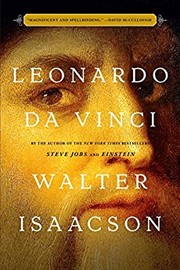
Leonardo da Vinci

Leonardo da Vinci

Leonardo's life read through his notebooks, where art and science were one pursuit.

Walter Isaacson
2017
T2 599 pages · about 9h 59m to read Open Librarygoodreads

Summary

Isaacson builds the biography around Leonardo's notebooks, roughly seven thousand two hundred surviving pages, and uses them to argue that his art and his science were a single activity. The book covers the illegitimate birth near Vinci, the Verrocchio workshop, the Milan years under Ludovico Sforza, the return to Florence, the anatomical work, and the final years in France.

The strongest material connects specific investigations to specific paintings. Isaacson shows how Leonardo's dissection of the human face, including the muscles that produce a smile, informs the Mona Lisa, and how his optical studies of how the eye perceives edges produced sfumato. His work on hydrodynamics, the movement of water around obstacles, appears in the treatment of hair and of fabric. The anatomical drawings of the heart, including the hypothesis about vortices in the aortic valve, were confirmed only in the twentieth century.

Isaacson emphasises the pattern of unfinished work. Leonardo left the Adoration of the Magi, the Sforza horse, the Battle of Anghiari and most of his treatises incomplete, and Isaacson treats this as a product of curiosity that outran commitment rather than as failure. He completed perhaps fifteen paintings in his life.

The interpretive claims are the weak part. Isaacson's argument that Leonardo represents a model of interdisciplinary creativity applicable to modern innovation is asserted repeatedly and thinly supported. Art historians have criticised the treatment of the Salvator Mundi attribution, which the book handles more credulously than the evidence supports. The notebook material is the reason to read it.

Key takeaways 8

  1. Leonardo's scientific investigation and his painting were one activity, and specific anatomical and optical findings appear directly in specific paintings.
  2. He dissected human bodies to understand the muscles producing expression, which is why the faces in his paintings carry information other painters could not produce.
  3. His observational method involved recording detail obsessively without a hypothesis, filling notebooks with questions he set himself.
  4. He left most of his work unfinished because curiosity moved him to the next problem, and he completed roughly fifteen paintings in a lifetime.
  5. His anatomical hypothesis about blood flow in the aortic valve was correct and was not confirmed until the twentieth century.
  6. He was illegitimate, left-handed, largely self-taught and unable to read Latin for much of his life, which kept him outside the scholarly tradition and forced him to observe directly.
  7. He treated the boundary between disciplines as an artefact rather than a fact, moving between engineering, anatomy, optics, geology and painting on the same page.
  8. He worked on the Mona Lisa for over a decade and never delivered it, treating a commission as an ongoing investigation rather than a job.

Who should read it

Readers interested in how direct observation across unrelated fields produces work that specialists cannot, drawn from primary notebook evidence.

About Walter Isaacson

American biographer and professor of history at Tulane University; formerly editor of Time and chief executive of CNN and the Aspen Institute.

The biographies are built on long direct access - years of interviews with Jobs, then with Musk - and reconstruct how each subject decided, hired and treated the people around them. The Innovators does the same for computing, presenting it as a chain of collaborations rather than a sequence of lone inventions.

Who recommended it 10 · 2 direct

“Leonardo da Vinci, which I recommended in 2018, remains my favorite.”

Daniel Petrereported
Elon Muskreported
Sahil Bloomreported

Similar books 6

Chosen by shared topics, the entries that hold them, and the people who recommended both.
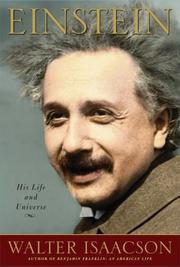
Walter Isaacson · 2007

Einstein's life and science, from the Bern patent office to relativity.

Walter Isaacson · 2011

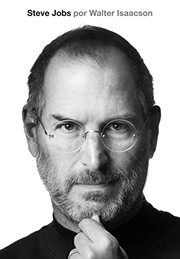
Steve Jobs's life and Apple's products, from forty interviews with him and many more.

Annie Leibovitz · 2006

A photographer's memoir in pictures, from portraits to her private life.

Recommended by: Patrick Collison
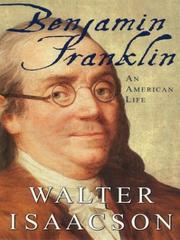
Walter Isaacson · 2003

Franklin's life as printer, scientist, diplomat and founder.

“…books I've recommended, highlighted to death, or forced on friends.” — Andrew Wilkinson

Source: Andrew Wilkinson's Bookshelf, neverenough.com

Recommended by: Alfred Lin, Andrew Wilkinson, Brad Feld and 8 others

S. N. Behrman · 1952

The dealer who sold Europe's Old Masters to rich Americans.

Ellen G. Landau · 1989

The sources of the painter's work, with the art of the painters he admired.

Recommended by: Mohnish Pabrai

Where it sits in the reference 1

Journalists

Topics 5

Biography and MemoirArt and DesignBiography of ScientistsFine Art and PhotographyArtists, Writers and Musicians