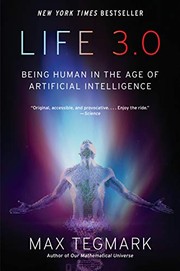
Life 3.0
How AI could change crime, war, justice, jobs and what it means to be human.
Tegmark surveys the full range of AI futures, from utopian to catastrophic, without foreclosing any of them. More useful as a map of the possibility space than as a prediction. The Asilomar AI Principles process he helped organize grew partly out of the conversations this book generated among researchers.
Summary
Tegmark, an MIT professor who helped bring research on beneficial AI into the mainstream, examines how artificial intelligence could affect crime, war, justice, jobs, society and the human sense of self. He poses the questions he thinks matter most: how to grow prosperity through automation without leaving people without income or purpose, what career advice to give children, how to make AI systems that do what we want without crashing, malfunctioning or being hacked, and whether to fear an arms race in lethal autonomous weapons.
The book then moves to longer horizons: whether machines will eventually outsmart humans at all tasks, replacing them in the job market or altogether, and whether AI will help life flourish or give humanity more power than it can handle. Tegmark lays out the full range of viewpoints, from superintelligence to meaning and consciousness and the ultimate physical limits on life in the cosmos, without settling on one forecast, and asks readers what future they want. It reads more as a map of possible futures than as a prediction.
Key takeaways 4
- Automation could raise prosperity but risks leaving many people without income or purpose.
- Making AI systems reliable and secure is a near-term engineering problem, not only a distant one.
- An arms race in lethal autonomous weapons is one of the nearest dangers of AI.
- The long-term outcome of AI depends on choices people make now about what future they want.
Who should read it
Readers and investors who want a broad survey of possible AI futures, from near-term jobs and weapons to superintelligence.
Who recommended it 6 · 2 direct
“A deep, bold, and visionary dive into Artificial Intelligence and its many implications. One of the most interesting books I've ever read. If you haven't read much of AI yet, start with “Surviving AI” as an intro, then read this as a deep-dive. His perspective is amazingly thorough. Defining terminology was a great way to start. For example life is a “process that can retain its complexity and replicate”. Intelligence is the “ability to accomplish complex goals”. That keeps it broad enough to define future technology as alive and intelligent.”
Similar books 6
Chosen by shared topics, the entries that hold them, and the people who recommended both.
What humanity may seek after famine, plague and war: immortality and divinity.
“Very interesting alternative perspective on life from a historian. Anti-religion, anti-humanism, pro-animal. Seems detached, but is quite opinionated. Much to think about, regardless. My notes here give a taste. A lot to think about.” — Derek Sivers
Source: Derek Sivers book notes (primary, rated list) · Rating: 6/10
Recommended by: Andrew Wilkinson, Bill Gates, Derek Sivers and 8 others
Why AI must be redesigned from the ground up to keep superhuman machines in check.
Recommended by: Andrew Wilkinson, Elon Musk, Sam Altman
Why machines smarter than humans pose a control problem to solve before they arrive.
“I've read a few of the books that get tossed around, like Bostrom's Superintelligence, and a bunch of the articles that people have written.” — Brad Feld
Source: What Is The "Third Wave" Of This Generation? — Feld Thoughts
Recommended by: Brad Feld, Michael Mauboussin and 9 others
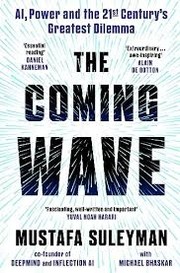
Why AI and synthetic biology will spread fast and cheaply, and how to contain them.
“Everything is about to be changed by AI in a radical, scary way” — Andrew Wilkinson
Source: Newsletter
Recommended by: Andrew Wilkinson, Bill Gates and 1 other
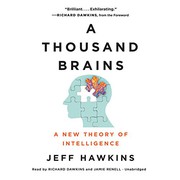
The theory that the neocortex works through thousands of models of the world.
Recommended by: Bill Gates
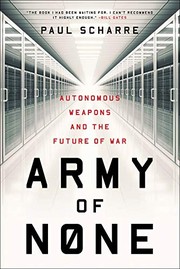
How autonomous weapons are changing war, and what that means.
Recommended by: Bill Gates
Where it sits in the reference 1
Topics 1
As an Amazon Associate I earn from qualifying purchases.