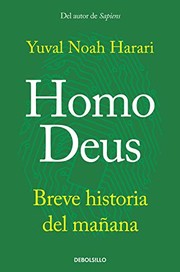
Homo Deus: A Brief History of Tomorrow
What humanity may seek after famine, plague and war: immortality and divinity.
Harari's concern — that humans may cede decision-making to opaque systems through preference rather than coercion — reframes the alignment problem as a cultural and political challenge, not only a technical one. Less rigorous than Bostrom or Russell, but more widely read, making it a useful lens for understanding public discourse.
Summary
Harari's sequel to Sapiens argues that having largely contained famine, plague and war, humanity will turn to new projects: immortality, engineered happiness and the acquisition of what he calls divine powers of creation through biotechnology and artificial intelligence.
His analytical spine is a history of the belief systems that organise societies. He argues that traditional religions were displaced by humanism, which relocated authority from God to human feelings and made individual experience the source of meaning and of political legitimacy. He then argues that humanism is being undermined by the same sciences that grew under it. If the self is a set of biochemical processes with no unified author, if human choices can be predicted and influenced by external algorithms better than by the individual, and if biotechnology can alter the desires that humanism treats as authoritative, then the foundation of liberal individualism dissolves.
He proposes that what replaces it will be dataism, an emerging belief that information flow is the supreme value and that humans are algorithms whose function is to process data, and that this framework already governs how technology companies and much of science operate.
The book is a work of speculative synthesis. Historians and scientists have criticised its factual compression, its confident assertions about consciousness and free will, and its treatment of contested scientific questions as settled. It should be read as provocation. Its argument about what happens to political legitimacy when individual choice can be predicted and manipulated is worth taking seriously regardless of the rest.
Key takeaways 7
- Famine, plague and war have been largely contained as existential threats, which redirects human ambition toward longevity, engineered happiness and enhancement.
- Humanism relocated authority from divine command to human feelings, which is what makes individual choice the basis of political and economic legitimacy.
- The sciences that grew under humanism undermine it, since a self that is a set of biochemical processes cannot be the authority humanism requires.
- When external algorithms predict and influence individual choices better than the individual can, the basis of both democratic and market legitimacy dissolves.
- Biotechnology that can alter desires removes the foundation of a system that treats existing desires as authoritative.
- Dataism, treating information flow as the supreme value and humans as data-processing algorithms, is an emerging framework that already governs technology and science.
- Enhancement technologies available to some and not others would produce biological inequality that no previous inequality resembles.
Who should read it
Readers who want a provocative framing of what predictive technology does to individual choice as a basis of legitimacy, read as speculation rather than history.
Who recommended it 11 · 7 direct
“Very interesting alternative perspective on life from a historian. Anti-religion, anti-humanism, pro-animal. Seems detached, but is quite opinionated. Much to think about, regardless. My notes here give a taste. A lot to think about.”
Similar books 6
Chosen by shared topics, the entries that hold them, and the people who recommended both.
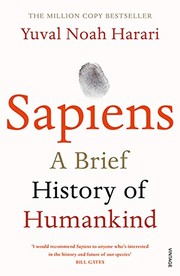
How shared fictions such as money, nations and gods let humans cooperate at scale.
“…books I've recommended, highlighted to death, or forced on friends.” — Andrew Wilkinson
Source: Andrew Wilkinson's Bookshelf, neverenough.com
Recommended by: Andrew Wilkinson, Bill Gates, David Perell and 40 others
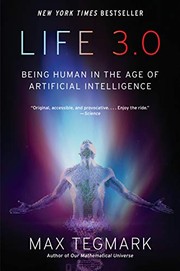
How AI could change crime, war, justice, jobs and what it means to be human.
“A deep, bold, and visionary dive into Artificial Intelligence and its many implications. One of the most interesting books I've ever read. If you haven't read much of AI yet, start with “Surviving AI” as an intro, then read this as a deep-dive. His perspective is amazingly thorough. Defining terminology was a great way to start. For example life is a “process that can retain its complexity and replicate”. Intelligence is the “ability to accomplish complex goals”. That keeps it broad enough to define future technology as alive and intelligent.” — Derek Sivers
Source: Derek Sivers book notes (primary, rated list) · Rating: 7/10
Recommended by: Andrew Wilkinson, Derek Sivers, Bill Gates and 3 others
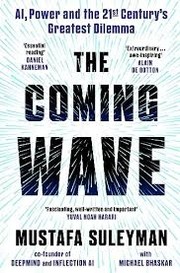
Why AI and synthetic biology will spread fast and cheaply, and how to contain them.
“Everything is about to be changed by AI in a radical, scary way” — Andrew Wilkinson
Source: Newsletter
Recommended by: Andrew Wilkinson, Bill Gates and 1 other
The theory that the neocortex works through thousands of models of the world.
Recommended by: Bill Gates
How autonomous weapons are changing war, and what that means.
Recommended by: Bill Gates

Khan Academy's founder on artificial intelligence in education and parenting.
Recommended by: Bill Gates
Where it sits in the reference 2
Topics 1
As an Amazon Associate I earn from qualifying purchases.