Updates

  1. Person pages list letters, writing, profiles and links as sortable tables with filters, and show each person's companies as links; Fund letters show each letter's description in its own column.
  2. Experts show a checked job title and a short description of each person; 30 more people have photographs.
  3. Every company, fund, university and publication the experts work for has a page listing the people there.
  4. Fund letters show each letter's thesis and filter by it; 225 person pages list the essays, columns and newsletter issues the person wrote.
  5. Person pages list every essay and newsletter issue a person wrote, and their own books as a table in List view.
  6. Recommends shows the five largest kinds of book and the rest under More; browse pictures load sooner.
  7. Podcasts and talks link the original episode, filter by Audio and video or Press, and list each publisher once.
  8. Pages are wider, Recommends has List and Grid, and a filter clicked again turns off.
  9. Book cards sit in a ruled grid with Open Library and Goodreads links and each book's one-line note.
  10. Funds is now Investors; each investor's styles are buttons that filter the table.
  11. Podcasts and talks on a person's page filter by year and publisher and show as a list or a grid of pictures.
  12. Quotes show only people's own words: 472 summaries written by list sites are gone.
  13. Country pages open from Browse again, and every link on the shelf lands on a page.
  14. Subject and person pages show their sections as tabs, and each book appears once on a person's page.
  15. Book cards show the quote, who said it and the source; grids show five cards to a row.
  16. On a phone, a menu holds the sections, search, Updates, Feedback and dark mode.
  17. Feedback takes a screenshot of the page with no browser prompt, opens a screenshot full size when you click it, and clears itself once sent.
  18. Book cards are centred, search names the topic each book sits in, and any text cut short shows whole on hover.
  19. Search groups its results by kind: people, companies, geographies, subjects, topics, books, funds, fund letters and papers.
  20. The Books table lists who recommended each book by name, and the browser tab names the section you are in.
  21. Feedback can take a screenshot of the page, or one you paste or choose, and opens in the corner beside Updates.
  22. Each rail button reopens its section where you left it, and Browse, Table and People show on every book and subject page.
  23. Filters grey out choices that hold nothing instead of hiding them, and Books › People filters by authors or recommenders.
  24. Feedback takes a subject line and up to three screenshots.
  25. Biographies are grouped by the person they are about: 41 new pages, from Abraham Lincoln to Lee Kuan Yew.
  26. Sport splits into 23 sports, and Religion into one topic per faith.
  27. Book lists show as cards: the cover, one recommendation quote and every recommender by name.
  28. Seventeen subjects that had two or three pages under different names now have one page each.
  29. Every page lists its Experts as authors and recommenders, with a link to them on the Experts tab.
  30. Economics, Financial history, Financial panics and Accounting are subjects of their own, with one page per financial crisis.
  31. Book, person and subject pages open inside the app, so the tabs stay in view.
  32. 996 more book covers, and photographs or logos for 227 more people and companies.
  33. Books › Browse shows every subject as cards, and the rail holds Fund letters, Papers, Experts, Books and Funds.
  34. Every topic over 150 books splits into narrower topics, each with a page of its own.

Send feedback

What is it?
Screenshots, up to 3 (optional)
or paste one with Ctrl+V

We use your email only to reply to you.

Madoff: The Final Word

Madoff: The Final Word

Richard Behar
2024
T3 Open Librarygoodreads

Summary

Richard Behar spent more than a decade on this book, including correspondence and interviews with Bernard Madoff before his death in 2021, and access to family members, employees and investigators. It arrives long after the standard accounts and sets out to correct them.

Behar's principal claims concern chronology and knowledge. He argues that the fraud began considerably earlier than the accounts based on Madoff's guilty plea suggest, and he examines the evidence about what Madoff's brother, sons and wife knew and when. He reconstructs the operation of the seventeenth floor at 885 Third Avenue, where the fabricated trading records were produced, and the roles of Frank DiPascali and Annette Bongiorno. He also revisits the feeder funds and the question of whether their principals were victims or participants, and the repeated failures of the Securities and Exchange Commission examinations.

Behar is candid that Madoff lied to him, and he treats his subject's statements as evidence to be tested rather than accepted. The book benefits from arriving after the trustee's recoveries, the criminal trials of five Madoff employees, and the deaths of several principals, all of which produced documentation unavailable to earlier writers. It is long, and readers who want the basic narrative should start with Diana Henriques's The Wizard of Lies. Behar's contribution is on the questions the earlier books left open.

Key takeaways 7

  1. Behar argues the fraud began substantially earlier than the date Madoff admitted in his guilty plea.
  2. Madoff's account of acting alone was self-serving and is contradicted by the operational requirements of producing decades of fabricated statements.
  3. The seventeenth-floor operation required a staff who generated backdated trades matched to historical prices, which cannot be done unknowingly.
  4. Feeder fund principals earned fees that gave them reason not to investigate, and Behar examines which of them crossed from negligence into knowledge.
  5. Securities and Exchange Commission examiners repeatedly failed to perform the single check, confirming holdings with the depository, that would have ended the fraud.
  6. Madoff's legitimate market-making business was genuinely innovative, which is why his reputation withstood scrutiny for so long.
  7. Behar treats Madoff's own statements to him as evidence requiring corroboration rather than as disclosure.

Who should read it

Readers who already know the Madoff story and want the later evidence on when the fraud began and who else knew.

Similar books 6

Chosen by shared topics, the entries that hold them, and the people who recommended both.
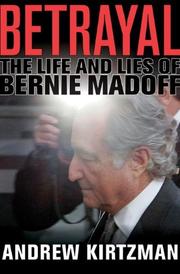
Andrew Kirtzman · 2009

Fast first draft, published months after the arrest.
Jerry Oppenheimer · 2009

A portrait of Bernie Madoff the man, and how he ran his fraud.
Harry Markopolos · 2010

A nine-year effort to convince the SEC that Bernard Madoff was a fraud.
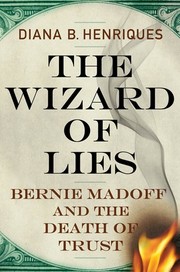
Diana B. Henriques · 2011

How Bernie Madoff's fraud began, how it ran for decades, and how it collapsed.
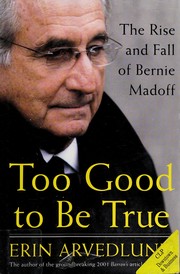
Erin Arvedlund · 2009

By the reporter who publicly questioned the returns in 2001.

Where it sits in the reference 4

Companies
Business themes
Biographies
Financial history

Topics

Biography and MemoirFinance and Markets