Updates

  1. Person pages list letters, writing, profiles and links as sortable tables with filters, and show each person's companies as links; Fund letters show each letter's description in its own column.
  2. Experts show a checked job title and a short description of each person; 30 more people have photographs.
  3. Every company, fund, university and publication the experts work for has a page listing the people there.
  4. Fund letters show each letter's thesis and filter by it; 225 person pages list the essays, columns and newsletter issues the person wrote.
  5. Person pages list every essay and newsletter issue a person wrote, and their own books as a table in List view.
  6. Recommends shows the five largest kinds of book and the rest under More; browse pictures load sooner.
  7. Podcasts and talks link the original episode, filter by Audio and video or Press, and list each publisher once.
  8. Pages are wider, Recommends has List and Grid, and a filter clicked again turns off.
  9. Book cards sit in a ruled grid with Open Library and Goodreads links and each book's one-line note.
  10. Funds is now Investors; each investor's styles are buttons that filter the table.
  11. Podcasts and talks on a person's page filter by year and publisher and show as a list or a grid of pictures.
  12. Quotes show only people's own words: 472 summaries written by list sites are gone.
  13. Country pages open from Browse again, and every link on the shelf lands on a page.
  14. Subject and person pages show their sections as tabs, and each book appears once on a person's page.
  15. Book cards show the quote, who said it and the source; grids show five cards to a row.
  16. On a phone, a menu holds the sections, search, Updates, Feedback and dark mode.
  17. Feedback takes a screenshot of the page with no browser prompt, opens a screenshot full size when you click it, and clears itself once sent.
  18. Book cards are centred, search names the topic each book sits in, and any text cut short shows whole on hover.
  19. Search groups its results by kind: people, companies, geographies, subjects, topics, books, funds, fund letters and papers.
  20. The Books table lists who recommended each book by name, and the browser tab names the section you are in.
  21. Feedback can take a screenshot of the page, or one you paste or choose, and opens in the corner beside Updates.
  22. Each rail button reopens its section where you left it, and Browse, Table and People show on every book and subject page.
  23. Filters grey out choices that hold nothing instead of hiding them, and Books › People filters by authors or recommenders.
  24. Feedback takes a subject line and up to three screenshots.
  25. Biographies are grouped by the person they are about: 41 new pages, from Abraham Lincoln to Lee Kuan Yew.
  26. Sport splits into 23 sports, and Religion into one topic per faith.
  27. Book lists show as cards: the cover, one recommendation quote and every recommender by name.
  28. Seventeen subjects that had two or three pages under different names now have one page each.
  29. Every page lists its Experts as authors and recommenders, with a link to them on the Experts tab.
  30. Economics, Financial history, Financial panics and Accounting are subjects of their own, with one page per financial crisis.
  31. Book, person and subject pages open inside the app, so the tabs stay in view.
  32. 996 more book covers, and photographs or logos for 227 more people and companies.
  33. Books › Browse shows every subject as cards, and the rail holds Fund letters, Papers, Experts, Books and Funds.
  34. Every topic over 150 books splits into narrower topics, each with a page of its own.

Send feedback

What is it?
Screenshots, up to 3 (optional)
or paste one with Ctrl+V

We use your email only to reply to you.

Too Good to Be True: The Rise and Fall of Be

Too Good to Be True: The Rise and Fall of Bernie Madoff

Erin Arvedlund
2009
T3 310 pages · about 5h 10m to read Open Librarygoodreads

By the reporter who publicly questioned the returns in 2001.

Summary

Arvedlund is the journalist who published the most specific public warning about Madoff before the collapse, a 2001 article in Barron's questioning how his reported returns were produced and noting that professionals could not replicate the stated strategy. She wrote this account after his arrest.

Her position gives the book its distinguishing content: she had asked the questions, received unsatisfactory answers, published them, and watched nothing happen. The account traces what she found at the time and why it was not acted on. Investors who read the article continued to invest. Regulators did not follow up. The feeder funds continued to raise money.

The substantive material covers Madoff's market-making business and its legitimacy, the advisory operation's implausibility, the split-strike conversion strategy and the fact that the options volumes required did not exist in the market, the absence of an independent custodian or a credible auditor, the feeder fund network and the fees it earned, and the social networks in Palm Beach, on Long Island and in Jewish philanthropic circles through which the money was raised.

The book was published in 2009, within months of the arrest, so it lacks the documentary record that later accounts had. Henriques's The Wizard of Lies, also in this reference, is more thorough. Arvedlund's contribution is the demonstration that the fraud was identifiable from public information by a journalist asking obvious questions, which reframes the failure as one of will rather than of detection capability.

Key takeaways 7

  1. The fraud was identifiable from public information, and a journalist published the central questions seven years before the collapse.
  2. Publishing specific doubts about the returns changed nothing, because no investor or regulator acted on them.
  3. The stated options strategy required volumes larger than the entire relevant market, which was checkable at the time.
  4. The advisory business had no independent custodian and used an auditor with no capacity to audit a firm of that size.
  5. Feeder funds earned fees for gathering assets and had no incentive to resolve the questions raised publicly.
  6. Reported returns were too smooth for any strategy operating in real markets, which is the simplest available red flag.
  7. Affinity networks in philanthropy and social clubs substituted for diligence among investors who could have afforded to do it properly.

Who should read it

Allocators and journalists who want the account from the person who published the warning, and the demonstration that detection was not the binding constraint.

Similar books 6

Chosen by shared topics, the entries that hold them, and the people who recommended both.
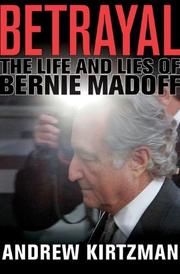
Andrew Kirtzman · 2009

Fast first draft, published months after the arrest.

Jerry Oppenheimer · 2009

A portrait of Bernie Madoff the man, and how he ran his fraud.

Harry Markopolos · 2010

A nine-year effort to convince the SEC that Bernard Madoff was a fraud.

Diana B. Henriques · 2011

How Bernie Madoff's fraud began, how it ran for decades, and how it collapsed.

Where it sits in the reference 4

Companies
Biographies
Business themes
Financial history

Topics

Biography and MemoirFinance and Markets