Updates

  1. Person pages list letters, writing, profiles and links as sortable tables with filters, and show each person's companies as links; Fund letters show each letter's description in its own column.
  2. Experts show a checked job title and a short description of each person; 30 more people have photographs.
  3. Every company, fund, university and publication the experts work for has a page listing the people there.
  4. Fund letters show each letter's thesis and filter by it; 225 person pages list the essays, columns and newsletter issues the person wrote.
  5. Person pages list every essay and newsletter issue a person wrote, and their own books as a table in List view.
  6. Recommends shows the five largest kinds of book and the rest under More; browse pictures load sooner.
  7. Podcasts and talks link the original episode, filter by Audio and video or Press, and list each publisher once.
  8. Pages are wider, Recommends has List and Grid, and a filter clicked again turns off.
  9. Book cards sit in a ruled grid with Open Library and Goodreads links and each book's one-line note.
  10. Funds is now Investors; each investor's styles are buttons that filter the table.
  11. Podcasts and talks on a person's page filter by year and publisher and show as a list or a grid of pictures.
  12. Quotes show only people's own words: 472 summaries written by list sites are gone.
  13. Country pages open from Browse again, and every link on the shelf lands on a page.
  14. Subject and person pages show their sections as tabs, and each book appears once on a person's page.
  15. Book cards show the quote, who said it and the source; grids show five cards to a row.
  16. On a phone, a menu holds the sections, search, Updates, Feedback and dark mode.
  17. Feedback takes a screenshot of the page with no browser prompt, opens a screenshot full size when you click it, and clears itself once sent.
  18. Book cards are centred, search names the topic each book sits in, and any text cut short shows whole on hover.
  19. Search groups its results by kind: people, companies, geographies, subjects, topics, books, funds, fund letters and papers.
  20. The Books table lists who recommended each book by name, and the browser tab names the section you are in.
  21. Feedback can take a screenshot of the page, or one you paste or choose, and opens in the corner beside Updates.
  22. Each rail button reopens its section where you left it, and Browse, Table and People show on every book and subject page.
  23. Filters grey out choices that hold nothing instead of hiding them, and Books › People filters by authors or recommenders.
  24. Feedback takes a subject line and up to three screenshots.
  25. Biographies are grouped by the person they are about: 41 new pages, from Abraham Lincoln to Lee Kuan Yew.
  26. Sport splits into 23 sports, and Religion into one topic per faith.
  27. Book lists show as cards: the cover, one recommendation quote and every recommender by name.
  28. Seventeen subjects that had two or three pages under different names now have one page each.
  29. Every page lists its Experts as authors and recommenders, with a link to them on the Experts tab.
  30. Economics, Financial history, Financial panics and Accounting are subjects of their own, with one page per financial crisis.
  31. Book, person and subject pages open inside the app, so the tabs stay in view.
  32. 996 more book covers, and photographs or logos for 227 more people and companies.
  33. Books › Browse shows every subject as cards, and the rail holds Fund letters, Papers, Experts, Books and Funds.
  34. Every topic over 150 books splits into narrower topics, each with a page of its own.

Send feedback

What is it?
Screenshots, up to 3 (optional)
or paste one with Ctrl+V

We use your email only to reply to you.

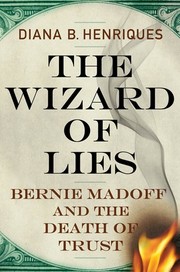
The Wizard of Lies: Bernie Madoff and the De

The Wizard of Lies: Bernie Madoff and the Death of Trust

Diana B. Henriques
2011
T1 448 pages · about 7h 28m to read Open Librarygoodreads

The standard account; the author interviewed Madoff in prison.

Summary

Henriques, a New York Times financial reporter, wrote the most thorough account of the Madoff fraud, working from court records, interviews with hundreds of people, and multiple prison interviews with Madoff himself.

The reconstruction addresses the questions the shorter accounts do not. Henriques traces the fraud's origins, arguing that it likely began in the early 1990s or earlier when Madoff covered losses rather than reporting them, and that it grew because he could not stop without revealing what had already happened. She establishes how the operation worked physically: a separate floor, a small staff producing fabricated trade confirmations and statements, historical price data used to construct plausible past trades, and no securities ever purchased.

The feeder fund analysis is the most consequential part for investors. Fairfield Greenwich, Access International, Tremont and others gathered billions and charged fees for doing so while performing diligence that would not have survived any serious examination. Henriques documents what they knew, what they chose not to ask, and how the fee structure removed any incentive to look.

She covers the regulatory failure in detail: the Securities and Exchange Commission examined Madoff repeatedly, received Harry Markopolos's submissions over years, and never took the single step of confirming with the Depository Trust Company whether the securities existed.

Her treatment of the family is careful, and she is unable to resolve the question of who else knew, which the legal process also did not fully settle. Some readers found her prison interviews gave Madoff a platform, and her characterisation of the family's knowledge has been disputed. The book remains the definitive account.

Key takeaways 7

  1. The fraud likely began by covering trading losses rather than as a deliberate scheme, and grew because stopping would have revealed the earlier losses.
  2. No securities were ever purchased, and statements were constructed after the fact from historical price data.
  3. Feeder funds charged fees for gathering assets while performing diligence that would not have survived examination.
  4. The fee structure at feeder funds removed any incentive to ask the questions that would have ended the arrangement.
  5. The Securities and Exchange Commission never confirmed with the central depository whether the claimed securities existed.
  6. Harry Markopolos supplied the regulator with a specific quantitative case repeatedly over years without result.
  7. The apparent returns were too smooth to be produced by any strategy in real markets, and this was visible in the reported numbers.

Who should read it

Allocators and anyone performing manager diligence who wants the definitive account of what was visible, who chose not to look, and why.

Similar books 6

Chosen by shared topics, the entries that hold them, and the people who recommended both.
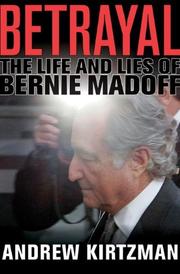
Andrew Kirtzman · 2009

Fast first draft, published months after the arrest.
Jerry Oppenheimer · 2009

A portrait of Bernie Madoff the man, and how he ran his fraud.
Harry Markopolos · 2010

A nine-year effort to convince the SEC that Bernard Madoff was a fraud.
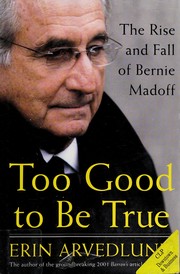
Erin Arvedlund · 2009

By the reporter who publicly questioned the returns in 2001.

Where it sits in the reference 4

Companies
Biographies
Business themes
Financial history

Topics

Biography and MemoirFinance and Markets