Updates

  1. Person pages list letters, writing, profiles and links as sortable tables with filters, and show each person's companies as links; Fund letters show each letter's description in its own column.
  2. Experts show a checked job title and a short description of each person; 30 more people have photographs.
  3. Every company, fund, university and publication the experts work for has a page listing the people there.
  4. Fund letters show each letter's thesis and filter by it; 225 person pages list the essays, columns and newsletter issues the person wrote.
  5. Person pages list every essay and newsletter issue a person wrote, and their own books as a table in List view.
  6. Recommends shows the five largest kinds of book and the rest under More; browse pictures load sooner.
  7. Podcasts and talks link the original episode, filter by Audio and video or Press, and list each publisher once.
  8. Pages are wider, Recommends has List and Grid, and a filter clicked again turns off.
  9. Book cards sit in a ruled grid with Open Library and Goodreads links and each book's one-line note.
  10. Funds is now Investors; each investor's styles are buttons that filter the table.
  11. Podcasts and talks on a person's page filter by year and publisher and show as a list or a grid of pictures.
  12. Quotes show only people's own words: 472 summaries written by list sites are gone.
  13. Country pages open from Browse again, and every link on the shelf lands on a page.
  14. Subject and person pages show their sections as tabs, and each book appears once on a person's page.
  15. Book cards show the quote, who said it and the source; grids show five cards to a row.
  16. On a phone, a menu holds the sections, search, Updates, Feedback and dark mode.
  17. Feedback takes a screenshot of the page with no browser prompt, opens a screenshot full size when you click it, and clears itself once sent.
  18. Book cards are centred, search names the topic each book sits in, and any text cut short shows whole on hover.
  19. Search groups its results by kind: people, companies, geographies, subjects, topics, books, funds, fund letters and papers.
  20. The Books table lists who recommended each book by name, and the browser tab names the section you are in.
  21. Feedback can take a screenshot of the page, or one you paste or choose, and opens in the corner beside Updates.
  22. Each rail button reopens its section where you left it, and Browse, Table and People show on every book and subject page.
  23. Filters grey out choices that hold nothing instead of hiding them, and Books › People filters by authors or recommenders.
  24. Feedback takes a subject line and up to three screenshots.
  25. Biographies are grouped by the person they are about: 41 new pages, from Abraham Lincoln to Lee Kuan Yew.
  26. Sport splits into 23 sports, and Religion into one topic per faith.
  27. Book lists show as cards: the cover, one recommendation quote and every recommender by name.
  28. Seventeen subjects that had two or three pages under different names now have one page each.
  29. Every page lists its Experts as authors and recommenders, with a link to them on the Experts tab.
  30. Economics, Financial history, Financial panics and Accounting are subjects of their own, with one page per financial crisis.
  31. Book, person and subject pages open inside the app, so the tabs stay in view.
  32. 996 more book covers, and photographs or logos for 227 more people and companies.
  33. Books › Browse shows every subject as cards, and the rail holds Fund letters, Papers, Experts, Books and Funds.
  34. Every topic over 150 books splits into narrower topics, each with a page of its own.

Send feedback

What is it?
Screenshots, up to 3 (optional)
or paste one with Ctrl+V

We use your email only to reply to you.

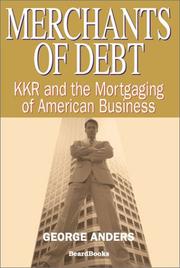
Merchants of Debt: KKR and the Mortgaging of

Merchants of Debt: KKR and the Mortgaging of American Business

George Anders
1992
T2 348 pages · about 5h 48m to read Open Librarygoodreads

The best firm-level account of the buyout method.

Summary

Anders, a Wall Street Journal reporter, wrote a critical history of Kohlberg Kravis Roberts from the 1976 founding through the aftermath of the RJR Nabisco buyout. He had substantial access to the firm and to the companies it owned.

The institutional material covers how the buyout worked in practice: the identification of companies with stable cash flow and undervalued assets, the assembly of debt financing first from banks and then from the high yield market, the equity contribution which was a small fraction of the purchase price, the fee structure through which KKR earned transaction fees, monitoring fees and carried interest, and the management incentive arrangements that made executives wealthy.

Anders' critical argument concerns where the value came from. He documents specific transactions where returns depended on interest deductibility, on asset sales, on cutting research and capital investment, and on wage and pension changes rather than on operating improvement, and he follows the consequences at companies including Safeway, where the reorganisation involved substantial job losses that he reports in detail.

He also covers the fee economics closely, showing that KKR's partners earned enormous sums from transaction and monitoring fees regardless of investment outcomes, which is a structural point that applies to the industry generally.

The book is adversarial where Baker and Smith's academic treatment is sympathetic, and reading both gives a fuller picture. Anders is a careful reporter and the transaction detail is accurate. It ends in 1992 and predates the industry's later development entirely.

Key takeaways 7

  1. KKR's partners earned very large sums from transaction and monitoring fees regardless of whether the underlying investments succeeded.
  2. A substantial share of buyout returns came from interest deductibility, asset sales and reduced investment rather than from operating improvement.
  3. The equity contribution in early leveraged buyouts was a small fraction of the purchase price, which magnified returns and transferred risk to lenders.
  4. Management incentive arrangements made executives wealthy from transactions that imposed costs on employees and on the business's long-horizon capacity.
  5. Cutting research and capital investment raises near-term cash flow and is invisible in the financial statements until years later.
  6. The buyout firm's economics reward doing deals rather than doing good deals, which is a structural feature of the fee arrangement.
  7. Debt service obligations forced asset sales and cost reductions on schedules determined by the financing rather than by the business.

Who should read it

Investors and operators who want the critical account of leveraged buyout economics and fee structures, read alongside the academic defence.

Similar books 6

Chosen by shared topics, the entries that hold them, and the people who recommended both.
Bryan Burrough, John Helyar · 1989

The 1988 bidding war for RJR Nabisco, the largest leveraged buyout to that date.

Brendan Ballou · 2023

The prosecutorial case against the industry KKR created; read as counterweight.
Eileen Appelbaum, Rosemary Batt · 2014

What private equity does to companies, workers and investor returns, critically.
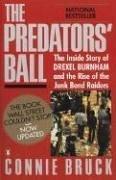
Connie Bruck · 1988

How Milken's Drexel junk-bond desk financed the 1980s buyouts and hostile takeovers.

Recommended by: Mohnish Pabrai
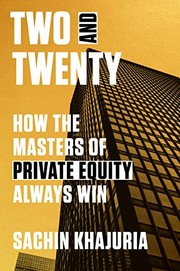
Sachin Khajuria · 2022

Practitioner insider on how a modern buyout firm actually earns.

Where it sits in the reference 4

Companies
Companies
Biographies
Business models

Topics

Company HistoriesFinance and Markets