Updates

  1. Person pages list letters, writing, profiles and links as sortable tables with filters, and show each person's companies as links; Fund letters show each letter's description in its own column.
  2. Experts show a checked job title and a short description of each person; 30 more people have photographs.
  3. Every company, fund, university and publication the experts work for has a page listing the people there.
  4. Fund letters show each letter's thesis and filter by it; 225 person pages list the essays, columns and newsletter issues the person wrote.
  5. Person pages list every essay and newsletter issue a person wrote, and their own books as a table in List view.
  6. Recommends shows the five largest kinds of book and the rest under More; browse pictures load sooner.
  7. Podcasts and talks link the original episode, filter by Audio and video or Press, and list each publisher once.
  8. Pages are wider, Recommends has List and Grid, and a filter clicked again turns off.
  9. Book cards sit in a ruled grid with Open Library and Goodreads links and each book's one-line note.
  10. Funds is now Investors; each investor's styles are buttons that filter the table.
  11. Podcasts and talks on a person's page filter by year and publisher and show as a list or a grid of pictures.
  12. Quotes show only people's own words: 472 summaries written by list sites are gone.
  13. Country pages open from Browse again, and every link on the shelf lands on a page.
  14. Subject and person pages show their sections as tabs, and each book appears once on a person's page.
  15. Book cards show the quote, who said it and the source; grids show five cards to a row.
  16. On a phone, a menu holds the sections, search, Updates, Feedback and dark mode.
  17. Feedback takes a screenshot of the page with no browser prompt, opens a screenshot full size when you click it, and clears itself once sent.
  18. Book cards are centred, search names the topic each book sits in, and any text cut short shows whole on hover.
  19. Search groups its results by kind: people, companies, geographies, subjects, topics, books, funds, fund letters and papers.
  20. The Books table lists who recommended each book by name, and the browser tab names the section you are in.
  21. Feedback can take a screenshot of the page, or one you paste or choose, and opens in the corner beside Updates.
  22. Each rail button reopens its section where you left it, and Browse, Table and People show on every book and subject page.
  23. Filters grey out choices that hold nothing instead of hiding them, and Books › People filters by authors or recommenders.
  24. Feedback takes a subject line and up to three screenshots.
  25. Biographies are grouped by the person they are about: 41 new pages, from Abraham Lincoln to Lee Kuan Yew.
  26. Sport splits into 23 sports, and Religion into one topic per faith.
  27. Book lists show as cards: the cover, one recommendation quote and every recommender by name.
  28. Seventeen subjects that had two or three pages under different names now have one page each.
  29. Every page lists its Experts as authors and recommenders, with a link to them on the Experts tab.
  30. Economics, Financial history, Financial panics and Accounting are subjects of their own, with one page per financial crisis.
  31. Book, person and subject pages open inside the app, so the tabs stay in view.
  32. 996 more book covers, and photographs or logos for 227 more people and companies.
  33. Books › Browse shows every subject as cards, and the rail holds Fund letters, Papers, Experts, Books and Funds.
  34. Every topic over 150 books splits into narrower topics, each with a page of its own.

Send feedback

What is it?
Screenshots, up to 3 (optional)
or paste one with Ctrl+V

We use your email only to reply to you.

Minding Mr. Market: Ten Years on Wall Street

Minding Mr. Market: Ten Years on Wall Street with Grant's Interest Rate Observer

James Grant
1993
T4 424 pages · about 7h 4m to read Open Librarygoodreads

title listed on grantspub.com books page

Summary

Grant collected pieces from the first decade of Grant's Interest Rate Observer, the newsletter he founded in 1983 after leaving Barron's, covering the period from the start of the great bond bull market through the early 1990s.

The recurring analytical positions are the value of the collection. Grant writes from a credit perspective, arguing that the price of money determines everything else and that the market's willingness to lend is a better indicator of where a cycle stands than any measure of enthusiasm for equities. He is consistently sceptical of leverage, of financial innovation that claims to reduce risk, and of the assumption that a lender's models describe the borrower's actual condition. He covers the savings and loan crisis, the leveraged buyout boom and its collapse, the commercial real estate cycle, the junk bond market's rise and failure, and the Japanese asset bubble.

The format lets a reader see positions taken in real time with the outcome known, which is the main use. Grant was early on several correct calls and wrong on others, particularly on inflation and on the duration of the bond bull market, and the collection includes both.

Grant's prose style is distinctive, dense with irony and historical allusion, and readers either enjoy it or do not. The specific market situations are thirty years old. What transfers is the credit-first analytical posture and the demonstration that being correct about a cycle's excesses does not tell you when it ends.

Key takeaways 7

  1. The price and availability of credit determines asset prices, so the lending market indicates where a cycle stands better than equity market sentiment does.
  2. A lender's risk models describe the lender's assumptions rather than the borrower's condition, and the two diverge most at cycle peaks.
  3. Financial innovations that claim to reduce risk generally relocate it to a place where it is not being measured.
  4. Being correct about a cycle's excesses tells you nothing about when it will end, and the holding cost of being early can exceed the eventual gain.
  5. Credit standards deteriorate gradually and invisibly during an expansion because each individual relaxation is defensible on its own.
  6. Interest rates are the price of time and their level shapes every other valuation, which makes rate analysis prior to security analysis.
  7. Reading contemporaneous commentary with the outcome known is the best available calibration on one's own real-time judgement.

Who should read it

Investors who want a credit-first analytical posture demonstrated across a decade of real-time positions with the outcomes known.

About James Grant

Founder and editor, Grant's Interest Rate Observer (since 1983); financial historian and biographer

Grant's Interest Rate Observer is a primary source other investors read and quote, and Money of the Mind is a standard credit history.

Grant's Interest Rate Observer

Who recommended it 1 · 1 direct

Similar books 6

Chosen by shared topics, the entries that hold them, and the people who recommended both.

James Grant · 2008

Collected Grant's essays; title listed on grantspub.com books page

Recommended by: Mohnish Pabrai

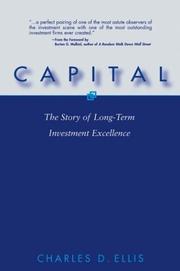
Charles D. Ellis · 2004

How Capital Group built its long-term investing culture.

Recommended by: Mohnish Pabrai

Where it sits in the reference 2

Investors
Financial history

Topics

InvestingFinancial History