Modern Security Analysis
Subtitled Understanding Wall Street Fundamentals.
Summary
Whitman and Diz present an alternative to the standard Graham and Dodd framework, arguing that conventional security analysis overweights earnings and the income statement and underweights the balance sheet and what Whitman calls resource conversion.
Their central claim is that a company should be analysed as a collection of assets and liabilities capable of being redeployed, sold, refinanced or reorganised, rather than as a stream of earnings. Whitman argues that most value creation in his experience came from resource conversion events, meaning mergers, spin-offs, refinancings, liquidations and changes of control, rather than from operating earnings growth, and that an analyst who values a company only on earnings power will systematically misprice companies with valuable assets and poor current results.
The technical material covers reading financial statements for what they disclose about asset values, understanding the difference between accounting conventions designed for creditors and those designed for equity holders, the tax consequences that determine which conversion transactions are feasible, and the legal framework of control, fiduciary duty and creditor rights that governs what management can actually do.
Whitman is combative about academic finance and about the efficient market framework, and the book restates positions from his earlier work. It is written for serious analysts and is dense with accounting and legal detail. Its weakness is that the resource conversion approach depends on transactions occurring, which the analyst does not control, and the book gives less guidance on timing and on the holding cost of being early than the approach requires.
Key takeaways 7
- A company should be analysed as a collection of assets and liabilities capable of redeployment rather than as a stream of earnings.
- Most value creation for outside investors comes from resource conversion events including mergers, spin-offs, refinancings and changes of control rather than from operating growth.
- Financial statements should be read as objective benchmarks to be adjusted rather than as statements of truth, because accounting conventions serve creditors and regulators rather than equity analysts.
- Balance sheet strength is the primary determinant of a company's ability to survive conditions it did not forecast and to act when opportunities appear.
- Tax consequences determine which restructuring transactions are feasible, so an analyst who ignores tax will misjudge what management can do.
- Legal rights attaching to a security, including control provisions and creditor protections, are part of its value and are ignored by earnings-based analysis.
- Standard academic finance provides no useful framework for analysing companies whose value lies in assets rather than in current earnings.
Who should read it
Serious analysts and value investors who want the asset-based and resource-conversion alternative to earnings-focused security analysis.
About Martin J. Whitman
Founder and Chairman, Third Avenue Management; portfolio manager, Third Avenue Value Fund 1990-2012
Four books plus three decades of unusually didactic shareholder letters built out safe-and-cheap and distress investing as a distinct branch of the value tradition.
Who recommended it 1 · 1 direct
Similar books 6
Chosen by shared topics, the entries that hold them, and the people who recommended both.
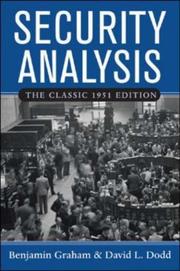
How to read financial statements sceptically and value bonds and stocks.
“I've spent more time with all of the editions of Benjamin Graham and David Dodd's Security Analysis than with any other book” — Christopher Bloomstran
Source: Semper Augustus 2024 Letter to Clients, 'Books and Tunes for Walking', p. 95
Recommended by: Christopher Bloomstran, Howard Marks and 11 others
Safe and cheap investing: a security can be both lower-risk and higher-return.
Recommended by: Guy Spier, Mohnish Pabrai, Seth Klarman
Net asset value and resource conversion as the real drivers of return.
Recommended by: Mohnish Pabrai

Recommended by: Mohnish Pabrai
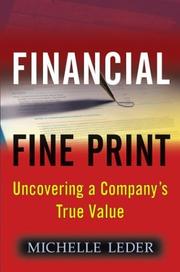
Recommended by: Mohnish Pabrai

A short line-by-line primer on the balance sheet, income account and key ratios.
Recommended by: Mohnish Pabrai
Where it sits in the reference 3
Topics