Updates

  1. Person pages list letters, writing, profiles and links as sortable tables with filters, and show each person's companies as links; Fund letters show each letter's description in its own column.
  2. Experts show a checked job title and a short description of each person; 30 more people have photographs.
  3. Every company, fund, university and publication the experts work for has a page listing the people there.
  4. Fund letters show each letter's thesis and filter by it; 225 person pages list the essays, columns and newsletter issues the person wrote.
  5. Person pages list every essay and newsletter issue a person wrote, and their own books as a table in List view.
  6. Recommends shows the five largest kinds of book and the rest under More; browse pictures load sooner.
  7. Podcasts and talks link the original episode, filter by Audio and video or Press, and list each publisher once.
  8. Pages are wider, Recommends has List and Grid, and a filter clicked again turns off.
  9. Book cards sit in a ruled grid with Open Library and Goodreads links and each book's one-line note.
  10. Funds is now Investors; each investor's styles are buttons that filter the table.
  11. Podcasts and talks on a person's page filter by year and publisher and show as a list or a grid of pictures.
  12. Quotes show only people's own words: 472 summaries written by list sites are gone.
  13. Country pages open from Browse again, and every link on the shelf lands on a page.
  14. Subject and person pages show their sections as tabs, and each book appears once on a person's page.
  15. Book cards show the quote, who said it and the source; grids show five cards to a row.
  16. On a phone, a menu holds the sections, search, Updates, Feedback and dark mode.
  17. Feedback takes a screenshot of the page with no browser prompt, opens a screenshot full size when you click it, and clears itself once sent.
  18. Book cards are centred, search names the topic each book sits in, and any text cut short shows whole on hover.
  19. Search groups its results by kind: people, companies, geographies, subjects, topics, books, funds, fund letters and papers.
  20. The Books table lists who recommended each book by name, and the browser tab names the section you are in.
  21. Feedback can take a screenshot of the page, or one you paste or choose, and opens in the corner beside Updates.
  22. Each rail button reopens its section where you left it, and Browse, Table and People show on every book and subject page.
  23. Filters grey out choices that hold nothing instead of hiding them, and Books › People filters by authors or recommenders.
  24. Feedback takes a subject line and up to three screenshots.
  25. Biographies are grouped by the person they are about: 41 new pages, from Abraham Lincoln to Lee Kuan Yew.
  26. Sport splits into 23 sports, and Religion into one topic per faith.
  27. Book lists show as cards: the cover, one recommendation quote and every recommender by name.
  28. Seventeen subjects that had two or three pages under different names now have one page each.
  29. Every page lists its Experts as authors and recommenders, with a link to them on the Experts tab.
  30. Economics, Financial history, Financial panics and Accounting are subjects of their own, with one page per financial crisis.
  31. Book, person and subject pages open inside the app, so the tabs stay in view.
  32. 996 more book covers, and photographs or logos for 227 more people and companies.
  33. Books › Browse shows every subject as cards, and the rail holds Fund letters, Papers, Experts, Books and Funds.
  34. Every topic over 150 books splits into narrower topics, each with a page of its own.

Send feedback

What is it?
Screenshots, up to 3 (optional)
or paste one with Ctrl+V

We use your email only to reply to you.

The Interpretation of Financial Statements

The Interpretation of Financial Statements

Benjamin Graham, Spencer B. Meredith
1937
T1 120 pages · about 2h to read Open Librarygoodreads

Later editions revised with Charles McGolrick.

Summary

Graham and Meredith produced a short primer that walks line by line through the balance sheet and income account of an industrial company, defining each item in plain language before turning to ratios. It runs well under a hundred pages of text plus a glossary, and it was written for investors with no accounting training.

The method is definitional rather than analytical. The authors explain what cash, receivables, inventory, plant, goodwill, current liabilities, funded debt and surplus mean, then show how to compute current ratio, working capital, book value per share, margins, interest coverage and earnings per share. They repeatedly warn that stated asset values are historical costs rather than market values, that goodwill and intangibles deserve suspicion, and that a single year's earnings tells an investor little.

Its value today is as the shortest possible introduction to reading a company's accounts, and as a record of what Graham thought a non-professional needed to know. Buffett has recommended it for exactly that reason.

It is badly dated as a technical guide. It predates the statement of cash flows, modern lease accounting, deferred taxes as now presented, segment reporting, stock compensation and every rule an analyst now spends time on. Anyone using it should treat it as a conceptual starting point and read a current accounting text alongside it.

Key takeaways 7

  1. An investor can read a company's accounts usefully without formal accounting training.
  2. Balance sheet asset figures record historical cost and say nothing about what the assets would fetch.
  3. Goodwill and other intangible items on the balance sheet deserve to be treated as worth nothing until proven otherwise.
  4. Ratios matter only in comparison, either against the same company's past or against competitors.
  5. A single year's reported earnings is an unreliable guide to earning power, so average across several years.
  6. Current assets less current liabilities is the first measure of whether a business can survive a bad year.
  7. Fixed charges coverage matters more than reported profit for judging the safety of a bond or preferred issue.

Who should read it

Investors and operators who have never formally studied accounting and want the concepts in one short sitting before moving to a current textbook.

About Benjamin Graham

Co-founder, Graham-Newman Corporation; lecturer in finance, Columbia Business School 1928-1956

Security Analysis and The Intelligent Investor are the founding texts of value investing and remain the primary source every later value investor argues from.

Graham-Newman Corporation, Columbia Business School

Who recommended it 1 · 1 direct

Similar books 6

Chosen by shared topics, the entries that hold them, and the people who recommended both.
Benjamin Graham · 1996

Published posthumously; edited by Seymour Chatman.

Recommended by: Mohnish Pabrai
Benjamin Graham, David L. Dodd · 1934

How to read financial statements sceptically and value bonds and stocks.

“I've spent more time with all of the editions of Benjamin Graham and David Dodd's Security Analysis than with any other book” — Christopher Bloomstran

Source: Semper Augustus 2024 Letter to Clients, 'Books and Tunes for Walking', p. 95

Recommended by: Christopher Bloomstran, Howard Marks and 11 others
Martin J. Whitman, Fernando Diz · 2013

Security analysis that weighs the balance sheet over reported earnings.

Recommended by: Mohnish Pabrai
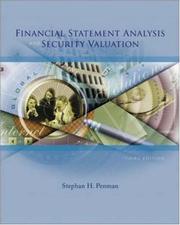
Stephen H. Penman · 2001

How to use financial statements to value a business, from concept to practice.

Where it sits in the reference 2

Investors
Accounting

Topics

AccountingInvesting