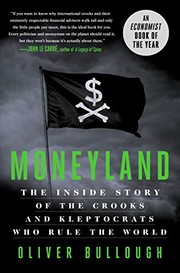
Moneyland
How the offshore world lets officials who steal money hide it and spend it abroad.
How the pieces assemble: Nevis trusts, BVI companies, London property, Caribbean passports.
Summary
Bullough, an investigative journalist, takes readers into what he calls Moneyland, the secret country of the lawless, stateless super-rich. Once, an official who stole money could do little with it: buy a car, build a house, give it to family, and then watch it pile up. Then, in 1962, some bankers in London had an idea called offshore, and for the first time thieves could take everything.
Bullough travels from ruined towns on the edge of Siberia to luxury homes in Knightsbridge and Manhattan. He shows the poor countries where public money is stolen and the rich ones where it is laundered and invested, and the respectable white-collar professionals who enable it. He argues that the institutions of Europe and the United States have become money-laundering operations that undermine Western stability, and he counts the cost of being open for business to any customer however corrupt. He introduces the kleptocrats and their children, explains how the system works, and describes the activists fighting back.
Key takeaways 4
- The offshore system, born in London in 1962, let thieves hide and spend stolen money at scale.
- Money stolen in poor countries is laundered and invested in rich ones.
- Respectable lawyers, bankers and other professionals make the system work.
- Western institutions that serve kleptocrats weaken Western stability.
Who should read it
Investors and compliance professionals who want to understand how offshore structures and property markets launder stolen wealth.
Similar books 6
Chosen by shared topics, the entries that hold them, and the people who recommended both.
A sociologist trains as a wealth manager to show how fortunes are shielded offshore.

How Britain built its overseas territories into a deliberate service industry.
How small tax havens defeated the OECD's campaign against harmful tax competition.
What the Panama Papers showed about how offshore shell companies are built and sold.
How tax havens work as part of the world economy, not as rogue states.
How much wealth is hidden in tax havens, and how to tax it.