Updates

  1. Person pages list letters, writing, profiles and links as sortable tables with filters, and show each person's companies as links; Fund letters show each letter's description in its own column.
  2. Experts show a checked job title and a short description of each person; 30 more people have photographs.
  3. Every company, fund, university and publication the experts work for has a page listing the people there.
  4. Fund letters show each letter's thesis and filter by it; 225 person pages list the essays, columns and newsletter issues the person wrote.
  5. Person pages list every essay and newsletter issue a person wrote, and their own books as a table in List view.
  6. Recommends shows the five largest kinds of book and the rest under More; browse pictures load sooner.
  7. Podcasts and talks link the original episode, filter by Audio and video or Press, and list each publisher once.
  8. Pages are wider, Recommends has List and Grid, and a filter clicked again turns off.
  9. Book cards sit in a ruled grid with Open Library and Goodreads links and each book's one-line note.
  10. Funds is now Investors; each investor's styles are buttons that filter the table.
  11. Podcasts and talks on a person's page filter by year and publisher and show as a list or a grid of pictures.
  12. Quotes show only people's own words: 472 summaries written by list sites are gone.
  13. Country pages open from Browse again, and every link on the shelf lands on a page.
  14. Subject and person pages show their sections as tabs, and each book appears once on a person's page.
  15. Book cards show the quote, who said it and the source; grids show five cards to a row.
  16. On a phone, a menu holds the sections, search, Updates, Feedback and dark mode.
  17. Feedback takes a screenshot of the page with no browser prompt, opens a screenshot full size when you click it, and clears itself once sent.
  18. Book cards are centred, search names the topic each book sits in, and any text cut short shows whole on hover.
  19. Search groups its results by kind: people, companies, geographies, subjects, topics, books, funds, fund letters and papers.
  20. The Books table lists who recommended each book by name, and the browser tab names the section you are in.
  21. Feedback can take a screenshot of the page, or one you paste or choose, and opens in the corner beside Updates.
  22. Each rail button reopens its section where you left it, and Browse, Table and People show on every book and subject page.
  23. Filters grey out choices that hold nothing instead of hiding them, and Books › People filters by authors or recommenders.
  24. Feedback takes a subject line and up to three screenshots.
  25. Biographies are grouped by the person they are about: 41 new pages, from Abraham Lincoln to Lee Kuan Yew.
  26. Sport splits into 23 sports, and Religion into one topic per faith.
  27. Book lists show as cards: the cover, one recommendation quote and every recommender by name.
  28. Seventeen subjects that had two or three pages under different names now have one page each.
  29. Every page lists its Experts as authors and recommenders, with a link to them on the Experts tab.
  30. Economics, Financial history, Financial panics and Accounting are subjects of their own, with one page per financial crisis.
  31. Book, person and subject pages open inside the app, so the tabs stay in view.
  32. 996 more book covers, and photographs or logos for 227 more people and companies.
  33. Books › Browse shows every subject as cards, and the rail holds Fund letters, Papers, Experts, Books and Funds.
  34. Every topic over 150 books splits into narrower topics, each with a page of its own.

Send feedback

What is it?
Screenshots, up to 3 (optional)
or paste one with Ctrl+V

We use your email only to reply to you.

Option Volatility and Pricing

Option Volatility and Pricing

Sheldon Natenberg
1988
T1 392 pages · about 6h 32m to read Open Librarygoodreads

The trader's book on volatility and position greeks.

Summary

Sheldon Natenberg traded on the Chicago exchanges and wrote the book that options traders are still handed on their first day. Its subject is not option pricing theory as such but how to think about volatility as the tradeable quantity.

The central reorientation is that an option's price is a statement about expected future volatility, and that a trader's view should be expressed as a view on volatility rather than on direction. Natenberg builds the apparatus for this: the pricing model as a tool for converting price to implied volatility and back, the Greeks as the sensitivities that must be managed, delta hedging as the mechanism that isolates the volatility exposure, and the practical difference between realised and implied volatility as the source of profit and loss in a hedged position.

The second half covers the structures traders use, including vertical spreads, straddles, butterflies, calendar spreads and ratio positions, and explains what each is a bet on. He covers volatility skew and the term structure of implied volatility, and treats them as market phenomena to be traded rather than as model errors. Later chapters address risk management, position limits and the ways option positions fail. The book assumes no advanced mathematics and is written for practitioners; readers wanting derivations should go to Hull. It has been updated across editions and the third edition covers volatility products and electronic markets.

Key takeaways 7

  1. An option's price is a statement about expected future volatility, and that is what the trader is buying or selling.
  2. Delta hedging removes directional exposure and leaves a position whose profit depends on realised volatility exceeding or falling short of implied.
  3. The profit from a hedged long option position comes from rehedging as the underlying moves, so gamma converts movement into money.
  4. Implied volatility varies systematically by strike and by expiry, and the resulting surface is a market fact rather than a model failure.
  5. Every spread structure is a specific bet on volatility level, on volatility change, or on the distribution's shape.
  6. Option positions fail through gap moves and through volatility changes rather than through the gradual movements the models assume.
  7. Natenberg argues that traders should think in terms of theoretical edge per contract and manage position size against it.

Who should read it

Anyone trading or risk-managing options who needs the practitioner's framework for treating volatility as the traded quantity.

Similar books 6

Chosen by shared topics, the entries that hold them, and the people who recommended both.

Richard M. Bookstaber · 2007

How financial innovation made markets more crisis-prone, from a risk manager.
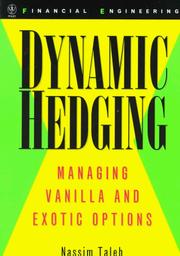
Nassim Nicholas Taleb · 1997

Technical manual on managing vanilla and exotic options
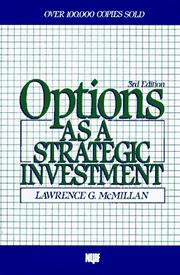
Lawrence G. McMillan · 1980

A comprehensive reference on option strategies, organised strategy by strategy.
Where it sits in the reference 1

Assets

Topics

Finance and MarketsInvesting