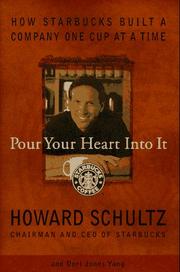
Pour Your Heart Into It
How a Seattle coffee bean seller became Starbucks, from the founder's side.
Insider account: Schultz on building the company to 1997.
Summary
Schultz tells Starbucks' story from the Seattle coffee bean retailer he joined in 1982 through his trip to Milan that produced the espresso bar idea, his departure to found Il Giornale, his purchase of Starbucks in 1987, and the expansion through the 1990s to about 1,300 stores.
The operating decisions he defends are the interesting content. He extended health insurance to part-time employees working twenty hours a week, which was unusual and expensive, on the argument that it reduced turnover enough to pay for itself in training costs and store consistency. He created Bean Stock, giving equity to all employees including part-time baristas, before the company was public. He insisted on company-owned stores rather than franchising in order to control the experience, which slowed expansion and required far more capital. He refused to use artificial flavourings in the coffee for years, and he resisted product extensions he thought would damage the brand.
The framing throughout is that these were commercial decisions rather than benevolence, and Schultz argues that the employee experience directly determines the customer experience in a service business where the transaction lasts three minutes.
The book is a founder's account written at a high point and is promotional in tone. It predates the over-expansion of the 2000s, Schultz's return in 2008 and the closure of hundreds of stores, and the subsequent unionisation campaigns which complicate the labour narrative substantially. The early operating decisions and their reasoning remain the useful part.
Key takeaways 7
- Extending health insurance to part-time employees reduced turnover enough to pay for itself in avoided training and improved store consistency.
- Giving equity to all employees before the company was public was intended to convert hourly staff into people who behaved as owners.
- Company-owned stores rather than franchises were necessary to control the customer experience, and the decision required far more capital and slowed growth.
- In a service business where the transaction lasts three minutes, the employee's state determines the customer's experience entirely.
- Starbucks sold a place to be rather than coffee, and store design, seating and atmosphere were the product.
- Refusing profitable product extensions that would damage the brand is a decision that must be made repeatedly and gets harder as the company grows.
- Building an aspirational brand in a commodity category required creating a vocabulary and a ritual that customers would adopt as their own.
Who should read it
Founders in retail and service businesses who want the reasoning behind labour, ownership and experience decisions from the operator who made them.
About Howard Schultz
Former chief executive and chairman of Starbucks, which he grew from a small Seattle retailer into a global chain.
Pour Your Heart Into It and From the Ground Up describe how a service format was standardised across thousands of locations while the company paid for health coverage and equity for hourly staff, and what that cost. Onward records the 2008 turnaround - closing stores, retraining baristas, cutting a growth plan the founder had approved - and is the more useful account for anyone operating under pressure.
Who recommended it 1 · 1 direct
Similar books 6
Chosen by shared topics, the entries that hold them, and the people who recommended both.
How Starbucks's founder returned as chief executive and turned the company around.
Recommended by: Tom Bilyeu, Ron Conway
Starbucks's turnaround, and the responsibilities its chief saw for business.
Recommended by: Bill Gates
A milkshake-machine salesman finds the McDonald brothers and builds the franchise.
Recommended by: Mohnish Pabrai
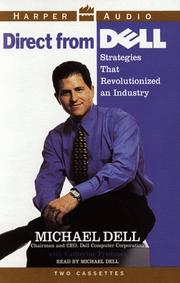
How build-to-order, direct sales and negative working capital built a PC giant.
Recommended by: Mohnish Pabrai, Andrew Grove
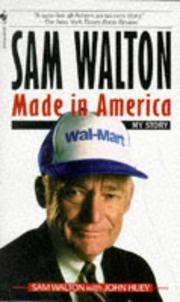
How Walmart grew from one Arkansas store by cutting costs and prices.
Recommended by: David Cancel, David Perell, Mohnish Pabrai and 4 others
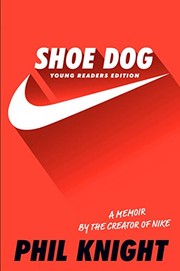
How a running-shoe importer became Nike, surviving one cash crisis after another.
“…books I've recommended, highlighted to death, or forced on friends.” — Andrew Wilkinson
Source: Andrew Wilkinson's Bookshelf, neverenough.com
Recommended by: Andrew Wilkinson, Bill Gates, Bill Gurley and 27 others
Where it sits in the reference 4
Topics 5
As an Amazon Associate I earn from qualifying purchases.