Updates

  1. Every US-listed company has a page with its SEC filings. Company pages list their experts and their management, past and present. Fund managers sit under Investors. Each show has a page of its episodes, and an episode page names its guests and hosts. Biographies lists groups, then people. Breadcrumbs show where a page sits.
  2. Media lists every podcast episode, video, interview and talk, over 10,000, by person, company, publisher and event; each filter searches its own choices. Books opens on its table, then Browse, then Authors and Recommenders. A filter's count no longer covers its arrow.
  3. A book that no company, country or subject page lists shows its topics under Where it sits in the reference. On a phone, a page's tabs scroll sideways only. Descriptions read the same on every page. See them in the Experts tab lists every expert the page names.
  4. Every podcast episode, video and interview has its own page with a video or audio player and a link to the source. Investor pages show each company's sector and market cap; firms such as Berkshire Hathaway have one page that holds their letters and their company tabs. Letters tabs filter by company and search the theses. Companies filter by Public, Private and Defunct and link each company's website.
  5. Every tab, view and search has its own address, such as /books/table/asset or /letters/companies, so Back works and a link opens the same place. Page addresses no longer end in .html. Fund letters, Investors, Companies and Papers load about a fifth of the data they did.
  6. Fund letters has a Companies tab: every company the letters name, with its market cap, sector, country, and how many letters and investors name it. Investor pages link each investor's website. Lists in table cells end with “… and N more” at every width.
  7. 1,120 more book summaries; descriptions for 373 papers; pages for 137 more companies, each with the fund letters that discuss it; 215 official photographs; search has its own page.
  8. 411 more books have a summary; person pages list 930 more of the books they wrote; 147 people show their official photograph.
  9. Every investor has a page with its letters and the companies they discuss; company pages list the investors whose letters name them.
  10. A Companies section at the top of the rail lists every company the books, experts and fund letters name.
  11. Person pages list letters, writing, profiles and links as sortable tables with filters, and show each person's companies as links; Fund letters show each letter's description in its own column.
  12. Experts show a checked job title and a short description of each person; 30 more people have photographs.
  13. Every company, fund, university and publication the experts work for has a page listing the people there.
  14. Fund letters show each letter's thesis and filter by it; 225 person pages list the essays, columns and newsletter issues the person wrote.
  15. Person pages list every essay and newsletter issue a person wrote, and their own books as a table in List view.
  16. Recommends shows the five largest kinds of book and the rest under More; browse pictures load sooner.
  17. Podcasts and talks link the original episode, filter by Audio and video or Press, and list each publisher once.
  18. Pages are wider, Recommends has List and Grid, and a filter clicked again turns off.
  19. Book cards sit in a ruled grid with Open Library and Goodreads links and each book's one-line note.
  20. Funds is now Investors; each investor's styles are buttons that filter the table.
  21. Podcasts and talks on a person's page filter by year and publisher and show as a list or a grid of pictures.
  22. Quotes show only people's own words: 472 summaries written by list sites are gone.
  23. Country pages open from Browse again, and every link on the shelf lands on a page.
  24. Subject and person pages show their sections as tabs, and each book appears once on a person's page.
  25. Book cards show the quote, who said it and the source; grids show five cards to a row.
  26. On a phone, a menu holds the sections, search, Updates, Feedback and dark mode.
  27. Feedback takes a screenshot of the page with no browser prompt, opens a screenshot full size when you click it, and clears itself once sent.
  28. Book cards are centred, search names the topic each book sits in, and any text cut short shows whole on hover.
  29. Search groups its results by kind: people, companies, geographies, subjects, topics, books, funds, fund letters and papers.
  30. The Books table lists who recommended each book by name, and the browser tab names the section you are in.
  31. Feedback can take a screenshot of the page, or one you paste or choose, and opens in the corner beside Updates.
  32. Each rail button reopens its section where you left it, and Browse, Table and People show on every book and subject page.
  33. Filters grey out choices that hold nothing instead of hiding them, and Books › People filters by authors or recommenders.
  34. Feedback takes a subject line and up to three screenshots.
  35. Biographies are grouped by the person they are about: 41 new pages, from Abraham Lincoln to Lee Kuan Yew.
  36. Sport splits into 23 sports, and Religion into one topic per faith.
  37. Book lists show as cards: the cover, one recommendation quote and every recommender by name.
  38. Seventeen subjects that had two or three pages under different names now have one page each.
  39. Every page lists its Experts as authors and recommenders, with a link to them on the Experts tab.
  40. Economics, Financial history, Financial panics and Accounting are subjects of their own, with one page per financial crisis.
  41. Book, person and subject pages open inside the app, so the tabs stay in view.
  42. 996 more book covers, and photographs or logos for 227 more people and companies.
  43. Books › Browse shows every subject as cards, and the rail holds Fund letters, Papers, Experts, Books and Funds.
  44. Every topic over 150 books splits into narrower topics, each with a page of its own.

Send feedback

What is it?
Screenshots, up to 3 (optional)
or paste one with Ctrl+V

We use your email only to reply to you.

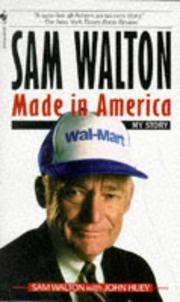
Sam Walton: Made in America

Sam Walton: Made in America

How Walmart grew from one Arkansas store by cutting costs and prices.

Sam Walton, John Huey
1992
T1 271 pages · about 4h 31m to read Open Librarygoodreads

Insider account: the founder's memoir, dictated as he was dying.

Summary

Walton wrote this with John Huey while dying of cancer, and it is the primary source on how Walmart was built. It covers the Ben Franklin franchise in Newport, the loss of that lease which forced him to start again in Bentonville, the opening of the first Walmart in 1962, and the expansion to over one thousand seven hundred stores.

The operational logic is stated plainly. Walton put discount stores in small towns that competitors considered too small to support them, which gave him local monopolies before anyone contested them. He built distribution centres first and then filled in stores within a day's drive, which inverted the usual sequence and produced a cost advantage in logistics that competitors could not match without rebuilding their networks. He invested very early in computerised inventory systems and satellite communications, spending amounts that appeared excessive at the time.

Walton is candid about copying. He describes visiting competitors constantly, measuring their aisles, counting cars in their lots, and taking whatever worked. He also describes his failures, including the initial lease mistake in Newport and several formats that did not work. The cultural material covers profit sharing for hourly employees, the practice of calling them associates, the Saturday morning meetings, and the store manager autonomy over merchandise. Walton's own frugality, including the pickup truck and shared hotel rooms, is documented as policy rather than eccentricity.

The book presents Walton's own view and does not address the criticisms that dominated Walmart's later reputation, including wages, supplier pressure and the effect on small-town retailers. It ends in 1992, before the international expansion and the labour controversies. Read it for the distribution and small-town strategy.

Key takeaways 8

  1. Walton opened discount stores in towns competitors considered too small, which gave him uncontested positions for years before anyone entered.
  2. Building distribution centres first and then locating stores within a day's drive produced a logistics cost advantage that competitors could not copy without rebuilding their networks.
  3. Investing heavily in inventory technology and satellite communications before the return was visible produced the data advantage that later defined the company.
  4. Walton copied openly from competitors, visiting their stores constantly and adopting anything that worked, and he treats this as method rather than as embarrassment.
  5. Passing cost savings to customers rather than taking margin produced the volume that made further cost reduction possible.
  6. Sharing profits with hourly employees was introduced after Walton concluded that withholding it was his single biggest mistake.
  7. Store managers were given authority over local merchandise decisions, and the weekly Saturday meeting existed to move information between stores fast.
  8. The founder's personal frugality was enforced as company policy, including shared hotel rooms and modest offices, to keep costs consistent with the strategy.

Who should read it

Operators building physical distribution or retail businesses, and investors who want the primary account of how a cost advantage was constructed over decades.

Who recommended it 6 · 2 direct

Iman Gadzhireported

Similar books 6

Chosen by shared topics, the entries that hold them, and the people who recommended both.
Bob Ortega · 1998

First major critical history by a WSJ Walmart reporter.
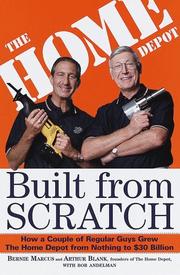
Bernie Marcus, Arthur Blank · 1999

How two fired executives built Home Depot into a national chain.

Brad Stone · 2013

Amazon's first two decades, from an online bookshop to selling nearly everything.

Marc Levinson · 2011

How A&P became the world's largest retailer and the political fight it set off.

Recommended by: Patrick Collison
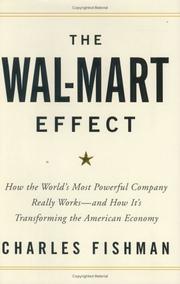
Charles Fishman · 2006

What Wal-Mart's scale does to its suppliers, its towns and prices everywhere.
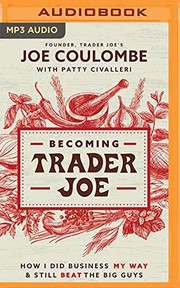
Joe Coulombe · 2021

Founder's account of a private-label, limited-SKU, high-turn grocery model.

Where it sits in the reference 8

Companies
Biographies
Business models
Business models
Business models
Business models
Industries
Investment styles

Topics 5

Biography and MemoirCompany HistoriesEntrepreneurship and StartupsFounders and EntrepreneursFounder Memoirs