Updates

  1. Every US-listed company has a page with its SEC filings. Company pages list their experts and their management, past and present. Fund managers sit under Investors. Each show has a page of its episodes, and an episode page names its guests and hosts. Biographies lists groups, then people. Breadcrumbs show where a page sits.
  2. Media lists every podcast episode, video, interview and talk, over 10,000, by person, company, publisher and event; each filter searches its own choices. Books opens on its table, then Browse, then Authors and Recommenders. A filter's count no longer covers its arrow.
  3. A book that no company, country or subject page lists shows its topics under Where it sits in the reference. On a phone, a page's tabs scroll sideways only. Descriptions read the same on every page. See them in the Experts tab lists every expert the page names.
  4. Every podcast episode, video and interview has its own page with a video or audio player and a link to the source. Investor pages show each company's sector and market cap; firms such as Berkshire Hathaway have one page that holds their letters and their company tabs. Letters tabs filter by company and search the theses. Companies filter by Public, Private and Defunct and link each company's website.
  5. Every tab, view and search has its own address, such as /books/table/asset or /letters/companies, so Back works and a link opens the same place. Page addresses no longer end in .html. Fund letters, Investors, Companies and Papers load about a fifth of the data they did.
  6. Fund letters has a Companies tab: every company the letters name, with its market cap, sector, country, and how many letters and investors name it. Investor pages link each investor's website. Lists in table cells end with “… and N more” at every width.
  7. 1,120 more book summaries; descriptions for 373 papers; pages for 137 more companies, each with the fund letters that discuss it; 215 official photographs; search has its own page.
  8. 411 more books have a summary; person pages list 930 more of the books they wrote; 147 people show their official photograph.
  9. Every investor has a page with its letters and the companies they discuss; company pages list the investors whose letters name them.
  10. A Companies section at the top of the rail lists every company the books, experts and fund letters name.
  11. Person pages list letters, writing, profiles and links as sortable tables with filters, and show each person's companies as links; Fund letters show each letter's description in its own column.
  12. Experts show a checked job title and a short description of each person; 30 more people have photographs.
  13. Every company, fund, university and publication the experts work for has a page listing the people there.
  14. Fund letters show each letter's thesis and filter by it; 225 person pages list the essays, columns and newsletter issues the person wrote.
  15. Person pages list every essay and newsletter issue a person wrote, and their own books as a table in List view.
  16. Recommends shows the five largest kinds of book and the rest under More; browse pictures load sooner.
  17. Podcasts and talks link the original episode, filter by Audio and video or Press, and list each publisher once.
  18. Pages are wider, Recommends has List and Grid, and a filter clicked again turns off.
  19. Book cards sit in a ruled grid with Open Library and Goodreads links and each book's one-line note.
  20. Funds is now Investors; each investor's styles are buttons that filter the table.
  21. Podcasts and talks on a person's page filter by year and publisher and show as a list or a grid of pictures.
  22. Quotes show only people's own words: 472 summaries written by list sites are gone.
  23. Country pages open from Browse again, and every link on the shelf lands on a page.
  24. Subject and person pages show their sections as tabs, and each book appears once on a person's page.
  25. Book cards show the quote, who said it and the source; grids show five cards to a row.
  26. On a phone, a menu holds the sections, search, Updates, Feedback and dark mode.
  27. Feedback takes a screenshot of the page with no browser prompt, opens a screenshot full size when you click it, and clears itself once sent.
  28. Book cards are centred, search names the topic each book sits in, and any text cut short shows whole on hover.
  29. Search groups its results by kind: people, companies, geographies, subjects, topics, books, funds, fund letters and papers.
  30. The Books table lists who recommended each book by name, and the browser tab names the section you are in.
  31. Feedback can take a screenshot of the page, or one you paste or choose, and opens in the corner beside Updates.
  32. Each rail button reopens its section where you left it, and Browse, Table and People show on every book and subject page.
  33. Filters grey out choices that hold nothing instead of hiding them, and Books › People filters by authors or recommenders.
  34. Feedback takes a subject line and up to three screenshots.
  35. Biographies are grouped by the person they are about: 41 new pages, from Abraham Lincoln to Lee Kuan Yew.
  36. Sport splits into 23 sports, and Religion into one topic per faith.
  37. Book lists show as cards: the cover, one recommendation quote and every recommender by name.
  38. Seventeen subjects that had two or three pages under different names now have one page each.
  39. Every page lists its Experts as authors and recommenders, with a link to them on the Experts tab.
  40. Economics, Financial history, Financial panics and Accounting are subjects of their own, with one page per financial crisis.
  41. Book, person and subject pages open inside the app, so the tabs stay in view.
  42. 996 more book covers, and photographs or logos for 227 more people and companies.
  43. Books › Browse shows every subject as cards, and the rail holds Fund letters, Papers, Experts, Books and Funds.
  44. Every topic over 150 books splits into narrower topics, each with a page of its own.

Send feedback

What is it?
Screenshots, up to 3 (optional)
or paste one with Ctrl+V

We use your email only to reply to you.

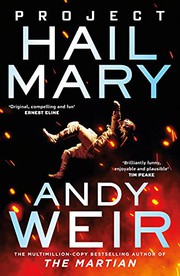
Project Hail Mary

Project Hail Mary

A novel of an amnesiac astronaut sent to stop a microbe that is dimming the sun.

Andy Weir
2021
496 pages · about 8h 16m to read Open Librarygoodreads

Summary

Weir's 2021 novel opens with Ryland Grace waking from a coma on a spacecraft with amnesia and two dead crewmates, and reconstructing both his situation and his memory through the book. The premise is that a microorganism called Astrophage is consuming the sun's output and will render Earth uninhabitable within decades, and that the mission is a one-way trip to a star system that appears unaffected.

The book's method is problem-solving. Grace works through each obstacle using physics, chemistry and biology explained at a level a general reader can follow, and Weir builds the plot from the sequence of problems rather than from character conflict. The central development is the encounter with Rocky, an alien engineer on a parallel mission from another affected system, and the construction of a shared language and working relationship between two species with incompatible biology and different scientific backgrounds.

The collaboration is the part that carries beyond the genre. Weir shows two engineers with different physical constraints, different materials science and different mathematical conventions establishing enough common ground to build things together, and the process of translating between two knowledge bases is worked out concretely rather than assumed.

The science is mostly plausible with several deliberate departures, particularly the Astrophage biology itself. The prose is functional and the humour is broad. Characterisation is thin apart from the central relationship. Weir writes the same kind of book as The Martian with a larger structure, and readers who disliked that will find nothing different here. It is read in technology circles for its treatment of iterative problem-solving under constraint.

Key takeaways 8

  1. Problems are solved by working from what is physically known, testing cheaply, and accepting that most attempts fail informatively.
  2. Two parties with entirely different knowledge bases can establish common ground by starting from what both can measure rather than from what either believes.
  3. Collaboration between specialists with incompatible assumptions requires building a shared vocabulary before any joint work is possible.
  4. Constraints on materials, energy and time determine what solutions are available, and the novel treats resource accounting as the central discipline.
  5. Amnesia is used structurally to force the protagonist to derive his situation from evidence rather than from memory, which is the book's method throughout.
  6. A mission with no return and no communication requires that every decision be made with the information available on board.
  7. Improvisation with available materials, rather than the correct equipment, produces most of the solutions in the story.
  8. The novel treats scientific work as iterative failure rather than as insight, which is unusual in fiction about scientists.

Who should read it

Readers who want an engineering problem-solving novel and a concrete treatment of collaboration across incompatible knowledge bases.

Who recommended it 7 · 1 direct

Similar books 6

Chosen by shared topics, the entries that hold them, and the people who recommended both.
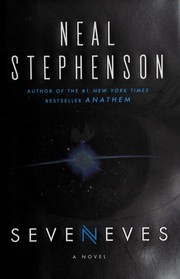
Neal Stephenson · 2015

Recommended by: Bill Gates, Delian Asparouhov

Andy Weir · 2011

A novel of an astronaut left alone on Mars who must survive until rescue.

Cixin Liu · 2008

A novel in which a scientist answers an alien warning and invites first contact.

Iain M. Banks · 1987

A space opera of a war between the Culture, a machine-run utopia, and its enemies.

Daniel Suarez · 2019

Recommended by: Delian Asparouhov

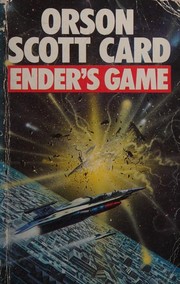
Orson Scott Card · 1985

A novel of a gifted boy trained in an orbiting school for war against aliens.

Where it sits in the reference 3

FictionScience fictionSpace opera and space exploration