
Updates

  1. Person pages list letters, writing, profiles and links as sortable tables with filters, and show each person's companies as links; Fund letters show each letter's description in its own column.
  2. Experts show a checked job title and a short description of each person; 30 more people have photographs.
  3. Every company, fund, university and publication the experts work for has a page listing the people there.
  4. Fund letters show each letter's thesis and filter by it; 225 person pages list the essays, columns and newsletter issues the person wrote.
  5. Person pages list every essay and newsletter issue a person wrote, and their own books as a table in List view.
  6. Recommends shows the five largest kinds of book and the rest under More; browse pictures load sooner.
  7. Podcasts and talks link the original episode, filter by Audio and video or Press, and list each publisher once.
  8. Pages are wider, Recommends has List and Grid, and a filter clicked again turns off.
  9. Book cards sit in a ruled grid with Open Library and Goodreads links and each book's one-line note.
  10. Funds is now Investors; each investor's styles are buttons that filter the table.
  11. Podcasts and talks on a person's page filter by year and publisher and show as a list or a grid of pictures.
  12. Quotes show only people's own words: 472 summaries written by list sites are gone.
  13. Country pages open from Browse again, and every link on the shelf lands on a page.
  14. Subject and person pages show their sections as tabs, and each book appears once on a person's page.
  15. Book cards show the quote, who said it and the source; grids show five cards to a row.
  16. On a phone, a menu holds the sections, search, Updates, Feedback and dark mode.
  17. Feedback takes a screenshot of the page with no browser prompt, opens a screenshot full size when you click it, and clears itself once sent.
  18. Book cards are centred, search names the topic each book sits in, and any text cut short shows whole on hover.
  19. Search groups its results by kind: people, companies, geographies, subjects, topics, books, funds, fund letters and papers.
  20. The Books table lists who recommended each book by name, and the browser tab names the section you are in.
  21. Feedback can take a screenshot of the page, or one you paste or choose, and opens in the corner beside Updates.
  22. Each rail button reopens its section where you left it, and Browse, Table and People show on every book and subject page.
  23. Filters grey out choices that hold nothing instead of hiding them, and Books › People filters by authors or recommenders.
  24. Feedback takes a subject line and up to three screenshots.
  25. Biographies are grouped by the person they are about: 41 new pages, from Abraham Lincoln to Lee Kuan Yew.
  26. Sport splits into 23 sports, and Religion into one topic per faith.
  27. Book lists show as cards: the cover, one recommendation quote and every recommender by name.
  28. Seventeen subjects that had two or three pages under different names now have one page each.
  29. Every page lists its Experts as authors and recommenders, with a link to them on the Experts tab.
  30. Economics, Financial history, Financial panics and Accounting are subjects of their own, with one page per financial crisis.
  31. Book, person and subject pages open inside the app, so the tabs stay in view.
  32. 996 more book covers, and photographs or logos for 227 more people and companies.
  33. Books › Browse shows every subject as cards, and the rail holds Fund letters, Papers, Experts, Books and Funds.
  34. Every topic over 150 books splits into narrower topics, each with a page of its own.

Send feedback

What is it?
Screenshots, up to 3 (optional)
or paste one with Ctrl+V

We use your email only to reply to you.

Sixty to Zero

Sixty to Zero

Alex Taylor III
2010
T4 254 pages · about 4h 14m to read Open Librarygoodreads

Fortune correspondent's inside look at the collapse.

Summary

Alex Taylor covered the automotive industry for Fortune for decades and wrote this account of General Motors' decline and 2009 bankruptcy from the perspective of a journalist who observed it throughout.

His explanation covers the same ground as Ingrassia's Crash Course with a different emphasis. Taylor concentrates on management and on the specific decisions: the brand proliferation that left divisions competing for the same customers, the finance-driven culture that treated cars as units, the failure of the Roger Smith reorganisations and the enormous spending on automation and on Saturn that produced nothing proportionate, the succession of chief executives who protected the existing structure, and the persistent inability to make product decisions that customers would respond to.

He also covers the labour agreements, the dealer network that could not be reduced because of state franchise laws, the legacy healthcare and pension obligations, and the market share decline that continued for three decades without ever producing a response proportionate to it.

Taylor's judgement is that the company's problem was a culture in which senior executives were promoted for loyalty and process rather than for results, and in which the seriousness of the decline was never accepted internally.

The reference has not verified the specific claims in this account. The book is journalism by a long observer rather than an investigation, and it covers ground that Ingrassia, Lutz and others cover with more original reporting. Its value is the compression of a three-decade decline into a single readable account.

Key takeaways 7

  1. General Motors lost market share continuously for three decades without ever producing a response proportionate to the decline.
  2. Brand proliferation left divisions competing for the same customers while each carried full development and distribution cost.
  3. The Roger Smith reorganisations and the automation and Saturn spending consumed enormous capital without producing proportionate results.
  4. State franchise laws prevented reducing the dealer network, which locked in a distribution cost structure the company could not change outside bankruptcy.
  5. Executives were promoted for loyalty and process adherence rather than for results, which reproduced the culture that caused the decline.
  6. The seriousness of the decline was never accepted internally, which is why each response was sized to a smaller problem than the actual one.
  7. The reference has not verified the specific claims in this account.

Who should read it

Readers wanting a compressed single-volume account of General Motors' decline, with Ingrassia and Lutz offering more original reporting.

Who recommended it 1 · 1 direct

Similar books 6

Chosen by shared topics, the entries that hold them, and the people who recommended both.
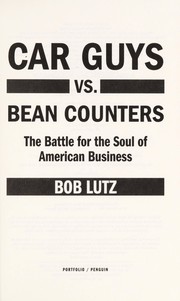
Bob Lutz · 2011

Insider account: Lutz on product culture versus finance control.

Recommended by: Mohnish Pabrai
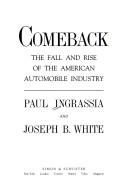
Paul Ingrassia, Joseph B. White · 1994

Detroit's early-1990s crisis and the GM boardroom coup.

Recommended by: Mohnish Pabrai
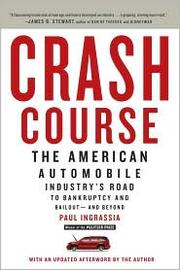
Paul Ingrassia · 2010

How Detroit fell from postwar dominance to the 2009 bankruptcies of GM and Chrysler.

Recommended by: Mohnish Pabrai

Where it sits in the reference 3

Companies
Business themes
Business themes

Topics

Company HistoriesBusiness and Management