Updates

  1. Person pages list letters, writing, profiles and links as sortable tables with filters, and show each person's companies as links; Fund letters show each letter's description in its own column.
  2. Experts show a checked job title and a short description of each person; 30 more people have photographs.
  3. Every company, fund, university and publication the experts work for has a page listing the people there.
  4. Fund letters show each letter's thesis and filter by it; 225 person pages list the essays, columns and newsletter issues the person wrote.
  5. Person pages list every essay and newsletter issue a person wrote, and their own books as a table in List view.
  6. Recommends shows the five largest kinds of book and the rest under More; browse pictures load sooner.
  7. Podcasts and talks link the original episode, filter by Audio and video or Press, and list each publisher once.
  8. Pages are wider, Recommends has List and Grid, and a filter clicked again turns off.
  9. Book cards sit in a ruled grid with Open Library and Goodreads links and each book's one-line note.
  10. Funds is now Investors; each investor's styles are buttons that filter the table.
  11. Podcasts and talks on a person's page filter by year and publisher and show as a list or a grid of pictures.
  12. Quotes show only people's own words: 472 summaries written by list sites are gone.
  13. Country pages open from Browse again, and every link on the shelf lands on a page.
  14. Subject and person pages show their sections as tabs, and each book appears once on a person's page.
  15. Book cards show the quote, who said it and the source; grids show five cards to a row.
  16. On a phone, a menu holds the sections, search, Updates, Feedback and dark mode.
  17. Feedback takes a screenshot of the page with no browser prompt, opens a screenshot full size when you click it, and clears itself once sent.
  18. Book cards are centred, search names the topic each book sits in, and any text cut short shows whole on hover.
  19. Search groups its results by kind: people, companies, geographies, subjects, topics, books, funds, fund letters and papers.
  20. The Books table lists who recommended each book by name, and the browser tab names the section you are in.
  21. Feedback can take a screenshot of the page, or one you paste or choose, and opens in the corner beside Updates.
  22. Each rail button reopens its section where you left it, and Browse, Table and People show on every book and subject page.
  23. Filters grey out choices that hold nothing instead of hiding them, and Books › People filters by authors or recommenders.
  24. Feedback takes a subject line and up to three screenshots.
  25. Biographies are grouped by the person they are about: 41 new pages, from Abraham Lincoln to Lee Kuan Yew.
  26. Sport splits into 23 sports, and Religion into one topic per faith.
  27. Book lists show as cards: the cover, one recommendation quote and every recommender by name.
  28. Seventeen subjects that had two or three pages under different names now have one page each.
  29. Every page lists its Experts as authors and recommenders, with a link to them on the Experts tab.
  30. Economics, Financial history, Financial panics and Accounting are subjects of their own, with one page per financial crisis.
  31. Book, person and subject pages open inside the app, so the tabs stay in view.
  32. 996 more book covers, and photographs or logos for 227 more people and companies.
  33. Books › Browse shows every subject as cards, and the rail holds Fund letters, Papers, Experts, Books and Funds.
  34. Every topic over 150 books splits into narrower topics, each with a page of its own.

Send feedback

What is it?
Screenshots, up to 3 (optional)
or paste one with Ctrl+V

We use your email only to reply to you.

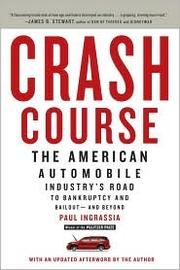
Crash Course: The American Automobile Indust

Crash Course: The American Automobile Industry's Road from Glory to Disaster

Paul Ingrassia
2010
T2 Open Librarygoodreads

Pulitzer-winning reporter on the bankruptcy and bailout.

Summary

Ingrassia covered Detroit for the Wall Street Journal for decades and won a Pulitzer for his reporting on General Motors. This book traces the American automobile industry from its postwar dominance to the 2009 bankruptcies of GM and Chrysler.

His explanation puts equal weight on management and labour. On the company side he documents the finance-driven culture at GM, the brand proliferation that left divisions competing with each other, the failure to respond to Japanese quality, and a succession of chief executives who protected the existing structure. On the union side he covers the contract terms that accumulated over decades: the jobs bank that paid laid-off workers, the work rules that limited what a worker could be assigned, the retiree healthcare obligations that were promised without funding, and the pattern bargaining that spread each concession across all three companies. He argues that management and the United Auto Workers reached a series of agreements that were rational for both parties in the moment and that collectively made the industry uncompetitive.

The last section covers the 2008 and 2009 crisis in detail, including the congressional hearings, the Presidential Task Force on the Auto Industry, and the structured bankruptcies that wiped out shareholders, imposed losses on bondholders and preserved a modified union position.

The reporting is even-handed and the labour cost analysis is careful about the difference between hourly wages and total legacy cost per vehicle. Ingrassia is less strong on the product and engineering side than Lutz is, and the book was written immediately after the bankruptcies so it does not assess how the restructured companies performed.

Key takeaways 7

  1. General Motors and the United Auto Workers reached agreements over decades that were rational for both parties at the time and that collectively made the companies uncompetitive.
  2. Legacy retiree healthcare and pension obligations, not hourly wages, produced the labour cost gap against foreign transplant plants.
  3. Brand proliferation left General Motors divisions competing against each other for the same customers while each carried full development and distribution cost.
  4. Pattern bargaining spread every concession granted by one manufacturer to all three, which removed any competitive benefit from resisting.
  5. The jobs bank, which paid laid-off workers nearly full wages, removed the cost saving from reducing production and therefore removed the incentive to match output to demand.
  6. Detroit management responded to Japanese competition by disputing the quality data for years rather than by investigating the production system that produced it.
  7. The structured bankruptcies of 2009 achieved in weeks the contract and dealer network changes that decades of negotiation had failed to achieve.

Who should read it

Operators and investors interested in how incremental labour and management decisions accumulate into structural uncompetitiveness over decades.

Who recommended it 1 · 1 direct

Similar books 6

Chosen by shared topics, the entries that hold them, and the people who recommended both.
Bob Lutz · 2011

Insider account: Lutz on product culture versus finance control.

Recommended by: Mohnish Pabrai
Paul Ingrassia, Joseph B. White · 1994

Detroit's early-1990s crisis and the GM boardroom coup.

Recommended by: Mohnish Pabrai
Alfred P. Sloan Jr., Alfred D. Chandler Jr. · 1963

The decentralised structure and financial controls that ran General Motors.

Alex Taylor III · 2010

Fortune correspondent's inside look at the collapse.

Recommended by: Mohnish Pabrai

Where it sits in the reference 4

Companies
Business themes
Industries
Business themes

Topics

Company HistoriesBusiness and Management