Updates

  1. Person pages list letters, writing, profiles and links as sortable tables with filters, and show each person's companies as links; Fund letters show each letter's description in its own column.
  2. Experts show a checked job title and a short description of each person; 30 more people have photographs.
  3. Every company, fund, university and publication the experts work for has a page listing the people there.
  4. Fund letters show each letter's thesis and filter by it; 225 person pages list the essays, columns and newsletter issues the person wrote.
  5. Person pages list every essay and newsletter issue a person wrote, and their own books as a table in List view.
  6. Recommends shows the five largest kinds of book and the rest under More; browse pictures load sooner.
  7. Podcasts and talks link the original episode, filter by Audio and video or Press, and list each publisher once.
  8. Pages are wider, Recommends has List and Grid, and a filter clicked again turns off.
  9. Book cards sit in a ruled grid with Open Library and Goodreads links and each book's one-line note.
  10. Funds is now Investors; each investor's styles are buttons that filter the table.
  11. Podcasts and talks on a person's page filter by year and publisher and show as a list or a grid of pictures.
  12. Quotes show only people's own words: 472 summaries written by list sites are gone.
  13. Country pages open from Browse again, and every link on the shelf lands on a page.
  14. Subject and person pages show their sections as tabs, and each book appears once on a person's page.
  15. Book cards show the quote, who said it and the source; grids show five cards to a row.
  16. On a phone, a menu holds the sections, search, Updates, Feedback and dark mode.
  17. Feedback takes a screenshot of the page with no browser prompt, opens a screenshot full size when you click it, and clears itself once sent.
  18. Book cards are centred, search names the topic each book sits in, and any text cut short shows whole on hover.
  19. Search groups its results by kind: people, companies, geographies, subjects, topics, books, funds, fund letters and papers.
  20. The Books table lists who recommended each book by name, and the browser tab names the section you are in.
  21. Feedback can take a screenshot of the page, or one you paste or choose, and opens in the corner beside Updates.
  22. Each rail button reopens its section where you left it, and Browse, Table and People show on every book and subject page.
  23. Filters grey out choices that hold nothing instead of hiding them, and Books › People filters by authors or recommenders.
  24. Feedback takes a subject line and up to three screenshots.
  25. Biographies are grouped by the person they are about: 41 new pages, from Abraham Lincoln to Lee Kuan Yew.
  26. Sport splits into 23 sports, and Religion into one topic per faith.
  27. Book lists show as cards: the cover, one recommendation quote and every recommender by name.
  28. Seventeen subjects that had two or three pages under different names now have one page each.
  29. Every page lists its Experts as authors and recommenders, with a link to them on the Experts tab.
  30. Economics, Financial history, Financial panics and Accounting are subjects of their own, with one page per financial crisis.
  31. Book, person and subject pages open inside the app, so the tabs stay in view.
  32. 996 more book covers, and photographs or logos for 227 more people and companies.
  33. Books › Browse shows every subject as cards, and the rail holds Fund letters, Papers, Experts, Books and Funds.
  34. Every topic over 150 books splits into narrower topics, each with a page of its own.

Send feedback

What is it?
Screenshots, up to 3 (optional)
or paste one with Ctrl+V

We use your email only to reply to you.

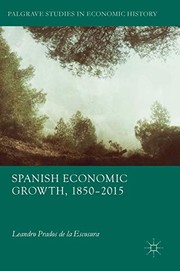
Spanish Economic Growth, 1850-2015

Spanish Economic Growth, 1850-2015

Leandro Prados de la Escosura
2017
T3 407 pages · about 6h 47m to read Open Librarygoodreads

The long-run reconstruction of Spanish output and productivity.

Summary

Leandro Prados de la Escosura reconstructs Spain's national accounts from 1850 to 2015, producing consistent historical series for output, expenditure, employment, capital and productivity. The book is primarily a data construction exercise and secondarily an interpretation of what the data show.

The method involves rebuilding gross domestic product from the production side across agriculture, industry and services, with consistent price deflators, and reconciling it with expenditure and income estimates. This kind of work matters because prior Spanish historical series were inconsistent across periods and produced different conclusions about when Spain grew and why. Prados de la Escosura's series are now the standard reference.

The interpretation identifies the periods of growth and their sources. He finds that Spanish growth was driven by total factor productivity in some periods and by factor accumulation in others, that the autarkic policies of the early Franco period were substantially damaging, that the liberalisation of 1959 marked the beginning of rapid convergence with Western Europe, and that convergence stalled after 1975 and resumed only partially. He also examines regional divergence and the role of human capital. The book is quantitative economic history and is written for specialists. Its data appendices are its most widely used component.

Key takeaways 7

  1. Consistent historical national accounts change the conclusions about when Spain grew and what drove the growth.
  2. Autarkic economic policy in the early Franco period substantially reduced Spanish output below its achievable level.
  3. The 1959 stabilisation and liberalisation plan marked the beginning of rapid convergence with Western Europe.
  4. Spanish convergence with the European core stalled after 1975 and has resumed only partially since.
  5. Total factor productivity rather than factor accumulation drove Spanish growth in the periods of fastest convergence.
  6. Human capital accumulation in Spain lagged behind income growth for most of the period, which constrained productivity.
  7. Prados de la Escosura argues that historical growth estimates are highly sensitive to deflator construction, which earlier series handled inconsistently.

Who should read it

Economic historians and analysts who need consistent long-run Spanish data and an interpretation of the country's growth episodes.

Similar books 6

Chosen by shared topics, the entries that hold them, and the people who recommended both.
Sebastian Royo · 2013

The cajas, the construction boom and the political economy of the bailout.
Leonor Freire Costa, Pedro Lains, Susana Münch Miranda · 2016

Portugal's economy over nine centuries, from imperial trade to EU convergence.

Marquis W. Childs · 1936

The book that made the Swedish model an international reference point.
Horst Siebert · 2005

A structural account of the social market model and its rigidities.
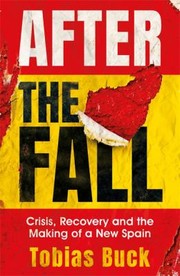
Tobias Buck · 2019

Spain's financial crisis, its bank rescue and the shape of the country's recovery.

Giles Tremlett · 2006

How Spain is breaking its silence over the Civil War and Franco's rule.

Where it sits in the reference 2

Geographies
Economics

Topics

EconomicsGeneral HistoryModern Europe and Russia