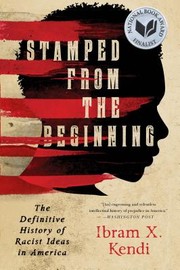
Stamped from the Beginning: The Definitive History of Racist Ideas in America
A history of racist ideas in America from their origins to the present.
Summary
Ibram X. Kendi, a historian who studies race and discriminatory policy, traces racist ideas in America from their origins to the present, published in 2016. He argues that "racist progress has constantly followed racial progress": each advance for Black Americans has been met by new racist ideas, the same ideas in different period costume, used to explain away the deaths of the enslaved, of Jim Crow lynching victims and of people killed by police.
He sorts American thinking on race into three camps. Segregationists hold that Black people are inferior, stamped from the beginning. Assimilationists hold that Black people can join the mainstream by shedding traits they attribute to culture or poverty. Antiracists reject both. Kendi criticises uplift suasion, the hope that Black self-improvement would persuade white people out of racism, arguing that positive examples are dismissed as exceptions. The book reappraises revered abolitionist and civil-rights figures, Black and white, including William Lloyd Garrison and W.E.B. Du Bois, and won the National Book Award for Nonfiction.
Key takeaways 5
- Racist ideas have often followed policies, serving to justify discrimination after the fact.
- Assimilationist thinking can carry racist assumptions even when it opposes segregation.
- Positive portrayals of Black Americans have not weakened racist views, because they are treated as exceptions.
- Each period of racial progress has produced a backlash of new racist ideas.
- Admired abolitionists and civil-rights figures held some of the ideas Kendi criticises.
Who should read it
Readers of American history who want a long survey of how racist ideas formed and changed, from a National Book Award winner.
Who recommended it 1
Similar books 6
Chosen by shared topics, the entries that hold them, and the people who recommended both.
How McDonald's and fast-food franchising became bound up with Black America.
How federal housing policy created racial segregation in American cities.

"The problem that has no name": the beliefs that kept women confined to the home.
Recommended by: Patrick Collison
The Ku Klux Klan of the 1920s, a mass movement that flourished in the North.
Recommended by: Marc Andreessen

The Jewish gangsters of Brooklyn in the 1920s and 1930s.
Recommended by: Ryan Holiday
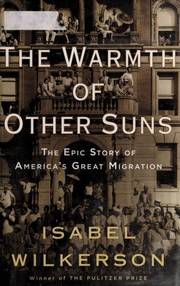
The decades-long migration of black Americans out of the South.
Recommended by: Barack Obama, Michelle Obama