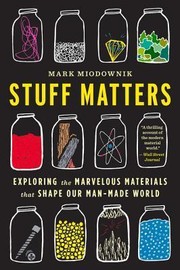
Stuff Matters
Why glass is clear and paperclips bend: the science of everyday materials.
Summary
Mark Miodownik, a British materials scientist, explains the science and history of the everyday materials of the man-made world. The book, subtitled Exploring the Marvelous Materials That Shape Our Man-Made World, gives a chapter to each of ten materials, combining their science with odd facts and anecdotes about their effect on human history. It became a New York Times bestseller and won critical praise.
Miodownik starts from questions such as why glass is transparent, why elastic stretches and why a paperclip bends, and examines the materials he meets in a typical morning, from the teacup to the jet engine, the silicon chip to the paperclip, and the plastic of appliances to the elastic in underwear. He also introduces materials most people have never heard of: a diamond five times the size of Earth; concrete cloth that can be moulded into any shape; and graphene, a single atom thick and the thinnest, strongest and stiffest material known.
Key takeaways 4
- The way a material behaves follows from its structure at small scales.
- Ordinary objects such as paperclips and teacups involve deep engineering.
- Materials have shaped human history as much as ideas have.
- Graphene, one atom thick, is the strongest and stiffest material known.
Who should read it
General readers curious about the science behind everyday objects.
Who recommended it 2 · 2 direct
Similar books 6
Chosen by shared topics, the entries that hold them, and the people who recommended both.
The case that fast-improving technology will make scarce resources cheap.
Recommended by: Bill Gates, Richard Branson, Morgan Housel and 2 others
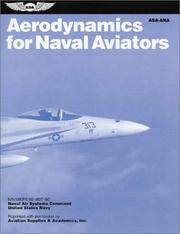
The aerodynamics of aircraft performance and piloting, for naval aviators.
Recommended by: Patrick Collison
A textbook on aircraft performance, stability and control.
Recommended by: Patrick Collison
The physics and dynamics of bicycles and cycling.
Recommended by: Patrick Collison
How the Bell Labs team of Shockley, Bardeen and Brattain invented the transistor.
Recommended by: Patrick Collison