Updates

  1. Person pages list letters, writing, profiles and links as sortable tables with filters, and show each person's companies as links; Fund letters show each letter's description in its own column.
  2. Experts show a checked job title and a short description of each person; 30 more people have photographs.
  3. Every company, fund, university and publication the experts work for has a page listing the people there.
  4. Fund letters show each letter's thesis and filter by it; 225 person pages list the essays, columns and newsletter issues the person wrote.
  5. Person pages list every essay and newsletter issue a person wrote, and their own books as a table in List view.
  6. Recommends shows the five largest kinds of book and the rest under More; browse pictures load sooner.
  7. Podcasts and talks link the original episode, filter by Audio and video or Press, and list each publisher once.
  8. Pages are wider, Recommends has List and Grid, and a filter clicked again turns off.
  9. Book cards sit in a ruled grid with Open Library and Goodreads links and each book's one-line note.
  10. Funds is now Investors; each investor's styles are buttons that filter the table.
  11. Podcasts and talks on a person's page filter by year and publisher and show as a list or a grid of pictures.
  12. Quotes show only people's own words: 472 summaries written by list sites are gone.
  13. Country pages open from Browse again, and every link on the shelf lands on a page.
  14. Subject and person pages show their sections as tabs, and each book appears once on a person's page.
  15. Book cards show the quote, who said it and the source; grids show five cards to a row.
  16. On a phone, a menu holds the sections, search, Updates, Feedback and dark mode.
  17. Feedback takes a screenshot of the page with no browser prompt, opens a screenshot full size when you click it, and clears itself once sent.
  18. Book cards are centred, search names the topic each book sits in, and any text cut short shows whole on hover.
  19. Search groups its results by kind: people, companies, geographies, subjects, topics, books, funds, fund letters and papers.
  20. The Books table lists who recommended each book by name, and the browser tab names the section you are in.
  21. Feedback can take a screenshot of the page, or one you paste or choose, and opens in the corner beside Updates.
  22. Each rail button reopens its section where you left it, and Browse, Table and People show on every book and subject page.
  23. Filters grey out choices that hold nothing instead of hiding them, and Books › People filters by authors or recommenders.
  24. Feedback takes a subject line and up to three screenshots.
  25. Biographies are grouped by the person they are about: 41 new pages, from Abraham Lincoln to Lee Kuan Yew.
  26. Sport splits into 23 sports, and Religion into one topic per faith.
  27. Book lists show as cards: the cover, one recommendation quote and every recommender by name.
  28. Seventeen subjects that had two or three pages under different names now have one page each.
  29. Every page lists its Experts as authors and recommenders, with a link to them on the Experts tab.
  30. Economics, Financial history, Financial panics and Accounting are subjects of their own, with one page per financial crisis.
  31. Book, person and subject pages open inside the app, so the tabs stay in view.
  32. 996 more book covers, and photographs or logos for 227 more people and companies.
  33. Books › Browse shows every subject as cards, and the rail holds Fund letters, Papers, Experts, Books and Funds.
  34. Every topic over 150 books splits into narrower topics, each with a page of its own.

Send feedback

What is it?
Screenshots, up to 3 (optional)
or paste one with Ctrl+V

We use your email only to reply to you.

The Audit Failures of the Wirecard Scandal

The Audit Failures of the Wirecard Scandal

Edgar Low, Reinhard Heyd
2024
T4 Open Librarygoodreads

Technical accounting post-mortem.

Summary

The reference has not verified this book in detail; the summary states only what the title, author and subject establish.

Low and Heyd wrote an academic treatment of the audit failures in the Wirecard collapse. The reference has not verified the book's contents.

What the title, authors and date establish is the subject: an examination of how the statutory audit of Wirecard failed to detect or report the fraud over a period of years, in a case where nearly two billion euros of supposed trust account balances did not exist. The authors approach this from an accounting and auditing perspective rather than as journalism.

The established facts of the case that any such treatment addresses include the auditor's reliance on confirmations relating to third-party acquiring partners and escrow accounts that were not obtained directly from the banks concerned; the acceptance of documentation supplied through intermediaries rather than independently; the failure to apply professional scepticism to reported margins in the claimed geographies that were implausible on their face; the German audit oversight regime and its response; the subsequent regulatory changes including mandatory auditor rotation and the reform of BaFin's supervisory powers; and the liability proceedings brought against the audit firm.

Readers wanting the investigative account of the fraud itself should read Dan McCrum's Money Men, also in this reference. This volume appears to address the professional and regulatory questions rather than the narrative, and readers should verify the specific coverage against the table of contents.

Key takeaways 6

  1. The Wirecard audit accepted confirmations of cash balances that were not obtained directly from the banks holding the accounts.
  2. Reported margins from the claimed third-party acquiring geographies were implausible on their face and were not challenged.
  3. Statutory audit as practised did not detect a fraud that had been publicly alleged with documentary support for years.
  4. German audit oversight and financial supervision both failed, which prompted subsequent reform of BaFin's powers.
  5. Mandatory auditor rotation and other reforms followed the case, which indicates the regulator located the failure in audit independence.
  6. Liability proceedings against the audit firm test whether professional standards were met, which is a separate question from whether the fraud was detectable.

Who should read it

Auditors, audit committee members and regulators who need the professional analysis of the Wirecard audit failure, verified against the book's actual coverage.

Similar books 6

Chosen by shared topics, the entries that hold them, and the people who recommended both.

Dan McCrum · 2022

A reporter's six-year investigation of Wirecard until its missing cash sank it.
Rebecca Smith, John R. Emshwiller · 2003

The two Wall Street Journal reporters who broke the story.
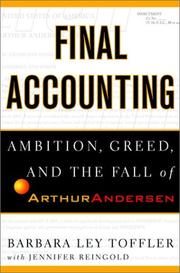
Barbara Ley Toffler · 2003

An Andersen partner on how consulting revenue corroded audit.

Rob Rose · 2018

Steinhoff: the largest accounting fraud in South African corporate history.
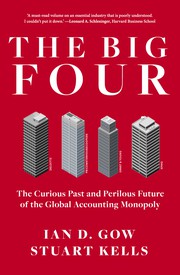
Ian D. Gow, Stuart Kells · 2018

The accounting oligopoly's economics and conflicts.

Peter C. Fusaro, Ross M. Miller · 2002

Early energy-market explainer.

Where it sits in the reference 3

Companies
Industries
Accounting

Topics

AccountingCompany Histories