Payments and Fintech
Card payments run on interchange: the merchant's acquirer pays a fee to the card issuer at a rate the network sets, so Visa and Mastercard collect small charges on enormous volume while the issuing bank keeps the interchange and the credit spread. That fee structure produced thirty years of merchant litigation in the United States, and in markets without card infrastructure it left room for M-PESA to build payments on airtime balances and for Alipay and WeChat Pay to build them on commerce and messaging. Fintech margins depend on funding costs and fraud losses, both of which move with the credit cycle. The literature covers the network economics, PayPal's founding, the Visa and MasterCard antitrust case, mobile money in Kenya and China, and the Wirecard fraud from reporting and audit angles.
Start here
- Paying with Plastic: The Digital Revolution in Buying and BorrowingDavid S. Evans, Richard Schmalensee, 2005
- The Founders: The Story of PayPal and the Entrepreneurs Who Shaped Silicon ValleyJimmy Soni, 2022
- Money Men: A Hot Startup, A Billion Dollar Fraud, A Fight for the TruthDan McCrum, 2022
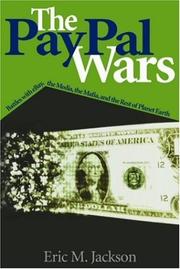
Insider account by an early PayPal marketing hire; partisan but first-hand.
Recommended by: Sahil Lavingia

Payments economics: interchange, closed loops and why Amex's model differs.
Recommended by: Patrick Collison

How Safaricom built the world's reference mobile-money business.

Payments and mobile commerce structure behind Alipay and Taobao.
A reporter's six-year investigation of Wirecard until its missing cash sank it.

PayPal from Confinity and X.com through the merger to the 2002 sale to eBay.
Recommended by: David Sacks, Elon Musk, Keith Rabois and 3 others
Technical accounting post-mortem.
Recommended by: Mohnish Pabrai
Recommended by: Patrick Collison
 Patrick Collisonrecommends 2 books here
 Peter Thielrecommends 1 book here
 Mohnish Pabrairecommends 1 book here
 Reid Hoffmanrecommends 1 book here
 David Sacksrecommends 1 book here
 Elon Muskrecommends 1 book here
 Keith Raboisrecommends 1 book here
 Max Levchinrecommends 1 book here