Updates

  1. Person pages list letters, writing, profiles and links as sortable tables with filters, and show each person's companies as links; Fund letters show each letter's description in its own column.
  2. Experts show a checked job title and a short description of each person; 30 more people have photographs.
  3. Every company, fund, university and publication the experts work for has a page listing the people there.
  4. Fund letters show each letter's thesis and filter by it; 225 person pages list the essays, columns and newsletter issues the person wrote.
  5. Person pages list every essay and newsletter issue a person wrote, and their own books as a table in List view.
  6. Recommends shows the five largest kinds of book and the rest under More; browse pictures load sooner.
  7. Podcasts and talks link the original episode, filter by Audio and video or Press, and list each publisher once.
  8. Pages are wider, Recommends has List and Grid, and a filter clicked again turns off.
  9. Book cards sit in a ruled grid with Open Library and Goodreads links and each book's one-line note.
  10. Funds is now Investors; each investor's styles are buttons that filter the table.
  11. Podcasts and talks on a person's page filter by year and publisher and show as a list or a grid of pictures.
  12. Quotes show only people's own words: 472 summaries written by list sites are gone.
  13. Country pages open from Browse again, and every link on the shelf lands on a page.
  14. Subject and person pages show their sections as tabs, and each book appears once on a person's page.
  15. Book cards show the quote, who said it and the source; grids show five cards to a row.
  16. On a phone, a menu holds the sections, search, Updates, Feedback and dark mode.
  17. Feedback takes a screenshot of the page with no browser prompt, opens a screenshot full size when you click it, and clears itself once sent.
  18. Book cards are centred, search names the topic each book sits in, and any text cut short shows whole on hover.
  19. Search groups its results by kind: people, companies, geographies, subjects, topics, books, funds, fund letters and papers.
  20. The Books table lists who recommended each book by name, and the browser tab names the section you are in.
  21. Feedback can take a screenshot of the page, or one you paste or choose, and opens in the corner beside Updates.
  22. Each rail button reopens its section where you left it, and Browse, Table and People show on every book and subject page.
  23. Filters grey out choices that hold nothing instead of hiding them, and Books › People filters by authors or recommenders.
  24. Feedback takes a subject line and up to three screenshots.
  25. Biographies are grouped by the person they are about: 41 new pages, from Abraham Lincoln to Lee Kuan Yew.
  26. Sport splits into 23 sports, and Religion into one topic per faith.
  27. Book lists show as cards: the cover, one recommendation quote and every recommender by name.
  28. Seventeen subjects that had two or three pages under different names now have one page each.
  29. Every page lists its Experts as authors and recommenders, with a link to them on the Experts tab.
  30. Economics, Financial history, Financial panics and Accounting are subjects of their own, with one page per financial crisis.
  31. Book, person and subject pages open inside the app, so the tabs stay in view.
  32. 996 more book covers, and photographs or logos for 227 more people and companies.
  33. Books › Browse shows every subject as cards, and the rail holds Fund letters, Papers, Experts, Books and Funds.
  34. Every topic over 150 books splits into narrower topics, each with a page of its own.

Send feedback

What is it?
Screenshots, up to 3 (optional)
or paste one with Ctrl+V

We use your email only to reply to you.

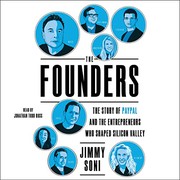
The Founders: The Story of PayPal and the En

The Founders: The Story of PayPal and the Entrepreneurs Who Shaped Silicon Valley

Jimmy Soni
2022
T2 384 pages · about 6h 24m to read Open Librarygoodreads

PayPal's fraud-detection work, from which Palantir was directly spun.

Summary

Soni tells the history of PayPal from the founding of Confinity by Thiel and Levchin and X.com by Musk, through the merger, the IPO and the 2002 sale to eBay for 1.5 billion dollars. He conducted extensive interviews with participants and had access to internal documents, and the book is more rigorous than the usual technology history.

The technical and operational material is the strongest part. Soni covers the fraud problem in detail, including the losses that reached over ten million dollars a month, the failure of rules-based detection, and the development of Igor, the system Levchin's team built that combined human review with machine learning. He also covers the growth mechanics, including the referral bonus that paid users to sign up others and the deliberate targeting of eBay power sellers.

The organisational material covers the conflict between the Confinity and X.com teams after the merger, the technical dispute over Windows versus Unix infrastructure, the removal of Musk as chief executive while he was on a plane, and the near-constant financing pressure through 2000 and 2001. The book also examines what happened to the people afterwards, since PayPal alumni founded or funded Tesla, SpaceX, LinkedIn, YouTube, Yelp, Palantir and Founders Fund, and Soni examines what in the company produced that concentration.

Soni relies heavily on participant recollection of events twenty years earlier, and the participants have interests in how they are portrayed. The framing that this group shaped Silicon Valley is asserted alongside the evidence rather than tested against alternative explanations, including that the group had capital and networks after a profitable exit.

Key takeaways 8

  1. PayPal's existential problem was fraud rather than competition, and losses exceeded ten million dollars a month before the detection system worked.
  2. Rules-based fraud detection failed because attackers adapted faster than rules could be written, which forced the move to machine learning combined with human review.
  3. Paying users to refer others produced the initial growth, and the cost per acquired user was justified by the network effect between buyers and sellers.
  4. Targeting eBay sellers specifically, rather than pursuing general consumer payments, is what produced the concentrated network that made the product useful.
  5. The merger of two competing companies created a persistent internal conflict that culminated in the removal of the chief executive.
  6. The company came close to failing several times on financing, and the IPO was completed in a market that had closed to technology offerings.
  7. Recruiting concentrated on unusual technical ability and cultural similarity, which produced both the execution capability and the internal factionalism.
  8. The alumni network's later record depended on capital, relationships and reputation from a successful exit as much as on any capability the company taught.

Who should read it

Founders and investors who want a documented account of solving fraud at scale, financing through a market collapse, and what a post-exit alumni network actually provides.

Who recommended it 6

David Sacksreported
Elon Muskreported
Keith Raboisreported
Max Levchinreported
Peter Thielreported
Reid Hoffmanreported

Similar books 6

Chosen by shared topics, the entries that hold them, and the people who recommended both.
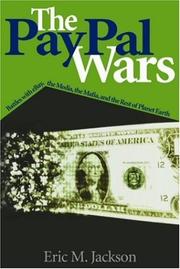
Eric M. Jackson · 2004

Insider account by an early PayPal marketing hire; partisan but first-hand.

Recommended by: Sahil Lavingia
Peter Thiel, Blake Masters · 2014

Why startups should build something new and own a small market before growing.

Max Chafkin · 2021

Peter Thiel biography with substantial Palantir founding material.

Recommended by: Andrew Wilkinson
Michael Steinberger · 2025

Alex Karp and Palantir's path from CIA funding to the surveillance state.

Adam Fisher · 2018

Oral history; Thiel and the PayPal cohort speak in their own words.

Dan McCrum · 2022

A reporter's six-year investigation of Wirecard until its missing cash sank it.

Where it sits in the reference 4

Companies
Companies
Biographies
Industries

Topics

Company HistoriesEntrepreneurship and StartupsFounder Profiles and Startup Stories