Updates

  1. Person pages list letters, writing, profiles and links as sortable tables with filters, and show each person's companies as links; Fund letters show each letter's description in its own column.
  2. Experts show a checked job title and a short description of each person; 30 more people have photographs.
  3. Every company, fund, university and publication the experts work for has a page listing the people there.
  4. Fund letters show each letter's thesis and filter by it; 225 person pages list the essays, columns and newsletter issues the person wrote.
  5. Person pages list every essay and newsletter issue a person wrote, and their own books as a table in List view.
  6. Recommends shows the five largest kinds of book and the rest under More; browse pictures load sooner.
  7. Podcasts and talks link the original episode, filter by Audio and video or Press, and list each publisher once.
  8. Pages are wider, Recommends has List and Grid, and a filter clicked again turns off.
  9. Book cards sit in a ruled grid with Open Library and Goodreads links and each book's one-line note.
  10. Funds is now Investors; each investor's styles are buttons that filter the table.
  11. Podcasts and talks on a person's page filter by year and publisher and show as a list or a grid of pictures.
  12. Quotes show only people's own words: 472 summaries written by list sites are gone.
  13. Country pages open from Browse again, and every link on the shelf lands on a page.
  14. Subject and person pages show their sections as tabs, and each book appears once on a person's page.
  15. Book cards show the quote, who said it and the source; grids show five cards to a row.
  16. On a phone, a menu holds the sections, search, Updates, Feedback and dark mode.
  17. Feedback takes a screenshot of the page with no browser prompt, opens a screenshot full size when you click it, and clears itself once sent.
  18. Book cards are centred, search names the topic each book sits in, and any text cut short shows whole on hover.
  19. Search groups its results by kind: people, companies, geographies, subjects, topics, books, funds, fund letters and papers.
  20. The Books table lists who recommended each book by name, and the browser tab names the section you are in.
  21. Feedback can take a screenshot of the page, or one you paste or choose, and opens in the corner beside Updates.
  22. Each rail button reopens its section where you left it, and Browse, Table and People show on every book and subject page.
  23. Filters grey out choices that hold nothing instead of hiding them, and Books › People filters by authors or recommenders.
  24. Feedback takes a subject line and up to three screenshots.
  25. Biographies are grouped by the person they are about: 41 new pages, from Abraham Lincoln to Lee Kuan Yew.
  26. Sport splits into 23 sports, and Religion into one topic per faith.
  27. Book lists show as cards: the cover, one recommendation quote and every recommender by name.
  28. Seventeen subjects that had two or three pages under different names now have one page each.
  29. Every page lists its Experts as authors and recommenders, with a link to them on the Experts tab.
  30. Economics, Financial history, Financial panics and Accounting are subjects of their own, with one page per financial crisis.
  31. Book, person and subject pages open inside the app, so the tabs stay in view.
  32. 996 more book covers, and photographs or logos for 227 more people and companies.
  33. Books › Browse shows every subject as cards, and the rail holds Fund letters, Papers, Experts, Books and Funds.
  34. Every topic over 150 books splits into narrower topics, each with a page of its own.

Send feedback

What is it?
Screenshots, up to 3 (optional)
or paste one with Ctrl+V

We use your email only to reply to you.

Money Men: A Hot Startup, A Billion Dollar F

Money Men: A Hot Startup, A Billion Dollar Fraud, A Fight for the Truth

Dan McCrum
2022
T1 Open Librarygoodreads

By the FT reporter who pursued the story for five years; also issued as House of Wirecard.

Summary

McCrum, a Financial Times reporter, wrote a first-person account of his six-year investigation into Wirecard, the German payments company that joined the DAX index before collapsing in 2020 when nearly two billion euros of supposed cash could not be found.

The investigative narrative is the substance. McCrum started from a short seller's tip in 2014 and published a series of articles questioning the company's accounts, focusing on the acquisitions in Asia, the round-tripping of funds through related parties, and the third-party acquiring arrangement under which Wirecard claimed a large share of its profits came from partners in Dubai, Manila and elsewhere that processed payments on its behalf. Documents showed those partners were largely fictitious or vastly smaller than claimed.

The response is what makes the book unusual. Wirecard hired lawyers and private investigators, surveilled McCrum and his colleagues, attempted to entrap them, and ran a campaign presenting the reporting as a market manipulation conspiracy. BaFin, the German financial regulator, responded by opening a criminal investigation into the journalists and by banning short selling in Wirecard shares, a step taken against speculators rather than against the company. German institutional investors, politicians and the accounting firm continued to support the company. The Financial Times faced substantial legal and reputational risk.

McCrum's argument is that the failure was institutional rather than technical: the fraud was detectable from public documents, and every institution charged with detecting it instead defended the company because it was a national technology success.

The book is a participant's account and centres the author's own experience, which some readers find intrusive. It was written before the criminal trials concluded. The description of how a regulator, an auditor and a national press can align against the evidence is the durable content.

Key takeaways 7

  1. Wirecard claimed a large share of its profits came from third-party acquiring partners that were largely fictitious.
  2. The fraud was detectable from public filings and from the implausibility of the reported margins in the claimed geographies.
  3. The German regulator investigated the journalists and banned short selling in the shares rather than examining the company.
  4. The auditor accepted confirmations of cash balances that it did not independently verify with the banks named.
  5. National pride in a domestic technology champion caused investors, regulators and politicians to discount evidence against it.
  6. The company used surveillance and legal threats against reporters, which raised the cost of investigation beyond what most outlets would accept.
  7. Short sellers supplied the initial analysis, and their financial interest was used to discredit accurate findings.

Who should read it

Investors and auditors who want a documented case of how a large accounting fraud survived years of published evidence because institutions defended it.

Similar books 6

Chosen by shared topics, the entries that hold them, and the people who recommended both.

John Gapper, Nicholas Denton · 1996

How one trader's losses destroyed Barings, Britain's oldest merchant bank, in 1995.
John Carreyrou · 2018

How Theranos reached a $9 billion value with blood tests that never worked.

Winston Ma · 2016

Payments and mobile commerce structure behind Alipay and Taobao.
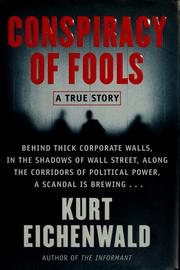
Kurt Eichenwald · 2005

Enron's collapse told scene by scene from depositions, emails and interviews.

Recommended by: Mohnish Pabrai

Where it sits in the reference 3

Companies
Industries
Business themes

Topics

Company HistoriesInvesting