Updates

  1. Person pages list letters, writing, profiles and links as sortable tables with filters, and show each person's companies as links; Fund letters show each letter's description in its own column.
  2. Experts show a checked job title and a short description of each person; 30 more people have photographs.
  3. Every company, fund, university and publication the experts work for has a page listing the people there.
  4. Fund letters show each letter's thesis and filter by it; 225 person pages list the essays, columns and newsletter issues the person wrote.
  5. Person pages list every essay and newsletter issue a person wrote, and their own books as a table in List view.
  6. Recommends shows the five largest kinds of book and the rest under More; browse pictures load sooner.
  7. Podcasts and talks link the original episode, filter by Audio and video or Press, and list each publisher once.
  8. Pages are wider, Recommends has List and Grid, and a filter clicked again turns off.
  9. Book cards sit in a ruled grid with Open Library and Goodreads links and each book's one-line note.
  10. Funds is now Investors; each investor's styles are buttons that filter the table.
  11. Podcasts and talks on a person's page filter by year and publisher and show as a list or a grid of pictures.
  12. Quotes show only people's own words: 472 summaries written by list sites are gone.
  13. Country pages open from Browse again, and every link on the shelf lands on a page.
  14. Subject and person pages show their sections as tabs, and each book appears once on a person's page.
  15. Book cards show the quote, who said it and the source; grids show five cards to a row.
  16. On a phone, a menu holds the sections, search, Updates, Feedback and dark mode.
  17. Feedback takes a screenshot of the page with no browser prompt, opens a screenshot full size when you click it, and clears itself once sent.
  18. Book cards are centred, search names the topic each book sits in, and any text cut short shows whole on hover.
  19. Search groups its results by kind: people, companies, geographies, subjects, topics, books, funds, fund letters and papers.
  20. The Books table lists who recommended each book by name, and the browser tab names the section you are in.
  21. Feedback can take a screenshot of the page, or one you paste or choose, and opens in the corner beside Updates.
  22. Each rail button reopens its section where you left it, and Browse, Table and People show on every book and subject page.
  23. Filters grey out choices that hold nothing instead of hiding them, and Books › People filters by authors or recommenders.
  24. Feedback takes a subject line and up to three screenshots.
  25. Biographies are grouped by the person they are about: 41 new pages, from Abraham Lincoln to Lee Kuan Yew.
  26. Sport splits into 23 sports, and Religion into one topic per faith.
  27. Book lists show as cards: the cover, one recommendation quote and every recommender by name.
  28. Seventeen subjects that had two or three pages under different names now have one page each.
  29. Every page lists its Experts as authors and recommenders, with a link to them on the Experts tab.
  30. Economics, Financial history, Financial panics and Accounting are subjects of their own, with one page per financial crisis.
  31. Book, person and subject pages open inside the app, so the tabs stay in view.
  32. 996 more book covers, and photographs or logos for 227 more people and companies.
  33. Books › Browse shows every subject as cards, and the rail holds Fund letters, Papers, Experts, Books and Funds.
  34. Every topic over 150 books splits into narrower topics, each with a page of its own.

Send feedback

What is it?
Screenshots, up to 3 (optional)
or paste one with Ctrl+V

We use your email only to reply to you.

Priceless: The Case that Brought Down the Vi

Priceless: The Case that Brought Down the Visa/MasterCard Bank Cartel

Lloyd Constantine
2009
T3 Open Librarygoodreads

Summary

Lloyd Constantine led the antitrust litigation brought by Wal-Mart and other retailers against Visa and MasterCard over the honour-all-cards rule, and this is his account of the case, which settled in 2003 for more than three billion dollars, the largest antitrust settlement in American history at the time.

The legal substance concerns tying. Visa and MasterCard required any merchant accepting their credit cards to also accept their debit cards, which carried interchange fees set at credit card levels despite debit transactions carrying no credit risk and lower processing cost. The retailers argued this was an illegal tie that used the market power of a product merchants could not refuse, credit cards, to force acceptance of a product on terms they would never have negotiated.

The economics of the case matter beyond it. The networks were owned by the banks that issued the cards, so interchange revenue flowed to the owners, and the associations' governance meant the fee level was set by the parties receiving it. Merchants had no ability to negotiate individually and were prohibited from steering customers toward cheaper payment methods.

Constantine's account is by the winning lawyer and is a litigation narrative rather than an economic analysis. The reference has not verified its specific claims. Evans and Schmalensee's Paying with Plastic covers the same industry from the network side and reaches different conclusions about interchange, and reading the two together is more useful than either alone.

Key takeaways 7

  1. The honour-all-cards rule required merchants accepting credit cards to also accept debit cards at interchange fees set at credit card levels.
  2. Debit transactions carry no credit risk and lower processing cost, which meant the fee bore no relation to the service provided.
  3. The card networks were owned by the banks receiving interchange revenue, so the fee level was set by the parties collecting it.
  4. Merchants could not negotiate individually and were prohibited from steering customers toward cheaper payment methods, which removed every competitive check.
  5. Tying a product merchants can refuse to one they cannot is the antitrust theory that succeeded, and the settlement exceeded three billion dollars.
  6. Governance structures in which the parties setting a price are the parties receiving it produce prices no market would sustain.
  7. The reference has not verified this account's specific claims, and Evans and Schmalensee present the opposing economic case.

Who should read it

Fintech operators and investors interested in interchange economics and network governance, read alongside the opposing economic account.

Who recommended it 1 · 1 direct

Similar books 6

Chosen by shared topics, the entries that hold them, and the people who recommended both.
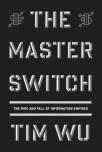
Tim Wu · 2010

Every US information industry moved from an open era to control by one firm.

Recommended by: Patrick Collison, Andrew Chen

Richard A. Posner · 1976

Antitrust should rest on the economics of efficiency, not on protecting competitors.
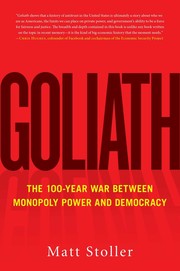
Matt Stoller · 2019

A political history of American monopoly and of the tradition that fought it.

Recommended by: David Heinemeier Hansson

David Dayen · 2020

Concentration traced sector by sector through its effects on customers.

Robert H. Bork · 1978

Antitrust law should pursue one goal, consumer welfare, and drop the rest.

Tim Wu · 2018

How antitrust shrank to a consumer price test, and the case for breaking up giants.

Recommended by: Jeff Jordan

Where it sits in the reference 2

Business themes
Industries

Topics

Company HistoriesPolitics and GovernmentRegulation, central banks and public policy