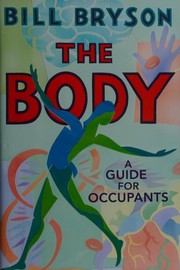
The Body: A Guide for Occupants
A tour of the human body: how it works, how it heals itself and how it fails.
Summary
Bill Bryson's second book of popular science, after A Short History of Nearly Everything (2003), turns inward to the human body: how it works, how it heals itself and how it fails. Published in 2019, it opens with a brief introduction and then gives a chapter to each part of the body, with two chapters on diseases and the problems the body can face.
Within each chapter Bryson describes how the relevant system works and tells the history of the scientific discoveries behind current knowledge, with his usual humour. The book is full of startling facts, such as that a body makes a million red blood cells in the time it takes to begin reading its opening, and of anecdotes. "We pass our existence within this wobble of flesh and yet take it almost entirely for granted," Bryson writes, and the book sets out to cure that indifference. The Guardian praised its extraordinary stories about the heart, lungs and genitals, delivered in Bryson's style, and The Independent its wide range of facts.
Key takeaways 4
- The body makes millions of red blood cells every few seconds.
- Bryson pairs each organ system with the history of how it was understood.
- The body has a remarkable ability to heal itself, and many ways to fail.
- People take their own bodies almost entirely for granted.
Who should read it
General readers who want an entertaining tour of human anatomy and medicine.
Who recommended it 2 · 1 direct
Similar books 6
Chosen by shared topics, the entries that hold them, and the people who recommended both.
How the human immune system works, and its part in health and longevity.
“Explains for the lay reader the intricate biology of our immune system.” — Vinod Khosla
Source: 2019 Book Recommendations — Vinod Khosla, Medium
Recommended by: Bill Gates, Vinod Khosla, Keith Rabois
How to read a personal genome and what it says.
Recommended by: Balaji S. Srinivasan
How genetic engineering will change human life, from sex to war, and the ethics.
Recommended by: Bill Gates
Essays on how far technology should be used to make better humans.
Recommended by: Patrick Collison
Why animals are best seen as hosts to millions of microbes.
Recommended by: Bill Gates, Patrick Collison
The science, myths and business of blood, from bloodletting to plasma sales.
Recommended by: Bill Gates