The Captive Mind
A poet who defected from Stalinist Poland on intellectuals under its regime.
Summary
Czeslaw Milosz, the Polish poet who won the 1980 Nobel Prize in Literature, wrote The Captive Mind soon after defecting from Stalinist Poland in 1951; Jane Zielonko's English translation appeared in 1953. Drawing on his years as an illegal author under Nazi occupation and as a member of the ruling class of postwar Poland, he tries to explain why Stalinism attracted intellectuals, how its adherents thought, and why both dissent and collaboration existed in the Soviet bloc. He said he wrote it under great inner conflict.
The first chapter takes the Murti-Bing pill from Stanislaw Ignacy Witkiewicz's novel Insatiability, a drug that cures independent thought and brings contentment and obedience but in the end splits personalities, as an image of Marxism-Leninism. The second describes how Eastern European intellectuals viewed the West with contempt and fascination. The third borrows from Arthur de Gobineau the Persian practice of Ketman, outward conformity hiding inner dissent, and lists seven forms of it in the people's republics, among them National Ketman (socialism yes, Russia no) and the Ketman of Revolutionary Purity, the belief that Stalin had betrayed Lenin.
Key takeaways 4
- Milosz compares Marxism-Leninism to a pill that cures independent thought.
- Ketman, public conformity masking private dissent, became a way of life in the Soviet bloc.
- Milosz treats the West as both despised and envied by Eastern intellectuals.
- Collaboration and resistance often existed within the same person.
Who should read it
Readers of political philosophy and of life under totalitarian rule.
Who recommended it 1 · 1 direct
“The definitive work on intellectual life under totalitarianism: The Captive Mind by Czeslaw Milosz”
Similar books 6
Chosen by shared topics, the entries that hold them, and the people who recommended both.
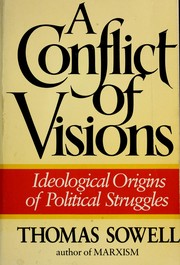
Why lasting political conflicts trace to two opposed visions of human nature.
“Two of Thomas Sowell's many brilliant books on how our current politics and culture came to be: A Conflict of Visions: Ideological Origins of Political Struggles by Thomas Sowell” — Marc Andreessen
Source: What I've Been Up To Lately — Marc Andreessen, a16z.com
Recommended by: Marc Andreessen
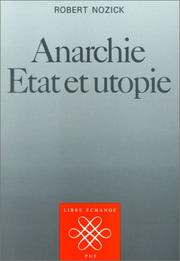
The case for a minimal state limited to protection, and against anything larger.
Recommended by: Marc Andreessen, Peter Thiel
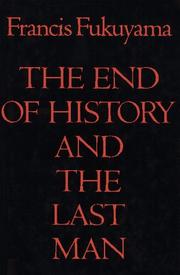
Why liberal democracy may be the end state of political change, and how people react.
Recommended by: Marc Andreessen, Peter Thiel
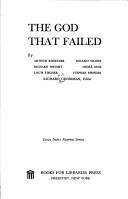
Six writers on their conversion to communism and their disillusionment with it.
Recommended by: Marc Andreessen

Elite theory: who rules, and why stated political aims mislead.
“The book that I always recommend on this topic is called "The Machiavellians," which is this sort of a famous book from the 1940s” — Marc Andreessen
Source: The a16z Show — Marc Andreessen with David Senra (transcript)
Recommended by: Marc Andreessen
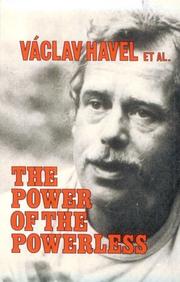
An essay on life under a communist regime and how dissent can arise within it.
“But then there's also the famous parable of the real life example, but the thing that Vaclav Havel talks about in the other good book on this topic, which is The Power of the Powerless, who is an anti-communist resistance fighter who ultimately became the president of Czechoslovakia after the fall of the wall.” — Marc Andreessen
Recommended by: Marc Andreessen