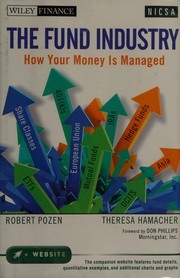
The Fund Industry
How mutual funds are structured, sold and regulated, from two industry insiders.
How funds are actually structured, distributed and regulated.
Summary
Robert Pozen ran Fidelity's investment operations and later chaired MFS, and Theresa Hamacher ran investment management at Nuveen. Together they wrote the standard textbook on the mutual fund business, covering it from the inside.
The content covers what funds are legally and operationally: the regulatory framework under the Investment Company Act, the board structure and the independent directors' role, the adviser relationship and the fee arrangement, and the distinction between the fund as a legal entity and the management company as a business. It covers portfolio management across equity and fixed income strategies, the measurement of performance and the problems with each measure, and the growth of index and exchange-traded products.
The business chapters are the distinctive part. They cover distribution, which the authors treat as the industry's actual competitive battleground, including the share class structures, the payments to intermediaries, and the platform economics; the operations including transfer agency, custody and pricing; the international variations in fund structure; and retirement plan channels. Pozen is candid about conflicts of interest between the management company's shareholders and the fund's investors, having run both sides. The book is used in university courses and by practitioners. Editions matter, since fee structures, distribution economics and the growth of passive investing have changed the industry substantially.
Key takeaways 7
- A mutual fund is a separate legal entity governed by its own board, and the management company that advises it is a different business with different owners.
- Distribution rather than investment performance is the industry's competitive battleground.
- Share class structures exist to route payments to intermediaries in ways that make the total cost difficult for investors to compute.
- Independent directors negotiate the advisory fee, and the effectiveness of that negotiation is the central governance question in the industry.
- Retirement plan channels determine flows for a large share of the industry, which makes plan sponsor relationships more valuable than retail marketing.
- The interests of the management company's shareholders and of the fund's investors conflict directly over fees and over asset growth.
- Fund performance measurement is confounded by survivorship, by benchmark selection and by the difference between fund and investor returns.
Who should read it
Anyone working in or investing in asset management who wants the industry's legal, operational and commercial structure explained by insiders.
Similar books 6
Chosen by shared topics, the entries that hold them, and the people who recommended both.
A practical manual for choosing and holding mutual funds, with costs in focus.
Recommended by: Mr. Money Mustache
How Markowitz, Sharpe, Fama, Black and Scholes built the theory of modern finance.
“But it was in his Capital Ideas, published in 1992, that I first learned of Louis Bachelier’s 1900 dissertation, The Theory of Speculation.” — John C. Bogle
Source: Success In Investment Management: What Can We Learn From Indexing?, page 1
Recommended by: John C. Bogle, Michael Mauboussin
How costs, turnover and fund structure decide what mutual fund investors earn.
“The founder of the Vanguard Group and father of the index-fund industry methodically sorts fact from fiction. Following his logical arguments can benefit you even if you never invest in a mutual fund, since Bogle touches on just about every crucial aspect of investing, including taxes, trading costs, diversification, performance measurement and the power of patience.” — Jason Zweig
Source: Best Books for Investors: A Short Shelf — jasonzweig.com
Recommended by: Jason Zweig, Michael Mauboussin and 4 others
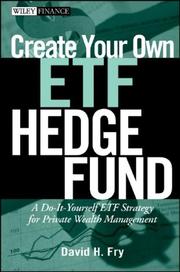
How individual investors can build a hedge-fund-style portfolio from ETFs.
Recommended by: Mohnish Pabrai
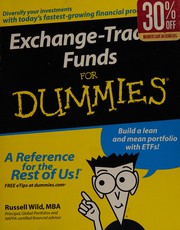
Exchange-traded funds explained in plain English: costs, risks and taxes.
Recommended by: Mohnish Pabrai
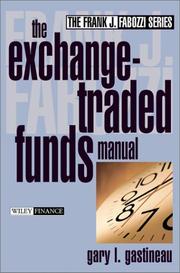
A technical reference on how exchange-traded funds are built and how they work.
Recommended by: Mohnish Pabrai