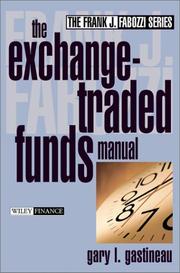
The Exchange-Traded Funds Manual
A technical reference on how exchange-traded funds are built and how they work.
Summary
Gastineau, who was involved in exchange-traded fund development at the American Stock Exchange, wrote the standard technical reference on how these instruments actually work.
The mechanical content is the substance. The creation and redemption process, in which authorised participants deliver or receive a basket of underlying securities in exchange for large blocks of fund shares, is what keeps the fund's market price close to its net asset value, and Gastineau explains why this arbitrage works and under what conditions it breaks. He covers the tax consequences of in-kind redemption, which allows an exchange-traded fund to dispose of low-basis securities without realising gains for continuing holders, and which is the structural tax advantage over mutual funds in the United States.
He also covers the regulatory history and the exemptive relief each structure required, the differences between unit investment trusts, open-end structures and grantor trusts, the trading costs and spreads that determine an investor's real cost, the index licensing arrangements, and the specific problems with fixed income and international products where the underlying does not trade when the fund does.
Gastineau is critical of index construction and of the reconstitution effect, arguing that funds tracking published indices are forced to trade at times when everyone knows they must, which costs holders measurably. He proposed alternatives.
The book is from 2002 and the product set has expanded enormously since, including leveraged, inverse, actively managed and thematic products the book does not cover. The mechanics it explains are unchanged.
Key takeaways 7
- The creation and redemption mechanism, in which authorised participants exchange baskets of securities for fund shares, is what keeps market price close to net asset value.
- In-kind redemption allows an exchange-traded fund to dispose of low-basis securities without realising taxable gains for continuing holders.
- An investor's real cost includes the trading spread and any premium or discount to net asset value, not only the expense ratio.
- Funds tracking published indices must trade at reconstitution dates that every other participant knows in advance, which costs holders measurably.
- Fixed income and international products face a structural problem because the underlying securities do not trade during the hours the fund does.
- The arbitrage that holds price to value depends on authorised participants being able and willing to transact, which is not guaranteed in a dislocation.
- Different legal structures including unit investment trusts, open-end funds and grantor trusts have different consequences for dividends, lending and tax.
Who should read it
Investors and allocators who need to understand exchange-traded fund mechanics, tax treatment and the conditions under which the arbitrage holds.
Who recommended it 1 · 1 direct
Similar books 6
Chosen by shared topics, the entries that hold them, and the people who recommended both.
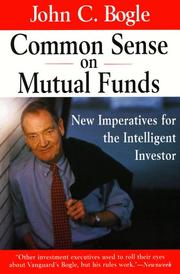
How costs, turnover and fund structure decide what mutual fund investors earn.
“The founder of the Vanguard Group and father of the index-fund industry methodically sorts fact from fiction. Following his logical arguments can benefit you even if you never invest in a mutual fund, since Bogle touches on just about every crucial aspect of investing, including taxes, trading costs, diversification, performance measurement and the power of patience.” — Jason Zweig
Source: Best Books for Investors: A Short Shelf — jasonzweig.com
Recommended by: Jason Zweig, Michael Mauboussin and 4 others
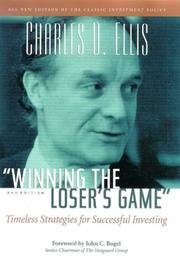
Why active investing became a loser's game, decided by errors, not by skill.
“In his marvelous book, Winning the Loser's Game, Charlie Ellis says” — Bill Miller
Source: Bill Miller 2Q 2020 Market Letter
Recommended by: Bill Miller, Michael Mauboussin and 2 others
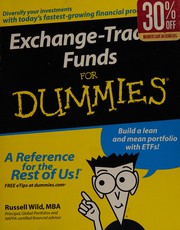
Exchange-traded funds explained in plain English: costs, risks and taxes.
Recommended by: Mohnish Pabrai
Stock prices follow a random walk, so a low-cost index fund beats stock picking.
“Even earlier, in 1973, in his classic A Random Walk Down Wall Street, Burton G. Malkiel had called for such a fund, although, alas, when we started it, I had yet to read his book.” — John C. Bogle
Source: CONVERGENCE!, page 1
Recommended by: Jason Zweig, John C. Bogle and 5 others
Fifty years of speeches and essays arguing for low-cost index funds.
Recommended by: Mohnish Pabrai, Mr. Money Mustache
Where it sits in the reference 2
Topics 4
As an Amazon Associate I earn from qualifying purchases.