Updates

  1. Person pages list letters, writing, profiles and links as sortable tables with filters, and show each person's companies as links; Fund letters show each letter's description in its own column.
  2. Experts show a checked job title and a short description of each person; 30 more people have photographs.
  3. Every company, fund, university and publication the experts work for has a page listing the people there.
  4. Fund letters show each letter's thesis and filter by it; 225 person pages list the essays, columns and newsletter issues the person wrote.
  5. Person pages list every essay and newsletter issue a person wrote, and their own books as a table in List view.
  6. Recommends shows the five largest kinds of book and the rest under More; browse pictures load sooner.
  7. Podcasts and talks link the original episode, filter by Audio and video or Press, and list each publisher once.
  8. Pages are wider, Recommends has List and Grid, and a filter clicked again turns off.
  9. Book cards sit in a ruled grid with Open Library and Goodreads links and each book's one-line note.
  10. Funds is now Investors; each investor's styles are buttons that filter the table.
  11. Podcasts and talks on a person's page filter by year and publisher and show as a list or a grid of pictures.
  12. Quotes show only people's own words: 472 summaries written by list sites are gone.
  13. Country pages open from Browse again, and every link on the shelf lands on a page.
  14. Subject and person pages show their sections as tabs, and each book appears once on a person's page.
  15. Book cards show the quote, who said it and the source; grids show five cards to a row.
  16. On a phone, a menu holds the sections, search, Updates, Feedback and dark mode.
  17. Feedback takes a screenshot of the page with no browser prompt, opens a screenshot full size when you click it, and clears itself once sent.
  18. Book cards are centred, search names the topic each book sits in, and any text cut short shows whole on hover.
  19. Search groups its results by kind: people, companies, geographies, subjects, topics, books, funds, fund letters and papers.
  20. The Books table lists who recommended each book by name, and the browser tab names the section you are in.
  21. Feedback can take a screenshot of the page, or one you paste or choose, and opens in the corner beside Updates.
  22. Each rail button reopens its section where you left it, and Browse, Table and People show on every book and subject page.
  23. Filters grey out choices that hold nothing instead of hiding them, and Books › People filters by authors or recommenders.
  24. Feedback takes a subject line and up to three screenshots.
  25. Biographies are grouped by the person they are about: 41 new pages, from Abraham Lincoln to Lee Kuan Yew.
  26. Sport splits into 23 sports, and Religion into one topic per faith.
  27. Book lists show as cards: the cover, one recommendation quote and every recommender by name.
  28. Seventeen subjects that had two or three pages under different names now have one page each.
  29. Every page lists its Experts as authors and recommenders, with a link to them on the Experts tab.
  30. Economics, Financial history, Financial panics and Accounting are subjects of their own, with one page per financial crisis.
  31. Book, person and subject pages open inside the app, so the tabs stay in view.
  32. 996 more book covers, and photographs or logos for 227 more people and companies.
  33. Books › Browse shows every subject as cards, and the rail holds Fund letters, Papers, Experts, Books and Funds.
  34. Every topic over 150 books splits into narrower topics, each with a page of its own.

Send feedback

What is it?
Screenshots, up to 3 (optional)
or paste one with Ctrl+V

We use your email only to reply to you.

The Great Demographic Reversal

The Great Demographic Reversal

Charles Goodhart, Manoj Pradhan
2020
T2 311 pages · about 5h 11m to read Open Librarygoodreads

Argues ageing turns from disinflationary to inflationary; the key macro claim.

Summary

Goodhart, a former Bank of England policymaker and LSE economist, and Pradhan, a former Morgan Stanley economist, argue that the disinflation of the past three decades was caused by a one-time expansion in the global supply of labour, and that this expansion is now reversing.

The historical claim is quantitative. Between roughly 1990 and 2018, the effective global labour force available to produce tradeable goods roughly doubled, through China's integration into world trade, the entry of the former Soviet bloc, the demographic bulge of working-age populations in developed countries, and rising female participation. This suppressed wage growth in developed economies, weakened labour's bargaining power, raised the return to capital, increased inequality within countries while reducing it between them, and produced the disinflation that central banks attributed to their own credibility.

The reversal follows from demography. China's working-age population is falling. Developed country populations are ageing and dependency ratios are rising. The authors argue this restores labour's bargaining power, raises wage growth, reduces inequality within countries, and produces structurally higher inflation and higher real interest rates. They argue further that dementia and long-term care costs will rise sharply and cannot be offshored or automated, that these costs fall on the state, and that combined with existing debt levels this creates a fiscal problem with no clean solution. They reject India and Africa as substitutes for China, arguing that neither can integrate labour into global manufacturing at comparable speed.

The book was published in 2020 and the inflation of 2021 to 2023 was widely read as supporting it, though the authors themselves would attribute that episode largely to pandemic supply disruption and fiscal transfers rather than to the demographic mechanism, which operates over decades. Critics argue that automation and artificial intelligence could substitute for the missing labour, that Japan's ageing produced deflation rather than inflation, and that the demographic effect on inflation is theoretically ambiguous because ageing reduces demand as well as supply.

Key takeaways 7

  1. The effective global labour supply for tradeable goods roughly doubled between 1990 and 2018, which suppressed wages and produced disinflation.
  2. Central banks attributed the disinflation to their own credibility when the cause was a one-time labour supply shock.
  3. China's working-age population is now falling, which removes the source of the disinflationary pressure.
  4. Ageing populations restore labour's bargaining power, which raises wage growth and structural inflation.
  5. Inequality within developed countries should fall as labour scarcity returns, reversing three decades of movement.
  6. Dementia and long-term care costs cannot be offshored or substantially automated and will fall on public budgets.
  7. Higher nominal rates combined with existing debt levels create a fiscal problem that neither growth nor inflation resolves cleanly.

Who should read it

Investors and operators making long-horizon assumptions about wages, inflation and rates who need the structural case that the last thirty years will not repeat.

Similar books 6

Chosen by shared topics, the entries that hold them, and the people who recommended both.
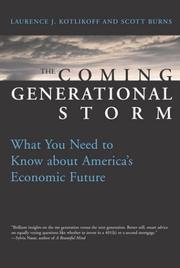
Laurence J. Kotlikoff, Scott Burns · 2004

US fiscal promises far exceed future revenue, which official debt figures hide.

Peter Zeihan · 2022

Why the US-guarded trading order is ending, and what that means for supply chains.

Recommended by: Andrew Wilkinson

Jennifer D. Sciubba · 2022

A political demographer on what the numbers do and do not determine.

David Graeber · 2011

Debt came before money and barter, and its history is one of forgiveness and revolt.

Recommended by: Patrick Collison

Darrell Bricker, John Ibbitson · 2019

The costs and benefits of a shrinking world population.

Camilla Cavendish · 2019

How a dozen countries respond as people over 65 come to outnumber small children.

Where it sits in the reference 3

Secular themes
Secular themes
Financial history

Topics

EconomicsSociology and CultureDemography, migration and generations