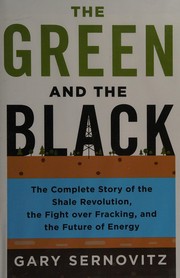
The Green and the Black: The Complete Story of the Shale Revolution, the Fight over Fracking and the Future of Energy
The shale revolution explained by an oil and gas insider.
Summary
Sernovitz works in oil and gas private equity and also writes fiction, and this book examines shale from both an industry insider's position and a self-consciously conflicted one, since he describes himself as both an oil investor and an environmentally concerned New Yorker.
The technical and economic content is the strongest part. He explains what shale wells actually are, why the production decline curves matter so much to the economics, how the acreage and leasing business works, why the industry was chronically cash-flow negative despite producing enormous quantities of oil and gas, and how the capital markets funded a decade of drilling that never repaid itself. He is precise about the difference between the resource being real and the investment being good, which most accounts blur.
The environmental chapters address the specific claims individually: water contamination and its actual mechanism through well casings, induced seismicity from wastewater disposal, methane leakage and its effect on the carbon comparison against coal, local air quality and community impact, and land use. He is careful about which claims the evidence supports.
His conclusion is that shale is neither the catastrophe nor the salvation its advocates on either side describe, and that the honest position requires holding both the emissions benefit relative to coal and the emissions cost relative to not burning it.
The book is short and well written. Its insider perspective on the capital destruction is more direct than journalistic accounts manage.
Key takeaways 7
- Shale wells decline extremely rapidly, which means production must be continually replaced by new drilling funded by new capital.
- The industry produced enormous quantities of oil and gas while being chronically cash-flow negative, which is a distinction between a real resource and a good investment.
- Capital markets funded a decade of drilling that never repaid itself, and the investors rather than the operators bore that cost.
- Water contamination from shale operations occurs through well casing failures near the surface rather than through fracturing fluid migrating up through rock.
- Methane leakage offsets part of the carbon benefit of gas displacing coal, and the size of the offset depends on the leakage rate.
- Wastewater disposal through deep injection wells has caused measurable induced seismicity, which is a documented consequence.
- The honest position holds both that gas emits less than coal and that it emits more than not burning it, and neither side of the debate does.
Who should read it
Energy investors who want an insider account of shale's capital economics alongside a careful treatment of the environmental claims.
Who recommended it 1 · 1 direct
“The best book I have read on the subject is The Green and The Black by Gary Sernovitz.”
Similar books 6
Chosen by shared topics, the entries that hold them, and the people who recommended both.
A short technical primer on oil: geology, extraction, refining, uses and reserves.
Recommended by: Mohnish Pabrai
How fracking was developed, and its economic and environmental consequences.
Recommended by: Mohnish Pabrai, The Barefoot Investor
Energy from 1990 to 2011: Russian and Caspian oil, Iraq, climate policy, renewables.
Recommended by: Bill Gates, Jim Collins, Mohnish Pabrai
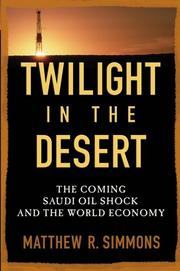
The argument that Saudi oil output was nearer its limit than the kingdom said.
Recommended by: Mohnish Pabrai
Why oil prices are stable only when a cartel or swing producer controls supply.
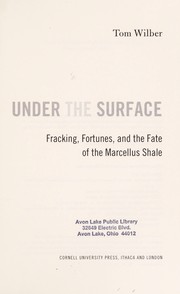
Fracking in the Marcellus Shale, from West Virginia to New York.
Recommended by: Mohnish Pabrai