Updates

  1. Person pages list letters, writing, profiles and links as sortable tables with filters, and show each person's companies as links; Fund letters show each letter's description in its own column.
  2. Experts show a checked job title and a short description of each person; 30 more people have photographs.
  3. Every company, fund, university and publication the experts work for has a page listing the people there.
  4. Fund letters show each letter's thesis and filter by it; 225 person pages list the essays, columns and newsletter issues the person wrote.
  5. Person pages list every essay and newsletter issue a person wrote, and their own books as a table in List view.
  6. Recommends shows the five largest kinds of book and the rest under More; browse pictures load sooner.
  7. Podcasts and talks link the original episode, filter by Audio and video or Press, and list each publisher once.
  8. Pages are wider, Recommends has List and Grid, and a filter clicked again turns off.
  9. Book cards sit in a ruled grid with Open Library and Goodreads links and each book's one-line note.
  10. Funds is now Investors; each investor's styles are buttons that filter the table.
  11. Podcasts and talks on a person's page filter by year and publisher and show as a list or a grid of pictures.
  12. Quotes show only people's own words: 472 summaries written by list sites are gone.
  13. Country pages open from Browse again, and every link on the shelf lands on a page.
  14. Subject and person pages show their sections as tabs, and each book appears once on a person's page.
  15. Book cards show the quote, who said it and the source; grids show five cards to a row.
  16. On a phone, a menu holds the sections, search, Updates, Feedback and dark mode.
  17. Feedback takes a screenshot of the page with no browser prompt, opens a screenshot full size when you click it, and clears itself once sent.
  18. Book cards are centred, search names the topic each book sits in, and any text cut short shows whole on hover.
  19. Search groups its results by kind: people, companies, geographies, subjects, topics, books, funds, fund letters and papers.
  20. The Books table lists who recommended each book by name, and the browser tab names the section you are in.
  21. Feedback can take a screenshot of the page, or one you paste or choose, and opens in the corner beside Updates.
  22. Each rail button reopens its section where you left it, and Browse, Table and People show on every book and subject page.
  23. Filters grey out choices that hold nothing instead of hiding them, and Books › People filters by authors or recommenders.
  24. Feedback takes a subject line and up to three screenshots.
  25. Biographies are grouped by the person they are about: 41 new pages, from Abraham Lincoln to Lee Kuan Yew.
  26. Sport splits into 23 sports, and Religion into one topic per faith.
  27. Book lists show as cards: the cover, one recommendation quote and every recommender by name.
  28. Seventeen subjects that had two or three pages under different names now have one page each.
  29. Every page lists its Experts as authors and recommenders, with a link to them on the Experts tab.
  30. Economics, Financial history, Financial panics and Accounting are subjects of their own, with one page per financial crisis.
  31. Book, person and subject pages open inside the app, so the tabs stay in view.
  32. 996 more book covers, and photographs or logos for 227 more people and companies.
  33. Books › Browse shows every subject as cards, and the rail holds Fund letters, Papers, Experts, Books and Funds.
  34. Every topic over 150 books splits into narrower topics, each with a page of its own.

Send feedback

What is it?
Screenshots, up to 3 (optional)
or paste one with Ctrl+V

We use your email only to reply to you.

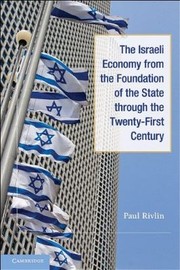
The Israeli Economy from the Foundation of t

The Israeli Economy from the Foundation of the State through the 21st Century

Paul Rivlin
2010
T3 308 pages · about 5h 8m to read Open Librarygoodreads

The wider economy: labour markets, defence spending, inflation and stabilisation.

Summary

Paul Rivlin, an economist at Tel Aviv University, traces the Israeli economy from the state's founding in 1948 through the first decade of the twenty-first century.

The periods he covers have distinct economic characters. The early decades involved absorbing mass immigration, building infrastructure, and a highly directed economy with substantial state and Histadrut ownership, funded partly by German reparations and by diaspora transfers. The 1970s brought the cost of the 1973 war, rising defence expenditure and accelerating inflation. The 1980s brought hyperinflation reaching several hundred per cent annually and the 1985 stabilisation programme, which combined fiscal correction with a temporary wage and price freeze and an exchange rate anchor and is regarded as a successful heterodox stabilisation. The 1990s brought Soviet immigration on a scale that increased the population by roughly a fifth, and the liberalisation that followed. The 2000s brought the technology sector's growth and the second intifada's economic cost.

Rivlin covers the structural issues throughout: defence spending as a share of output, the labour force participation of the ultra-Orthodox and Arab populations, income inequality, and the concentration of ownership in Israeli business groups. The book is an economic history rather than an argument and is the standard single-volume account. Readers wanting a critical assessment of the technology sector should add David Rosenberg's work.

Key takeaways 7

  1. Israel's early economy was highly directed, with substantial state and labour federation ownership, funded partly by reparations and diaspora transfers.
  2. The 1985 stabilisation combined fiscal correction, a temporary wage and price freeze and an exchange rate anchor, and ended hyperinflation quickly.
  3. Soviet immigration in the 1990s raised the population by roughly a fifth and supplied engineers who staffed the technology sector.
  4. Defence expenditure has consumed a share of Israeli output far above any comparable economy throughout the country's history.
  5. Low labour force participation among ultra-Orthodox and Arab populations constrains aggregate productivity and creates a fiscal problem.
  6. Israeli business ownership is concentrated in a small number of groups, which limits competition in domestic sectors.
  7. The technology sector's growth after the 1990s did not raise productivity in the rest of the economy.

Who should read it

Investors and analysts working on Israel who want the full economic history, including the stabilisation programme that ended hyperinflation.

Similar books 6

Chosen by shared topics, the entries that hold them, and the people who recommended both.

David Rosenberg · 2018

The sceptical case: the tech sector is an enclave, not an economy.

Aaron Jakes · 2020

Colonial economism and the debt-and-cotton origins of the modern Egyptian economy.

Daniel Gordis · 2016

Israel's political history and the choices behind its economy.

Dan Senor, Saul Singer · 2023

The social traits that the authors argue sustain Israel's success.
Alan Richards, John Waterbury · 1990

Egypt is the anchor case throughout; the standard textbook on regional state-business relations.

Christopher Cramer, John Sender, Arkebe Oqubay · 2020

A challenge to donor orthodoxy on how African economies should develop.

Where it sits in the reference 2

Geographies
Economics

Topics

EconomicsGeneral HistoryAsia, Africa, Latin America and the Middle East