Updates

  1. Person pages list letters, writing, profiles and links as sortable tables with filters, and show each person's companies as links; Fund letters show each letter's description in its own column.
  2. Experts show a checked job title and a short description of each person; 30 more people have photographs.
  3. Every company, fund, university and publication the experts work for has a page listing the people there.
  4. Fund letters show each letter's thesis and filter by it; 225 person pages list the essays, columns and newsletter issues the person wrote.
  5. Person pages list every essay and newsletter issue a person wrote, and their own books as a table in List view.
  6. Recommends shows the five largest kinds of book and the rest under More; browse pictures load sooner.
  7. Podcasts and talks link the original episode, filter by Audio and video or Press, and list each publisher once.
  8. Pages are wider, Recommends has List and Grid, and a filter clicked again turns off.
  9. Book cards sit in a ruled grid with Open Library and Goodreads links and each book's one-line note.
  10. Funds is now Investors; each investor's styles are buttons that filter the table.
  11. Podcasts and talks on a person's page filter by year and publisher and show as a list or a grid of pictures.
  12. Quotes show only people's own words: 472 summaries written by list sites are gone.
  13. Country pages open from Browse again, and every link on the shelf lands on a page.
  14. Subject and person pages show their sections as tabs, and each book appears once on a person's page.
  15. Book cards show the quote, who said it and the source; grids show five cards to a row.
  16. On a phone, a menu holds the sections, search, Updates, Feedback and dark mode.
  17. Feedback takes a screenshot of the page with no browser prompt, opens a screenshot full size when you click it, and clears itself once sent.
  18. Book cards are centred, search names the topic each book sits in, and any text cut short shows whole on hover.
  19. Search groups its results by kind: people, companies, geographies, subjects, topics, books, funds, fund letters and papers.
  20. The Books table lists who recommended each book by name, and the browser tab names the section you are in.
  21. Feedback can take a screenshot of the page, or one you paste or choose, and opens in the corner beside Updates.
  22. Each rail button reopens its section where you left it, and Browse, Table and People show on every book and subject page.
  23. Filters grey out choices that hold nothing instead of hiding them, and Books › People filters by authors or recommenders.
  24. Feedback takes a subject line and up to three screenshots.
  25. Biographies are grouped by the person they are about: 41 new pages, from Abraham Lincoln to Lee Kuan Yew.
  26. Sport splits into 23 sports, and Religion into one topic per faith.
  27. Book lists show as cards: the cover, one recommendation quote and every recommender by name.
  28. Seventeen subjects that had two or three pages under different names now have one page each.
  29. Every page lists its Experts as authors and recommenders, with a link to them on the Experts tab.
  30. Economics, Financial history, Financial panics and Accounting are subjects of their own, with one page per financial crisis.
  31. Book, person and subject pages open inside the app, so the tabs stay in view.
  32. 996 more book covers, and photographs or logos for 227 more people and companies.
  33. Books › Browse shows every subject as cards, and the rail holds Fund letters, Papers, Experts, Books and Funds.
  34. Every topic over 150 books splits into narrower topics, each with a page of its own.

Send feedback

What is it?
Screenshots, up to 3 (optional)
or paste one with Ctrl+V

We use your email only to reply to you.

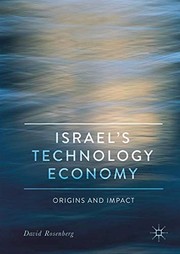
Israel's Technology Economy

Israel's Technology Economy

David Rosenberg
2018
T3 287 pages · about 4h 47m to read Open Librarygoodreads

The sceptical case: the tech sector is an enclave, not an economy.

Summary

David Rosenberg, a business journalist in Israel, examines the start-up nation account and argues it describes a small enclave rather than the Israeli economy. The technology sector employs roughly eight to nine per cent of the Israeli workforce and produces a large share of exports, and Rosenberg's question is why that success has not spread.

His explanation combines several factors. The sector's business model favours selling companies early to foreign acquirers rather than building firms to scale, which limits the accumulation of managerial and marketing capability inside Israel. Military technical training supplies engineers to the sector but is available only to those who serve, which excludes Arab citizens and most ultra-Orthodox men. The rest of the economy suffers from low productivity, concentrated ownership, weak competition in domestic services, and an education system that produces poor results outside the technical elite. The result he describes is a dual economy in which technology wages and property prices rise while most workers see little gain.

Rosenberg also questions whether the sector's advantages are durable. He argues that the military pipeline is narrowing as the units concerned professionalise, that multinational research centres in Israel capture value abroad, and that government policy has taken the sector's success as evidence that no further intervention is needed. The book is journalism rather than economics, and readers wanting quantitative treatment of Israeli productivity should go to the Bank of Israel's research. The dual-economy diagnosis has been widely accepted since.

Key takeaways 7

  1. Israel's technology sector employs under a tenth of the workforce and has not raised productivity in the rest of the economy.
  2. The Israeli model produces companies sold early to foreign acquirers rather than firms that grow to scale domestically.
  3. Military technical service supplies the sector's engineers, which excludes populations that do not serve and limits the talent pool.
  4. Multinational research centres in Israel employ engineers while capturing the resulting value in the parent company's jurisdiction.
  5. Concentrated ownership and weak competition in Israeli domestic services keep consumer prices high and productivity low.
  6. Rosenberg argues that the start-up nation narrative has excused the government from addressing the rest of the economy.
  7. Rising technology wages and housing costs widen the gap between the enclave and the population outside it.

Who should read it

Investors and policymakers who want a sceptical assessment of national start-up ecosystems and of whether technology clusters lift the economies around them.

Similar books 6

Chosen by shared topics, the entries that hold them, and the people who recommended both.
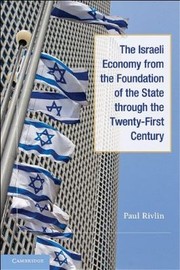
Paul Rivlin · 2010

The wider economy: labour markets, defence spending, inflation and stabilisation.
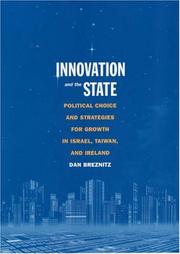
Dan Breznitz · 2007

How Israel, Taiwan and Ireland each used the state to build IT industries.

Avi Jorisch · 2018

Case studies of Israeli technologies and how they were commercialised.
Alan Richards, John Waterbury · 1990

Egypt is the anchor case throughout; the standard textbook on regional state-business relations.

Christopher Cramer, John Sender, Arkebe Oqubay · 2020

A challenge to donor orthodoxy on how African economies should develop.

Arang Keshavarzian · 2003

How informal credit, trust networks and trade finance work when the banking system does not.

Where it sits in the reference 2

Geographies
Economics

Topics

Technology and ComputingEconomicsTech strategy and platform economics