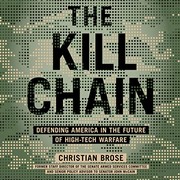
The Kill Chain
Why the US buys military power wrongly, and the case for cheap autonomous systems.
The defence procurement failure Palantir sells against.
Summary
Brose spent years as staff director of the Senate Armed Services Committee under John McCain, and he wrote this as an argument about how the United States buys and organises military power. His unit of analysis is the kill chain: the sequence of understanding a situation, deciding what to do, and taking action. He argues that American defense planning has fixated on platforms, meaning aircraft carriers, manned fighters and large bases, while China has built forces designed to break American kill chains through long-range missiles, sensors, jamming and cyber attack.
The consequence, he says, is that the US buys small numbers of extremely expensive systems that are precisely the targets an opponent has optimised against. He describes classified and unclassified wargames in which American forces lose quickly, and he traces the acquisition process, requirements writing, congressional politics and service culture that keep producing the same answers. His recommendation is a shift to large numbers of cheap, expendable, autonomous systems, to software and machine intelligence as the core capability, and to buying outcomes rather than platforms.
The evidence is insider testimony about Pentagon process plus open-source analysis of Chinese doctrine. There is little quantitative modelling.
Brose became an executive at Anduril Industries, which sells the kind of autonomous systems he advocates, and readers should weigh that. The book was also written before the Ukraine war, which supplied real evidence about cheap drones, attrition and the vulnerability of expensive platforms, largely supporting his direction while complicating his confidence that software alone decides outcomes.
Key takeaways 7
- Military advantage comes from closing the sense-decide-act loop faster than the opponent, not from owning better platforms.
- China has built its forces specifically to destroy the American kill chain rather than to match American platforms.
- The Pentagon's requirements and acquisition process guarantees small numbers of expensive systems regardless of strategic need.
- Large numbers of cheap expendable autonomous systems would survive a contested environment better than a few exquisite ones.
- American wargames have repeatedly shown US forces losing a Pacific conflict, and those results have not changed procurement.
- Congress protects programs for their jobs rather than their military value, which locks in obsolete capabilities.
- Software and machine intelligence, not airframes and hulls, are now the components that determine combat outcomes.
Who should read it
Investors and founders in defense technology who need the strategic argument that underwrites the sector, and anyone assessing how procurement politics constrains what gets bought.
Who recommended it 1
Similar books 6
Chosen by shared topics, the entries that hold them, and the people who recommended both.
How the Defense Innovation Unit brought Silicon Valley technology to the military.
Palantir's chief executive on why technology firms should serve national power.
How Knudsen and Kaiser led America's industrial build-up for the Second World War.
“One of the best books I've read, it's a great story of industrial production and heroes.” — Christopher Bloomstran
Source: Semper Augustus 2020 Letter to Clients, 'To Read or Not to Read', p. 57
Recommended by: Christopher Bloomstran, Patrick Collison
How Lockheed Martin operates and how it shapes the defence policy that buys from it.
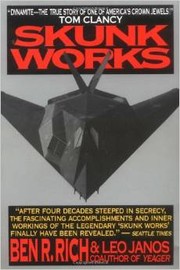
Insider account of Lockheed's advanced projects unit.
Recommended by: Jim Collins, Patrick Collison and 2 others
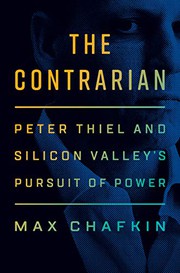
A critical biography of Peter Thiel, from PayPal and Palantir to politics.
Recommended by: Andrew Wilkinson