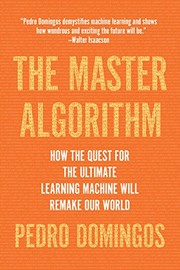
The Master Algorithm
The five schools of machine learning, and the search for one algorithm to unite them.
The five tribes of machine learning explained for non-specialists
Summary
Domingos, a machine learning researcher, argues that the field consists of five distinct schools with different assumptions, techniques and philosophical origins, and that a unified algorithm combining all five is the objective the field should pursue.
The five tribes are the symbolists, who treat learning as inverse deduction and work with rules and logic; the connectionists, who reverse-engineer the brain and work with neural networks and backpropagation; the evolutionaries, who simulate natural selection through genetic algorithms; the Bayesians, who treat learning as probabilistic inference and update beliefs with evidence; and the analogisers, who reason from similarity and work with support vector machines and nearest neighbour methods.
For each he explains the core assumption, the master algorithm within that tradition, what it does well and where it fails. His argument is that each captures something real and that none is sufficient, and he sketches his own attempt at unification through Markov logic networks. He also covers what machine learning cannot do, the difference between correlation and causation in learned models, the data requirements, and the social consequences including the concentration of data and the effects on employment and privacy.
The book was published in 2015, before the transformer architecture and before the current scale of connectionist success. The subsequent decade has gone overwhelmingly to one tribe, which weakens the claim that unification is the path. Domingos has become a public critic of parts of the field since. The taxonomy remains the clearest available explanation of why different machine learning approaches exist and what each assumes.
Key takeaways 8
- Machine learning consists of five distinct schools with different assumptions about how learning works, and each has its own core algorithm.
- Symbolists treat learning as inverse deduction, connectionists reverse-engineer the brain, evolutionaries simulate selection, Bayesians perform probabilistic inference and analogisers reason from similarity.
- Each approach captures something real about learning and each fails in ways the others do not, which is the argument for unification.
- Every learning algorithm embeds assumptions about the structure of the data, and no algorithm can learn without them.
- A model that fits training data perfectly has usually learned the noise rather than the pattern, which is the central practical failure.
- Correlations learned from data do not establish causation, and models used for decisions require causal assumptions the data does not supply.
- Concentration of data produces concentration of capability, since the same algorithm performs differently depending on what it is trained on.
- The decade since publication has gone overwhelmingly to one tribe, which weakens the argument that unification is the path forward.
Who should read it
Investors and operators who want to understand why different machine learning approaches exist and what each assumes, with the 2015 date in view.
Who recommended it 4 · 3 direct
“Pedro Domingos, The Master Algorithm: How the Quest for the Ultimate Learning Machine Will Remake Our World (New York: Basic Books, 2015)”
Similar books 6
Chosen by shared topics, the entries that hold them, and the people who recommended both.
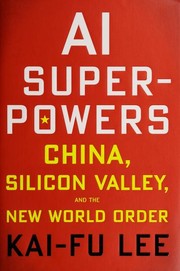
Why China may match the US in AI now that applying it matters more than research.
“Kai-Fu Lee, AI Superpowers: China, Silicon Valley, and the New World Order (Boston: Houghton Mifflin Harcourt Publishing, 2018), 22-26” — Michael Mauboussin
Source: One Job: Expectations and the Role of Intangible Investments, page 21
Recommended by: Balaji S. Srinivasan, Michael Mauboussin and 3 others

The textbook on deep learning: how machines learn layered concepts from data.
Recommended by: Vinod Khosla, Elon Musk and 2 others
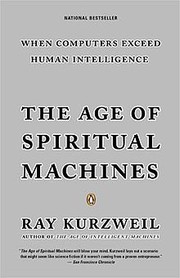
Predictions of computers passing the human brain and merging with human life.
“Ray Kurzweil, in his imagination-stretching book The Age of Spiritual Machines, suggests that it is possible to trace Moore’s Law, or some variant of it, back to about 1900.” — Michael Mauboussin
Source: Innovation and Markets: How Innovation Affects the Investing Process, page 13
Recommended by: Michael Mauboussin, Steve Jurvetson
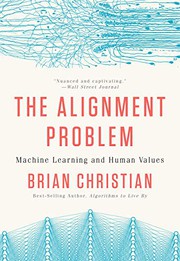
The struggle to make machine learning systems do what people actually intend.
Recommended by: Sam Altman
Why computers must recognise and express emotion to be intelligent.
“And so I was looking for a thesis topic and my fiance at the time went on Amazon and he said, "Oh, there's this really interesting book by this MIT professor called Rosalind Picard called Affective Computing.” — Rana el Kaliouby
Recommended by: Rana el Kaliouby
AI research from Dartmouth in 1956 to the funding cuts, told by the field's leaders.