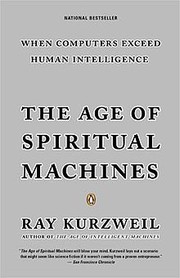
The Age of Spiritual Machines
Predictions of computers passing the human brain and merging with human life.
Summary
Ray Kurzweil, an inventor and futurist, sets out how technology will progress in the 21st century and how human and machine intelligence will merge. Viking published the book, subtitled When Computers Exceed Human Intelligence, on 1 January 1999. Kurzweil argues that evolution shows humans will one day build machines more intelligent than themselves, and presents his law of accelerating returns to explain why key events come ever faster and why computing power grows exponentially.
Exponential computing, he writes, is one ingredient of artificial intelligence; the others are automatic knowledge acquisition and algorithms such as recursion, neural networks and genetic algorithms. He predicts computers exceeding the memory and computing capacity of the human brain by 2020, with human-level ability soon after on affordable devices; relationships with automated personalities as teachers, companions and lovers; nanotechnology that augments bodies and cures cancer; direct neural links to computers; machines that appear to have free will and spiritual experiences; and intelligence spreading from Earth to influence the fate of the universe. Philosophers John Searle and Colin McGinn argued that computation alone cannot create consciousness.
Key takeaways 4
- The law of accelerating returns makes technological progress exponential.
- Kurzweil predicted computers would match the human brain's capacity around 2020.
- Humans and machines will merge through neural interfaces, he argues.
- Critics such as Searle deny that computation can produce consciousness.
Who should read it
Readers interested in the history of predictions about artificial intelligence.
Who recommended it 2 · 1 direct
“Ray Kurzweil, in his imagination-stretching book The Age of Spiritual Machines, suggests that it is possible to trace Moore’s Law, or some variant of it, back to about 1900.”
Similar books 6
Chosen by shared topics, the entries that hold them, and the people who recommended both.
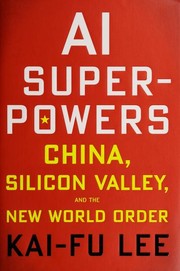
Why China may match the US in AI now that applying it matters more than research.
“Kai-Fu Lee, AI Superpowers: China, Silicon Valley, and the New World Order (Boston: Houghton Mifflin Harcourt Publishing, 2018), 22-26” — Michael Mauboussin
Source: One Job: Expectations and the Role of Intangible Investments, page 21
Recommended by: Balaji S. Srinivasan, Michael Mauboussin and 3 others
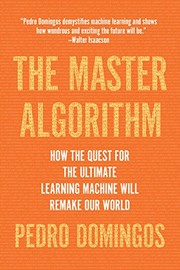
The five schools of machine learning, and the search for one algorithm to unite them.
“Pedro Domingos, The Master Algorithm: How the Quest for the Ultimate Learning Machine Will Remake Our World (New York: Basic Books, 2015)” — Michael Mauboussin
Source: How Well Do You Compare?, page 16
Recommended by: Michael Mauboussin, Shane Parrish and 2 others
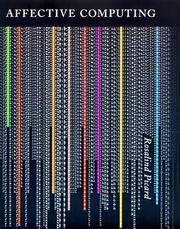
Why computers must recognise and express emotion to be intelligent.
“And so I was looking for a thesis topic and my fiance at the time went on Amazon and he said, "Oh, there's this really interesting book by this MIT professor called Rosalind Picard called Affective Computing.” — Rana el Kaliouby
Recommended by: Rana el Kaliouby
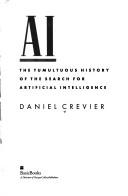
AI research from Dartmouth in 1956 to the funding cuts, told by the field's leaders.
The AI boom after ChatGPT, reported from inside Silicon Valley's funding rounds.
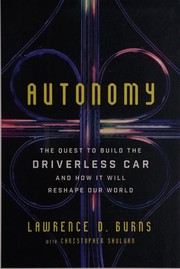
How driverless cars were built, and how they will change commuting, jobs and safety.