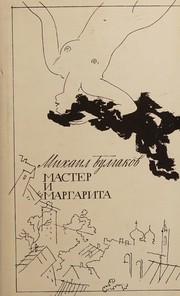
The Master and Margarita
A novel in which the devil, as Professor Woland, brings chaos to Soviet Moscow.
Summary
Bulgakov wrote the novel between 1928 and his death in 1940, revising it repeatedly, and it was published in censored form only in 1966 and complete in 1973. The devil, appearing as a foreign professor named Woland, arrives in Soviet Moscow with a retinue including a talking cat, and produces chaos among the literary and bureaucratic establishment.
Three narratives interlock. The Moscow chapters satirise the Soviet cultural apparatus, the housing bureaucracy, the state security organs and the writers' union, whose members are shown competing for apartments and restaurant privileges while producing work to order. The second narrative is a novel about Pontius Pilate written by a character called the Master, whose manuscript was rejected and who burned it and was committed to an asylum. The third follows Margarita, his lover, who accepts Woland's offer to host his ball in exchange for the Master's return.
The line that manuscripts do not burn is the novel's most quoted, and it carries the book's central claim about the survival of work under a regime that suppresses it. Bulgakov wrote it knowing it could not be published and burned an early draft himself.
The satire of the Soviet literary establishment is precise and requires some context to follow. The Pilate chapters are written in a completely different register and readers frequently find one thread more compelling than the other. Translations vary substantially in how they handle the humour and the wordplay. Its business relevance is minimal and its interest is as a document of work produced under conditions where publication was impossible.
Key takeaways 8
- Work produced under conditions where publication is impossible can survive the regime that suppressed it, which is what the phrase about manuscripts not burning asserts.
- The Soviet literary establishment is depicted as an apparatus for allocating apartments and privileges rather than for producing work.
- An institution that requires its members to produce to specification selects for people who have nothing of their own to say.
- Bureaucratic systems respond to inexplicable events by fitting them into their existing categories, which the novel uses for its central comedy.
- Cowardice is named as the worst of the vices, which is the judgment the Pilate narrative delivers on its central figure.
- People behave predictably when offered money and goods, which Woland demonstrates in the theatre scene as an experiment rather than as a temptation.
- Bulgakov wrote knowing the book could not be published in his lifetime and burned an early draft himself.
- The novel appeared in censored form twenty-six years after his death and complete only in 1973.
Who should read it
Readers interested in a satirical account of institutional life under a system that allocated everything, produced under conditions of certain suppression.
Who recommended it 5 · 1 direct
Similar books 6
Chosen by shared topics, the entries that hold them, and the people who recommended both.
An unfinished utopia built around organised scientific research.
Recommended by: Patrick Collison, Peter Thiel
Stephen Dedalus grows up in Dublin, feeling different from the other boys.
Recommended by: Patrick Collison
A novel setting Anna's ruinous affair against Levin's search for how to live.
Recommended by: Nat Eliason, Austen Allred, Laura R Walker and 5 others
All of the writer's fiction, newly translated into English, in a single volume.
Recommended by: Patrick Collison
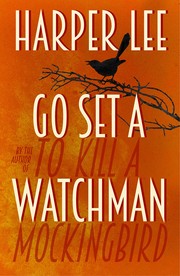
Scout Finch, aged twenty-six, returns home to Alabama to visit her father.
Recommended by: Patrick Collison
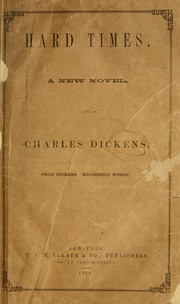
A novel of Victorian industrial society and its utilitarian schooling.
Recommended by: Patrick Collison