Anna Karenina
A novel setting Anna's ruinous affair against Levin's search for how to live.
Summary
Tolstoy's novel, serialised between 1875 and 1877, follows two parallel narratives. Anna, married to a senior official, begins an affair with Count Vronsky, leaves her husband and son, is excluded from society, and eventually kills herself. Konstantin Levin, a landowner, courts and marries Kitty, works on his estate, struggles with agricultural reform and with the question of how to live, and reaches an uncertain religious resolution.
The structure sets the two against each other. Anna's story runs on passion, social judgment and the impossibility of her position under the double standard applied to men and women. Levin's runs on work, family and the search for meaning, and is largely autobiographical.
The opening line, that happy families are all alike and every unhappy family is unhappy in its own way, has produced what is now called the Anna Karenina principle, which states that success requires avoiding every one of several possible failures while failure requires only one. Diamond used it in Guns, Germs and Steel and it has been applied widely in business and in statistics.
The agricultural chapters contain Tolstoy's arguments about labour, land ownership and the failure of imported Western management methods in Russian conditions, which readers frequently skip and which carry the book's economic thinking. The novel is long and the Levin sections lose many readers. Tolstoy's moral position on Anna is debated, since the narration is sympathetic while the plot is punitive. Translations vary considerably. Its business readership comes mainly through the principle in the first line rather than through the novel itself.
Key takeaways 8
- Success requires avoiding every one of several possible failures while failure requires only one, which is the principle drawn from the opening line.
- Social rules are applied asymmetrically, and the same conduct that excludes Anna leaves Vronsky's position intact.
- Levin's satisfaction comes from work, family and physical labour rather than from any conclusion he reaches by reasoning.
- Imported management and agricultural methods failed on Russian estates because they ignored the conditions and incentives of the people doing the work.
- Passion pursued against the social structure destroys the position that made the person's life possible, which the novel presents as a mechanism rather than as a judgment.
- Institutional and bureaucratic careers, represented by Karenin, produce competence without any capacity to address a personal crisis.
- The search for meaning through argument produces nothing, and Levin's resolution arrives through practice rather than through conclusion.
- The narration is sympathetic toward Anna while the plot destroys her, which is why the moral position of the novel remains disputed.
Who should read it
Readers who want the novel behind a principle widely cited in business, and a nineteenth-century treatment of work, meaning and social constraint.
Who recommended it 8 · 1 direct
Similar books 6
Chosen by shared topics, the entries that hold them, and the people who recommended both.
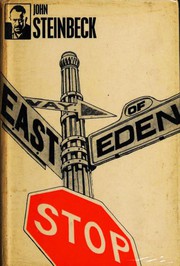
A historical family novel of love, depravity and the struggle for acceptance.
Recommended by: Andrew Wilkinson, Mohnish Pabrai and 2 others

Napoleon's invasion of Russia, followed through Pierre, Prince Andrei and Natasha.
“But War and Peace is still clearly better than Anna Karenina, which is more of a mono novel, and less complex and sprawling, right?” — Tyler Cowen
Source: Dan Wang on What China and America Can Learn from Each Other (Ep. 263) | Conversations with Tyler
Recommended by: Jim Collins, Mohnish Pabrai and 3 others
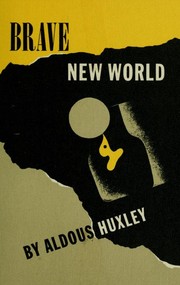
A novel of a future world where people are bred in hatcheries into contented castes.
“But alongside Orwell's dark vision, there was this other slightly older and less well known but equally chilling vision of Huxley's Brave New World.” — Tristan Harris
Source: The Tim Ferriss Show Transcripts: Tristan Harris — Fighting Skynet and Firewalling Attention (#387)
Recommended by: Matt Mullenweg, Stewart Brand and 3 others
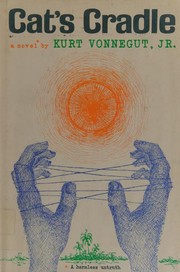
An apocalyptic satire of modern man and his madness, with an invented religion.
Recommended by: Mohnish Pabrai, Nat Eliason, Ev Williams
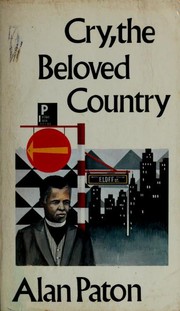
A Zulu pastor and his son in a South Africa divided by racial injustice.
Recommended by: Melinda Gates, Oprah Winfrey
A novel of an American with Spanish guerrillas sent to blow up a bridge.
Recommended by: Jim Collins, Mohnish Pabrai, Nat Eliason and 2 others