Updates

  1. Person pages list letters, writing, profiles and links as sortable tables with filters, and show each person's companies as links; Fund letters show each letter's description in its own column.
  2. Experts show a checked job title and a short description of each person; 30 more people have photographs.
  3. Every company, fund, university and publication the experts work for has a page listing the people there.
  4. Fund letters show each letter's thesis and filter by it; 225 person pages list the essays, columns and newsletter issues the person wrote.
  5. Person pages list every essay and newsletter issue a person wrote, and their own books as a table in List view.
  6. Recommends shows the five largest kinds of book and the rest under More; browse pictures load sooner.
  7. Podcasts and talks link the original episode, filter by Audio and video or Press, and list each publisher once.
  8. Pages are wider, Recommends has List and Grid, and a filter clicked again turns off.
  9. Book cards sit in a ruled grid with Open Library and Goodreads links and each book's one-line note.
  10. Funds is now Investors; each investor's styles are buttons that filter the table.
  11. Podcasts and talks on a person's page filter by year and publisher and show as a list or a grid of pictures.
  12. Quotes show only people's own words: 472 summaries written by list sites are gone.
  13. Country pages open from Browse again, and every link on the shelf lands on a page.
  14. Subject and person pages show their sections as tabs, and each book appears once on a person's page.
  15. Book cards show the quote, who said it and the source; grids show five cards to a row.
  16. On a phone, a menu holds the sections, search, Updates, Feedback and dark mode.
  17. Feedback takes a screenshot of the page with no browser prompt, opens a screenshot full size when you click it, and clears itself once sent.
  18. Book cards are centred, search names the topic each book sits in, and any text cut short shows whole on hover.
  19. Search groups its results by kind: people, companies, geographies, subjects, topics, books, funds, fund letters and papers.
  20. The Books table lists who recommended each book by name, and the browser tab names the section you are in.
  21. Feedback can take a screenshot of the page, or one you paste or choose, and opens in the corner beside Updates.
  22. Each rail button reopens its section where you left it, and Browse, Table and People show on every book and subject page.
  23. Filters grey out choices that hold nothing instead of hiding them, and Books › People filters by authors or recommenders.
  24. Feedback takes a subject line and up to three screenshots.
  25. Biographies are grouped by the person they are about: 41 new pages, from Abraham Lincoln to Lee Kuan Yew.
  26. Sport splits into 23 sports, and Religion into one topic per faith.
  27. Book lists show as cards: the cover, one recommendation quote and every recommender by name.
  28. Seventeen subjects that had two or three pages under different names now have one page each.
  29. Every page lists its Experts as authors and recommenders, with a link to them on the Experts tab.
  30. Economics, Financial history, Financial panics and Accounting are subjects of their own, with one page per financial crisis.
  31. Book, person and subject pages open inside the app, so the tabs stay in view.
  32. 996 more book covers, and photographs or logos for 227 more people and companies.
  33. Books › Browse shows every subject as cards, and the rail holds Fund letters, Papers, Experts, Books and Funds.
  34. Every topic over 150 books splits into narrower topics, each with a page of its own.

Send feedback

What is it?
Screenshots, up to 3 (optional)
or paste one with Ctrl+V

We use your email only to reply to you.

The Number

The Number

Alex Berenson
2003
T2 288 pages · about 4h 48m to read Open Librarygoodreads

How the earnings-per-share culture produced WorldCom-style accounting.

Summary

Alex Berenson covered Wall Street for the New York Times and wrote this history of how quarterly earnings per share came to dominate American corporate behaviour, and of what that dominance produced.

The historical section traces the development of American accounting and securities regulation from the nineteenth century through the establishment of the Securities and Exchange Commission, the professionalisation of auditing, and the emergence of the sell-side analyst. Berenson shows how a single number, earnings per share, came to be the focus of company disclosure, analyst forecasting and share price reaction, and how the growth of the analyst community created a consensus estimate that companies were then expected to meet exactly.

His argument is that meeting the number became the objective and that everything else followed from it: earnings management through reserve accounts and revenue recognition timing, the pressure on auditors whose consulting revenue depended on the client, the compensation of executives in options whose value depended on the share price, and eventually outright fraud at Enron, WorldCom and elsewhere. He documents the specific accounting techniques. The book was published in 2003, after Sarbanes-Oxley, and the auditor independence rules it argues for were partly adopted. Berenson is a reporter rather than an accountant and simplifies some technical material. The history of how one number came to dominate is the book's contribution.

Key takeaways 7

  1. Quarterly earnings per share became the single measure that companies, analysts and investors organised around.
  2. The analyst consensus estimate created a specific number companies were expected to meet, which made small misses disproportionately costly.
  3. Earnings management through reserves and revenue recognition timing was routine long before it became fraud.
  4. Auditors whose consulting revenue depended on the client could not enforce standards against that client.
  5. Option compensation gave executives a direct interest in the share price, which the earnings number drove.
  6. Berenson argues that fraud at Enron and WorldCom was the endpoint of a continuum rather than a departure from normal practice.
  7. Accounting numbers are estimates within ranges, and the pressure to hit a target determines where within the range a company reports.

Who should read it

Investors and directors who want the history of how quarterly earnings targets came to drive corporate behaviour and where that pressure leads.

Similar books 6

Chosen by shared topics, the entries that hold them, and the people who recommended both.

Terry Smith · 1992

The accounting tricks British companies used to inflate profits, firm by firm.

Dan Reingold, Jennifer Reingold · 2006

A telecom analyst on the conflicts of interest in research during the 1990s bubble.
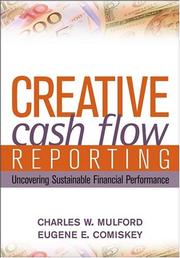
Charles W. Mulford, Eugene E. Comiskey · 2005

How operating cash flow itself gets dressed up.

Recommended by: Mohnish Pabrai
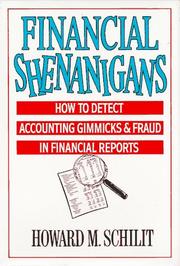
Howard M. Schilit, Jeremy Perler · 1993

The tricks companies use to inflate earnings, cash flow and key metrics, by case.

“Some of my favorites include Howard M. Schilit and Jeremy Perler, Financial Shenanigans” — Michael Mauboussin

Source: Thirty Years: Reflections on the Ten Attributes of Great Investors (Credit Suisse)

Recommended by: Michael Mauboussin, Anu Hariharan

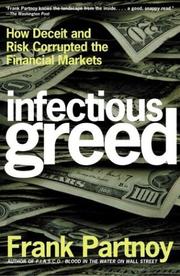
Frank Partnoy · 2003

How finance used complexity to hide risk from the 1980s through Enron.

Where it sits in the reference 2

Companies
Accounting

Topics

AccountingFinance and Markets