Financial Warnings: Detecting Earning Surprises, Avoiding Business Troubles, Implementing Corrective Strategies
Summary
Mulford and Comiskey, accounting professors at Georgia Tech, set out how to identify deteriorating financial condition and impending earnings disappointments from published financial statements before the deterioration is announced.
The analytical content covers the specific signals. Divergence between reported earnings and operating cash flow, sustained in either direction, indicates that one of the two figures is being managed. Rising accounts receivable relative to sales indicates either revenue recognised before collection is likely or customers in difficulty. Rising inventory relative to cost of sales indicates demand weakness that has not yet reached the income statement. Changes in accounting estimates including depreciation lives, allowances and pension assumptions shift earnings between periods without any economic change. Capitalisation of costs previously expensed moves spending off the income statement. Related party transactions, changes in auditors, restatements and unusual timing of disclosures are structural warnings independent of the numbers.
They also cover the mechanics of earnings management, distinguishing between the choices permitted within accounting standards, the aggressive interpretations that stretch them, and the outright violations, and they are precise about which category each technique falls into.
The book is technical and requires accounting fluency. It is from 1996 and the specific standards have changed substantially, particularly on revenue recognition, leases and pensions, so the individual techniques must be checked against current rules. The analytical approach and the signal categories transfer directly, and Mulford's later Creative Cash Flow Reporting extends the cash flow material.
Key takeaways 7
- A sustained divergence between reported earnings and operating cash flow in either direction indicates that one of the two figures is being managed.
- Accounts receivable rising faster than sales indicates either premature revenue recognition or customers in financial difficulty.
- Inventory rising faster than cost of sales signals demand weakness that has not yet appeared in reported earnings.
- Changes in accounting estimates including depreciation lives, allowances and pension assumptions shift earnings between periods with no economic change.
- Capitalising costs previously expensed moves current spending off the income statement and into future depreciation.
- Auditor changes, restatements, related party transactions and unusual disclosure timing are warnings independent of any figure in the accounts.
- Earnings management divides into permitted choices, aggressive interpretations and violations, and distinguishing them determines what the finding means.
Who should read it
Analysts and credit investors who need to identify deteriorating condition and earnings management from published statements before it is announced.
About Charles W. Mulford
Professor of accounting at Georgia Tech and director of its Financial Analysis Lab.
The Financial Numbers Game catalogues the specific devices companies use to flatter reported results - revenue recognition timing, capitalised costs, reserve releases, one-off classification - and shows how to find each one in the filings. Creative Cash Flow Reporting does the same for the cash flow statement, where operating cash flow can be raised by classification choices that leave the cash unchanged.
Who recommended it 1 · 1 direct
Similar books 6
Chosen by shared topics, the entries that hold them, and the people who recommended both.
How operating cash flow itself gets dressed up.
Recommended by: Mohnish Pabrai
The accounting tricks British companies used to inflate profits, firm by firm.
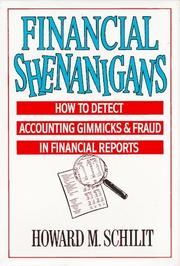
The tricks companies use to inflate earnings, cash flow and key metrics, by case.
“Some of my favorites include Howard M. Schilit and Jeremy Perler, Financial Shenanigans” — Michael Mauboussin
Source: Thirty Years: Reflections on the Ten Attributes of Great Investors (Credit Suisse)
Recommended by: Michael Mauboussin, Anu Hariharan
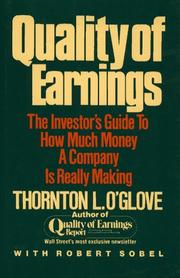
How to test whether reported earnings reflect reality, from tax books to receivables.
Recommended by: Rational Capital Investment Fund and 1 other
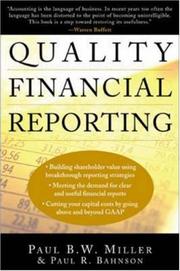
Recommended by: Mohnish Pabrai
Where it sits in the reference 2
Topics