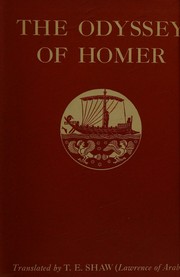
The Odyssey
The Greek epic of Odysseus's ten-year journey home from Troy to Ithaca.
Summary
The Odyssey is a Greek epic poem in twenty-four books, composed around the eighth century BCE from an oral tradition, following Odysseus' ten-year journey home from Troy and the situation at Ithaca where suitors have occupied his household and are consuming his property while his wife Penelope delays them.
The structure is not chronological. The first four books follow Telemachus searching for news of his father, the middle books have Odysseus narrate his own adventures retrospectively at the Phaeacian court, and the final third covers his return in disguise and the killing of the suitors.
The qualities the poem attributes to Odysseus are practical rather than heroic in the Iliad's sense. He is described repeatedly as of many turns, meaning resourceful and devious, and he survives through disguise, deception, patience and the willingness to accept humiliation. He conceals his identity for extended periods, tests people before revealing himself, and refuses immortality offered by Calypso in favour of returning to a mortal wife and an ordinary kingdom.
The episodes that circulate independently include the Cyclops, the Sirens, Scylla and Charybdis, and Circe. The Sirens episode, in which Odysseus binds himself to the mast in advance because he knows he will want to be released, is the standard reference for a commitment device. Translations differ enormously, and Emily Wilson's 2017 version is substantially different in register from earlier ones. The poem's treatment of the slaves killed at the end reads very differently now. Its business use is largely the commitment device and the resourcefulness of its protagonist.
Key takeaways 8
- Odysseus survives through resourcefulness, disguise and deception rather than through the direct courage the heroic tradition valued.
- Binding yourself in advance against a future preference you know you will have is the standard device the Sirens episode established.
- Concealing your identity and testing people before revealing yourself is Odysseus' consistent practice on returning.
- Patience under humiliation, including being insulted in his own house while disguised, is treated as the skill that made the outcome possible.
- He refuses immortality offered by Calypso in order to return to a mortal life, which the poem presents as the correct choice.
- An absent leader's property and household are consumed by whoever is present, which is the situation the poem opens with.
- Choosing between two bad options deliberately, as at Scylla and Charybdis, is presented as the actual form most decisions take.
- Translations differ enormously in register, and the choice of translation changes the reading experience substantially.
Who should read it
Readers wanting the foundational narrative of resourcefulness and delayed return, and the origin of the commitment device.
Who recommended it 9 · 7 direct
“And I'm re-reading, currently, The Odyssey by Homer in a new translation by Emily Wilson. Other books that I have found to be really great that I've read in the past year are - a really wonderful book, A Tomb for Boris Davidovich by Danilo Kis; Hannah Versus the Tree by Leland de la Durantaye; Ethan Frome by Edith Wharton.”
“Yes, as we read in Homer’s The Odyssey, “fair dealing yields more profit in the end.”
Similar books 6
Chosen by shared topics, the entries that hold them, and the people who recommended both.
The epic poem of the Trojan War: the clash of arms, the fury and grief of loss.
Recommended by: Jim Collins, Nat Eliason, Stewart Brand and 3 others
A young prince's halting pursuit of revenge for the murder of his father.
Recommended by: David Perell, Patrick Collison, Ryan Holiday and 1 other
Rome's epic origin story: Aeneas flees fallen Troy through battle, love and loss.
Recommended by: Patrick Collison, Ryan Holiday and 2 others
The collected poems of an American poet.
Recommended by: Caterina Fake, Tim O’Reilly
King Gilgamesh and the wild hero Enkidu become friends and travel together.
Recommended by: Ryan Holiday, Stewart Brand, Eric Weinstein
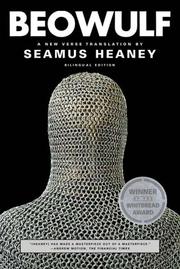
A verse translation of the Old English epic of a hero, monsters and a dragon.
Recommended by: Stewart Brand