Updates

  1. Person pages list letters, writing, profiles and links as sortable tables with filters, and show each person's companies as links; Fund letters show each letter's description in its own column.
  2. Experts show a checked job title and a short description of each person; 30 more people have photographs.
  3. Every company, fund, university and publication the experts work for has a page listing the people there.
  4. Fund letters show each letter's thesis and filter by it; 225 person pages list the essays, columns and newsletter issues the person wrote.
  5. Person pages list every essay and newsletter issue a person wrote, and their own books as a table in List view.
  6. Recommends shows the five largest kinds of book and the rest under More; browse pictures load sooner.
  7. Podcasts and talks link the original episode, filter by Audio and video or Press, and list each publisher once.
  8. Pages are wider, Recommends has List and Grid, and a filter clicked again turns off.
  9. Book cards sit in a ruled grid with Open Library and Goodreads links and each book's one-line note.
  10. Funds is now Investors; each investor's styles are buttons that filter the table.
  11. Podcasts and talks on a person's page filter by year and publisher and show as a list or a grid of pictures.
  12. Quotes show only people's own words: 472 summaries written by list sites are gone.
  13. Country pages open from Browse again, and every link on the shelf lands on a page.
  14. Subject and person pages show their sections as tabs, and each book appears once on a person's page.
  15. Book cards show the quote, who said it and the source; grids show five cards to a row.
  16. On a phone, a menu holds the sections, search, Updates, Feedback and dark mode.
  17. Feedback takes a screenshot of the page with no browser prompt, opens a screenshot full size when you click it, and clears itself once sent.
  18. Book cards are centred, search names the topic each book sits in, and any text cut short shows whole on hover.
  19. Search groups its results by kind: people, companies, geographies, subjects, topics, books, funds, fund letters and papers.
  20. The Books table lists who recommended each book by name, and the browser tab names the section you are in.
  21. Feedback can take a screenshot of the page, or one you paste or choose, and opens in the corner beside Updates.
  22. Each rail button reopens its section where you left it, and Browse, Table and People show on every book and subject page.
  23. Filters grey out choices that hold nothing instead of hiding them, and Books › People filters by authors or recommenders.
  24. Feedback takes a subject line and up to three screenshots.
  25. Biographies are grouped by the person they are about: 41 new pages, from Abraham Lincoln to Lee Kuan Yew.
  26. Sport splits into 23 sports, and Religion into one topic per faith.
  27. Book lists show as cards: the cover, one recommendation quote and every recommender by name.
  28. Seventeen subjects that had two or three pages under different names now have one page each.
  29. Every page lists its Experts as authors and recommenders, with a link to them on the Experts tab.
  30. Economics, Financial history, Financial panics and Accounting are subjects of their own, with one page per financial crisis.
  31. Book, person and subject pages open inside the app, so the tabs stay in view.
  32. 996 more book covers, and photographs or logos for 227 more people and companies.
  33. Books › Browse shows every subject as cards, and the rail holds Fund letters, Papers, Experts, Books and Funds.
  34. Every topic over 150 books splits into narrower topics, each with a page of its own.

Send feedback

What is it?
Screenshots, up to 3 (optional)
or paste one with Ctrl+V

We use your email only to reply to you.

The Odyssey

The Odyssey

Homer
no Open Library recordgoodreads

Summary

The Odyssey is a Greek epic poem in twenty-four books, composed around the eighth century BCE from an oral tradition, following Odysseus' ten-year journey home from Troy and the situation at Ithaca where suitors have occupied his household and are consuming his property while his wife Penelope delays them.

The structure is not chronological. The first four books follow Telemachus searching for news of his father, the middle books have Odysseus narrate his own adventures retrospectively at the Phaeacian court, and the final third covers his return in disguise and the killing of the suitors.

The qualities the poem attributes to Odysseus are practical rather than heroic in the Iliad's sense. He is described repeatedly as of many turns, meaning resourceful and devious, and he survives through disguise, deception, patience and the willingness to accept humiliation. He conceals his identity for extended periods, tests people before revealing himself, and refuses immortality offered by Calypso in favour of returning to a mortal wife and an ordinary kingdom.

The episodes that circulate independently include the Cyclops, the Sirens, Scylla and Charybdis, and Circe. The Sirens episode, in which Odysseus binds himself to the mast in advance because he knows he will want to be released, is the standard reference for a commitment device. Translations differ enormously, and Emily Wilson's 2017 version is substantially different in register from earlier ones. The poem's treatment of the slaves killed at the end reads very differently now. Its business use is largely the commitment device and the resourcefulness of its protagonist.

Key takeaways 8

  1. Odysseus survives through resourcefulness, disguise and deception rather than through the direct courage the heroic tradition valued.
  2. Binding yourself in advance against a future preference you know you will have is the standard device the Sirens episode established.
  3. Concealing your identity and testing people before revealing yourself is Odysseus' consistent practice on returning.
  4. Patience under humiliation, including being insulted in his own house while disguised, is treated as the skill that made the outcome possible.
  5. He refuses immortality offered by Calypso in order to return to a mortal life, which the poem presents as the correct choice.
  6. An absent leader's property and household are consumed by whoever is present, which is the situation the poem opens with.
  7. Choosing between two bad options deliberately, as at Scylla and Charybdis, is presented as the actual form most decisions take.
  8. Translations differ enormously in register, and the choice of translation changes the reading experience substantially.

Who should read it

Readers wanting the foundational narrative of resourcefulness and delayed return, and the origin of the commitment device.

Who recommended it 6 · 4 direct

Similar books 6

Chosen by shared topics, the entries that hold them, and the people who recommended both.
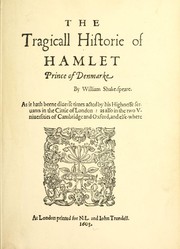
William Shakespeare · 1603
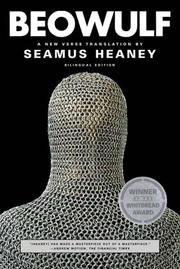
Seamus Heaney · 2000

Recommended by: Stewart Brand

Where it sits in the reference 0

No entry holds this book yet. It reached the reference because someone recommended it.

Topics

FictionPoetry, drama and myth