Updates

  1. Person pages list letters, writing, profiles and links as sortable tables with filters, and show each person's companies as links; Fund letters show each letter's description in its own column.
  2. Experts show a checked job title and a short description of each person; 30 more people have photographs.
  3. Every company, fund, university and publication the experts work for has a page listing the people there.
  4. Fund letters show each letter's thesis and filter by it; 225 person pages list the essays, columns and newsletter issues the person wrote.
  5. Person pages list every essay and newsletter issue a person wrote, and their own books as a table in List view.
  6. Recommends shows the five largest kinds of book and the rest under More; browse pictures load sooner.
  7. Podcasts and talks link the original episode, filter by Audio and video or Press, and list each publisher once.
  8. Pages are wider, Recommends has List and Grid, and a filter clicked again turns off.
  9. Book cards sit in a ruled grid with Open Library and Goodreads links and each book's one-line note.
  10. Funds is now Investors; each investor's styles are buttons that filter the table.
  11. Podcasts and talks on a person's page filter by year and publisher and show as a list or a grid of pictures.
  12. Quotes show only people's own words: 472 summaries written by list sites are gone.
  13. Country pages open from Browse again, and every link on the shelf lands on a page.
  14. Subject and person pages show their sections as tabs, and each book appears once on a person's page.
  15. Book cards show the quote, who said it and the source; grids show five cards to a row.
  16. On a phone, a menu holds the sections, search, Updates, Feedback and dark mode.
  17. Feedback takes a screenshot of the page with no browser prompt, opens a screenshot full size when you click it, and clears itself once sent.
  18. Book cards are centred, search names the topic each book sits in, and any text cut short shows whole on hover.
  19. Search groups its results by kind: people, companies, geographies, subjects, topics, books, funds, fund letters and papers.
  20. The Books table lists who recommended each book by name, and the browser tab names the section you are in.
  21. Feedback can take a screenshot of the page, or one you paste or choose, and opens in the corner beside Updates.
  22. Each rail button reopens its section where you left it, and Browse, Table and People show on every book and subject page.
  23. Filters grey out choices that hold nothing instead of hiding them, and Books › People filters by authors or recommenders.
  24. Feedback takes a subject line and up to three screenshots.
  25. Biographies are grouped by the person they are about: 41 new pages, from Abraham Lincoln to Lee Kuan Yew.
  26. Sport splits into 23 sports, and Religion into one topic per faith.
  27. Book lists show as cards: the cover, one recommendation quote and every recommender by name.
  28. Seventeen subjects that had two or three pages under different names now have one page each.
  29. Every page lists its Experts as authors and recommenders, with a link to them on the Experts tab.
  30. Economics, Financial history, Financial panics and Accounting are subjects of their own, with one page per financial crisis.
  31. Book, person and subject pages open inside the app, so the tabs stay in view.
  32. 996 more book covers, and photographs or logos for 227 more people and companies.
  33. Books › Browse shows every subject as cards, and the rail holds Fund letters, Papers, Experts, Books and Funds.
  34. Every topic over 150 books splits into narrower topics, each with a page of its own.

Send feedback

What is it?
Screenshots, up to 3 (optional)
or paste one with Ctrl+V

We use your email only to reply to you.

The Pentagon Wars

The Pentagon Wars

James G. Burton
1993
T3 306 pages · about 5h 6m to read Open Librarygoodreads

Insider account of the Bradley programme and operational testing.

Summary

James Burton was an Air Force colonel assigned to the Pentagon's testing office, and this is his account of the fight over live-fire testing of American combat vehicles, principally the Bradley Fighting Vehicle.

The substantive dispute concerned whether vehicles should be tested by firing real anti-armour weapons at them while loaded with fuel and ammunition, as they would be in combat. Burton argued that only such testing reveals what happens to crews. The Army resisted, and Burton documents the successive attempts to conduct tests with empty fuel tanks, with water instead of fuel, with ammunition removed, and with firing angles chosen to avoid vulnerable areas. When realistic tests were eventually conducted, they showed severe crew casualty risks from the aluminium armour and from stored ammunition, and design changes followed including spall liners and relocated ammunition storage.

The wider argument concerns the incentives in weapons procurement: programme offices are evaluated on delivering the programme, so testing that could delay or cancel it is treated as an attack. Burton also covers the requirement creep that turned the Bradley from a troop carrier into a vehicle attempting several incompatible roles. He was pushed toward early retirement as a result of the fight. The book is a participant's account with an evident position, and the events were dramatised in a 1998 film. The testing reforms it argued for were adopted in American law.

Key takeaways 7

  1. Live-fire testing with real fuel and ammunition reveals crew survivability risks that instrumented testing does not.
  2. The Army repeatedly configured tests to avoid conditions that would produce damaging results.
  3. Realistic testing showed severe crew casualty risks from the Bradley's aluminium armour and stored ammunition, and design changes followed.
  4. Programme offices are evaluated on delivering their programme, which makes testing that could delay it an institutional threat.
  5. Requirement creep turned the Bradley from a troop carrier into a vehicle attempting several incompatible roles at once.
  6. Burton was pushed toward early retirement for pursuing the testing, which he treats as the predictable institutional response.
  7. The testing reforms the book argued for were subsequently written into American law.

Who should read it

Readers interested in procurement incentives and in how organisations resist testing that could invalidate their programmes.

Similar books 6

Chosen by shared topics, the entries that hold them, and the people who recommended both.
William D. Hartung · 2010

Lockheed Martin as a case study in the contractor-state relationship.
Raj M. Shah, Christopher Kirchhoff · 2024

Insiders on Pentagon-Valley contracting where Palantir won

Norman R. Augustine · 1983

Fifty-two laws of management and defence spending, each backed by data.
Ben R. Rich, Leo Janos, Ben R./Janos, Leo Rich · 1994

Inside Lockheed's secret projects unit, from the U-2 to the stealth fighter.

Recommended by: Patrick Collison, Sam Altman
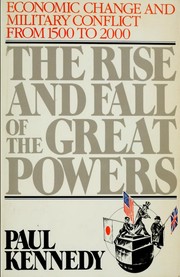
Paul Kennedy · 1987

Military spending measured against the economy that has to carry it.

“The River Out of Eden by Richard Dawkins, The Rise and Fall of the Great Powers by Paul Kennedy” — Ray Dalio

Source: Ray Dalio Reddit AMA, r/IAmA (u/RayTDalio)

Recommended by: Ray Dalio, Michael Wong
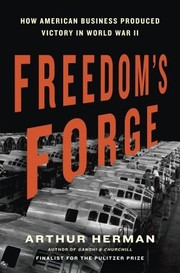
Arthur Herman · 2012

How Knudsen and Kaiser led America's industrial build-up for the Second World War.

“One of the best books I've read, it's a great story of industrial production and heroes.” — Christopher Bloomstran

Source: Semper Augustus 2020 Letter to Clients, 'To Read or Not to Read', p. 57

Recommended by: Christopher Bloomstran, Patrick Collison

Where it sits in the reference 2

Industries
Secular themes

Topics

War and StrategyPolitics and GovernmentGeopolitics and international relations