Updates

  1. Person pages list letters, writing, profiles and links as sortable tables with filters, and show each person's companies as links; Fund letters show each letter's description in its own column.
  2. Experts show a checked job title and a short description of each person; 30 more people have photographs.
  3. Every company, fund, university and publication the experts work for has a page listing the people there.
  4. Fund letters show each letter's thesis and filter by it; 225 person pages list the essays, columns and newsletter issues the person wrote.
  5. Person pages list every essay and newsletter issue a person wrote, and their own books as a table in List view.
  6. Recommends shows the five largest kinds of book and the rest under More; browse pictures load sooner.
  7. Podcasts and talks link the original episode, filter by Audio and video or Press, and list each publisher once.
  8. Pages are wider, Recommends has List and Grid, and a filter clicked again turns off.
  9. Book cards sit in a ruled grid with Open Library and Goodreads links and each book's one-line note.
  10. Funds is now Investors; each investor's styles are buttons that filter the table.
  11. Podcasts and talks on a person's page filter by year and publisher and show as a list or a grid of pictures.
  12. Quotes show only people's own words: 472 summaries written by list sites are gone.
  13. Country pages open from Browse again, and every link on the shelf lands on a page.
  14. Subject and person pages show their sections as tabs, and each book appears once on a person's page.
  15. Book cards show the quote, who said it and the source; grids show five cards to a row.
  16. On a phone, a menu holds the sections, search, Updates, Feedback and dark mode.
  17. Feedback takes a screenshot of the page with no browser prompt, opens a screenshot full size when you click it, and clears itself once sent.
  18. Book cards are centred, search names the topic each book sits in, and any text cut short shows whole on hover.
  19. Search groups its results by kind: people, companies, geographies, subjects, topics, books, funds, fund letters and papers.
  20. The Books table lists who recommended each book by name, and the browser tab names the section you are in.
  21. Feedback can take a screenshot of the page, or one you paste or choose, and opens in the corner beside Updates.
  22. Each rail button reopens its section where you left it, and Browse, Table and People show on every book and subject page.
  23. Filters grey out choices that hold nothing instead of hiding them, and Books › People filters by authors or recommenders.
  24. Feedback takes a subject line and up to three screenshots.
  25. Biographies are grouped by the person they are about: 41 new pages, from Abraham Lincoln to Lee Kuan Yew.
  26. Sport splits into 23 sports, and Religion into one topic per faith.
  27. Book lists show as cards: the cover, one recommendation quote and every recommender by name.
  28. Seventeen subjects that had two or three pages under different names now have one page each.
  29. Every page lists its Experts as authors and recommenders, with a link to them on the Experts tab.
  30. Economics, Financial history, Financial panics and Accounting are subjects of their own, with one page per financial crisis.
  31. Book, person and subject pages open inside the app, so the tabs stay in view.
  32. 996 more book covers, and photographs or logos for 227 more people and companies.
  33. Books › Browse shows every subject as cards, and the rail holds Fund letters, Papers, Experts, Books and Funds.
  34. Every topic over 150 books splits into narrower topics, each with a page of its own.

Send feedback

What is it?
Screenshots, up to 3 (optional)
or paste one with Ctrl+V

We use your email only to reply to you.

The Republic

The Republic

Plato
no Open Library recordgoodreads

Summary

Plato's dialogue, written around 375 BCE, begins with the question of what justice is and whether the just life is better than the unjust one, and answers it by constructing an ideal city in speech on the argument that justice will be easier to see at that scale.

The city divides into three classes, producers, guardians and rulers, corresponding to three parts of the soul, appetite, spirit and reason, and justice consists in each part performing its own function without interfering with the others. The rulers are philosopher-kings, selected through an extended educational programme and holding no private property, on the argument that people who want power should not have it and that private interest corrupts public judgment.

The central books contain the three images: the sun, which explains the form of the good; the divided line, which sets out degrees of knowledge from images through belief to reasoning and understanding; and the cave, in which prisoners take shadows for reality and the person who escapes and returns is not believed. Book eight describes the degeneration of regimes from aristocracy through timocracy, oligarchy, democracy and tyranny, with the mechanism of each transition specified. His account of democracy producing tyranny through the excess of freedom is the most cited passage in political theory.

The proposals are genuinely disturbing, including censorship of poetry, the abolition of the family among guardians, eugenic breeding and the noble lie. Popper attacked the work as the origin of totalitarian thinking. Readers should note that Socratic dialogue may present positions to be examined rather than endorsed, which remains disputed. Translations differ considerably.

Key takeaways 8

  1. Justice in a person consists of each part of the soul performing its own function, with reason governing spirit and appetite.
  2. People who desire power are for that reason unsuited to hold it, which is why Plato's rulers are compelled rather than ambitious.
  3. Rulers should hold no private property, on the argument that private interest corrupts public judgment permanently.
  4. Most people mistake appearances for reality, and someone who has seen otherwise will not be believed when they return to explain it.
  5. Regimes degenerate in a specific sequence, and Plato gives the mechanism by which each form produces the next.
  6. Democracy tends toward tyranny through an excess of freedom that leaves no authority capable of restraining a demagogue.
  7. A ruling class requires an origin story that binds it, which Plato calls the noble lie and defends as necessary.
  8. The proposals include censorship, abolition of family among rulers and controlled breeding, which readers must weigh against the arguments.

Who should read it

Readers who want the foundational text on justice, knowledge and political degeneration, prepared for proposals that are genuinely objectionable.

Who recommended it 6 · 1 direct

Peter Thielreported
Sam Altmanreported
Vlad Tenevreported

Similar books 6

Chosen by shared topics, the entries that hold them, and the people who recommended both.
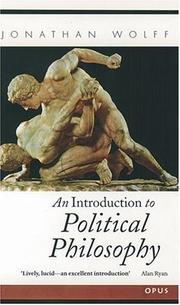
Niccolò Machiavelli · 1531

Recommended by: Peter Thiel

Where it sits in the reference 0

No entry holds this book yet. It reached the reference because someone recommended it.

Topics

PhilosophyPolitics and GovernmentAncient Greek and Roman philosophyPolitical philosophy and ideology