The SaaS Playbook
A guide for bootstrapped software founders: pricing, churn and growth plateaus.
Bootstrapped SaaS economics: pricing, churn, plateau.
Summary
Rob Walling founded several software businesses, runs the TinySeed accelerator for bootstrapped software companies, and wrote this as a practical guide for founders building software as a service businesses without venture funding.
The orientation is the distinguishing feature. Almost all published advice on software businesses assumes venture funding and the growth trajectory it requires, and Walling writes for founders who intend to build profitable businesses at a smaller scale. The differences he identifies are substantial: bootstrapped companies must reach profitability early, cannot buy growth, must price for margin rather than for share, and should serve customers who can pay rather than pursuing the largest possible market.
The operational content covers pricing, which he treats as the highest-leverage decision most founders neglect, including the argument for charging more than feels comfortable and for pricing on a value metric that grows with the customer; churn and its measurement, including the distinction between logical churn and the negative revenue churn that expansion produces; positioning and the identification of an ideal customer profile narrow enough to be actionable; marketing channels and the finding that most companies succeed on one or two rather than many; hiring and the sequence in which a founder should delegate; and the psychological aspects of running a company alone. The book is short and specific. It draws on Walling's own experience and on the companies in his accelerator rather than on systematic research.
Key takeaways 7
- Bootstrapped software companies must price for margin rather than for market share, because they cannot buy growth.
- Pricing is the highest-leverage decision most founders neglect, and most charge substantially less than customers would pay.
- A value metric that grows with the customer's usage produces revenue expansion without requiring new customer acquisition.
- Net negative revenue churn, where expansion from existing customers exceeds losses, changes the growth mathematics entirely.
- Most successful companies succeed on one or two marketing channels rather than on many, so testing broadly and then concentrating is the pattern.
- An ideal customer profile must be narrow enough to determine specific decisions about product, pricing and channel.
- Walling argues that serving customers who can pay is more important than addressing the largest available market.
Who should read it
Founders building software businesses without venture funding who want operational specifics on pricing, churn and channel selection.
Similar books 6
Chosen by shared topics, the entries that hold them, and the people who recommended both.
Why tech products stall between early adopters and the mainstream, and how to cross.
“I figured there was probably a formula in some of the best business books out there, and so I re-read Lean Startup, Crossing the Chasm, Innovator's Dilemma, and many others.” — Andrew Chen
Source: How to write a business book — behind the scenes from THE COLD START PROBLEM
Recommended by: Andrew Chen, Andrew Wilkinson, Bill Gurley and 14 others
Seven parts of a playbook for growing a software company's sales.
Recommended by: David Cancel
How to build a deliberately small, niche software business that pays.
“Great how-to guide about being a micropreneur: an entrepreneur running many small but profitable businesses.” — Derek Sivers
Source: Derek Sivers book notes (primary, rated list) · Rating: 6/10
Recommended by: Derek Sivers
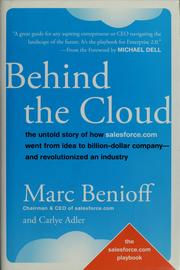
How Salesforce was built, set out as 111 plays on marketing, sales and growth.
“This morning, I spent three hours on the coach and plowed through Behind the Cloud: The Untold Story of How Salesforce.com Went from Idea to Billion-Dollar Company-and Revolutionized an Industry. It was excellent.” — Brad Feld
Source: Book: Behind the Cloud — Feld Thoughts
Recommended by: Brad Feld, David Cancel, David Sacks and 4 others
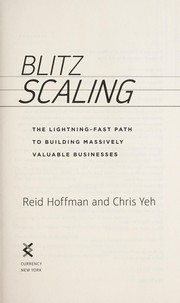
When and how to put speed before efficiency to capture a market before rivals.
“A great book on blitzscaling: An insightful book on how to scale at a very fast pace and more importantly WHEN.” — Vinod Khosla
Source: 2019 Book Recommendations — Vinod Khosla, Medium
Recommended by: Vinod Khosla, Anthony Pompliano, Bill Gates and 7 others
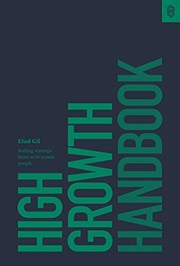
How to run a company as it grows from ten employees to several thousand.
Recommended by: Balaji S. Srinivasan, Matt Mullenweg and 10 others