Updates

  1. Person pages list letters, writing, profiles and links as sortable tables with filters, and show each person's companies as links; Fund letters show each letter's description in its own column.
  2. Experts show a checked job title and a short description of each person; 30 more people have photographs.
  3. Every company, fund, university and publication the experts work for has a page listing the people there.
  4. Fund letters show each letter's thesis and filter by it; 225 person pages list the essays, columns and newsletter issues the person wrote.
  5. Person pages list every essay and newsletter issue a person wrote, and their own books as a table in List view.
  6. Recommends shows the five largest kinds of book and the rest under More; browse pictures load sooner.
  7. Podcasts and talks link the original episode, filter by Audio and video or Press, and list each publisher once.
  8. Pages are wider, Recommends has List and Grid, and a filter clicked again turns off.
  9. Book cards sit in a ruled grid with Open Library and Goodreads links and each book's one-line note.
  10. Funds is now Investors; each investor's styles are buttons that filter the table.
  11. Podcasts and talks on a person's page filter by year and publisher and show as a list or a grid of pictures.
  12. Quotes show only people's own words: 472 summaries written by list sites are gone.
  13. Country pages open from Browse again, and every link on the shelf lands on a page.
  14. Subject and person pages show their sections as tabs, and each book appears once on a person's page.
  15. Book cards show the quote, who said it and the source; grids show five cards to a row.
  16. On a phone, a menu holds the sections, search, Updates, Feedback and dark mode.
  17. Feedback takes a screenshot of the page with no browser prompt, opens a screenshot full size when you click it, and clears itself once sent.
  18. Book cards are centred, search names the topic each book sits in, and any text cut short shows whole on hover.
  19. Search groups its results by kind: people, companies, geographies, subjects, topics, books, funds, fund letters and papers.
  20. The Books table lists who recommended each book by name, and the browser tab names the section you are in.
  21. Feedback can take a screenshot of the page, or one you paste or choose, and opens in the corner beside Updates.
  22. Each rail button reopens its section where you left it, and Browse, Table and People show on every book and subject page.
  23. Filters grey out choices that hold nothing instead of hiding them, and Books › People filters by authors or recommenders.
  24. Feedback takes a subject line and up to three screenshots.
  25. Biographies are grouped by the person they are about: 41 new pages, from Abraham Lincoln to Lee Kuan Yew.
  26. Sport splits into 23 sports, and Religion into one topic per faith.
  27. Book lists show as cards: the cover, one recommendation quote and every recommender by name.
  28. Seventeen subjects that had two or three pages under different names now have one page each.
  29. Every page lists its Experts as authors and recommenders, with a link to them on the Experts tab.
  30. Economics, Financial history, Financial panics and Accounting are subjects of their own, with one page per financial crisis.
  31. Book, person and subject pages open inside the app, so the tabs stay in view.
  32. 996 more book covers, and photographs or logos for 227 more people and companies.
  33. Books › Browse shows every subject as cards, and the rail holds Fund letters, Papers, Experts, Books and Funds.
  34. Every topic over 150 books splits into narrower topics, each with a page of its own.

Send feedback

What is it?
Screenshots, up to 3 (optional)
or paste one with Ctrl+V

We use your email only to reply to you.

The Sages: Warren Buffett, George Soros, Pau

The Sages: Warren Buffett, George Soros, Paul Volcker, and the Maelstrom of Markets

Summary

Morris, a lawyer, former banker and financial writer, wrote a short book profiling three men who he argues understood the risks building in the financial system before 2008 while the profession did not. He treats Buffett, Soros and Volcker as representatives of three different correct positions.

Buffett stands for the insistence that an investor must understand what they own, and Morris uses his 2002 description of derivatives as instruments that would cause serious trouble, and his refusal to participate in structured credit, as evidence. Soros stands for the argument that markets are reflexive and that regulators cannot rely on them to self-correct. Volcker stands for the position that banking is a public utility with public guarantees, that its risk-taking must therefore be limited, and that financial innovation of the preceding decades had produced little measurable benefit.

Morris connects these to his own diagnosis of the crisis, which he had set out earlier in The Trillion Dollar Meltdown. He argues that the combination of loose monetary policy, securitisation, rating agency failure, and compensation structures that paid for volume produced a credit bubble whose collapse was predictable in kind if not in timing.

The book is short and was written quickly after the crisis. It is a good summary of three points of view but it does not add new reporting or analysis, and the selection of three men who happened to be right is subject to the obvious objection about hindsight. Volcker's argument that financial innovation produced little benefit, in particular, deserves a fuller treatment than it gets here.

Key takeaways 7

  1. Buffett publicly identified derivatives as a source of systemic risk six years before the crisis and refused to hold structured credit.
  2. Soros's reflexivity implies that markets amplify errors rather than correcting them, so self-regulation cannot work.
  3. Volcker argued that banks carrying public guarantees should be restricted from proprietary risk taking.
  4. Financial innovation between 1980 and 2007 produced little measurable improvement in the allocation of capital.
  5. Compensation structures that paid on transaction volume rather than on outcomes drove the growth of securitisation.
  6. Understanding what you own is a practical constraint on portfolio size and complexity, not merely a slogan.
  7. The people who saw the crisis coming did so by reasoning about incentives and structures, not by forecasting.

Who should read it

Investors who want three coherent critiques of pre-crisis finance compressed into a short book, as an entry point rather than a full account.

About Charles R. Morris

Lawyer, banker and author on American finance and industrial history; died in 2021.

The Tycoons recounts how Carnegie, Rockefeller, Gould and Morgan assembled the industrial and financial structures of the American economy, with unusual attention to the financing and accounting they used to do it. The Sages compares the working methods of Buffett, Soros and Volcker against the crisis each of them read early.

Who recommended it 1 · 1 direct

Similar books 6

Chosen by shared topics, the entries that hold them, and the people who recommended both.
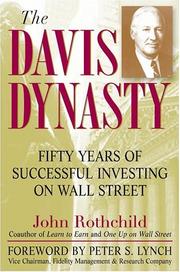
John Rothchild · 2001

Three generations compounding a fortune through insurance stocks

“When John Rothchild combines history and biography with investing in one package, history illuminates the biography and investing. This is a sparkling book on each level, but even more so as an…” — Peter Bernstein

Source: Bernstein on Rothchild mixing history, biography and investing

Recommended by: Mohnish Pabrai, Peter Bernstein and 1 other
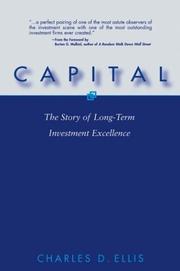
Charles D. Ellis · 2004

How Capital Group built its long-term investing culture.

Recommended by: Mohnish Pabrai

Where it sits in the reference 2

Journalists
Financial history

Topics

InvestingBiography and MemoirFinancial HistoryInvestors, Traders and GamblersInvestor profiles and interviews