Updates

  1. Person pages list letters, writing, profiles and links as sortable tables with filters, and show each person's companies as links; Fund letters show each letter's description in its own column.
  2. Experts show a checked job title and a short description of each person; 30 more people have photographs.
  3. Every company, fund, university and publication the experts work for has a page listing the people there.
  4. Fund letters show each letter's thesis and filter by it; 225 person pages list the essays, columns and newsletter issues the person wrote.
  5. Person pages list every essay and newsletter issue a person wrote, and their own books as a table in List view.
  6. Recommends shows the five largest kinds of book and the rest under More; browse pictures load sooner.
  7. Podcasts and talks link the original episode, filter by Audio and video or Press, and list each publisher once.
  8. Pages are wider, Recommends has List and Grid, and a filter clicked again turns off.
  9. Book cards sit in a ruled grid with Open Library and Goodreads links and each book's one-line note.
  10. Funds is now Investors; each investor's styles are buttons that filter the table.
  11. Podcasts and talks on a person's page filter by year and publisher and show as a list or a grid of pictures.
  12. Quotes show only people's own words: 472 summaries written by list sites are gone.
  13. Country pages open from Browse again, and every link on the shelf lands on a page.
  14. Subject and person pages show their sections as tabs, and each book appears once on a person's page.
  15. Book cards show the quote, who said it and the source; grids show five cards to a row.
  16. On a phone, a menu holds the sections, search, Updates, Feedback and dark mode.
  17. Feedback takes a screenshot of the page with no browser prompt, opens a screenshot full size when you click it, and clears itself once sent.
  18. Book cards are centred, search names the topic each book sits in, and any text cut short shows whole on hover.
  19. Search groups its results by kind: people, companies, geographies, subjects, topics, books, funds, fund letters and papers.
  20. The Books table lists who recommended each book by name, and the browser tab names the section you are in.
  21. Feedback can take a screenshot of the page, or one you paste or choose, and opens in the corner beside Updates.
  22. Each rail button reopens its section where you left it, and Browse, Table and People show on every book and subject page.
  23. Filters grey out choices that hold nothing instead of hiding them, and Books › People filters by authors or recommenders.
  24. Feedback takes a subject line and up to three screenshots.
  25. Biographies are grouped by the person they are about: 41 new pages, from Abraham Lincoln to Lee Kuan Yew.
  26. Sport splits into 23 sports, and Religion into one topic per faith.
  27. Book lists show as cards: the cover, one recommendation quote and every recommender by name.
  28. Seventeen subjects that had two or three pages under different names now have one page each.
  29. Every page lists its Experts as authors and recommenders, with a link to them on the Experts tab.
  30. Economics, Financial history, Financial panics and Accounting are subjects of their own, with one page per financial crisis.
  31. Book, person and subject pages open inside the app, so the tabs stay in view.
  32. 996 more book covers, and photographs or logos for 227 more people and companies.
  33. Books › Browse shows every subject as cards, and the rail holds Fund letters, Papers, Experts, Books and Funds.
  34. Every topic over 150 books splits into narrower topics, each with a page of its own.

Send feedback

What is it?
Screenshots, up to 3 (optional)
or paste one with Ctrl+V

We use your email only to reply to you.

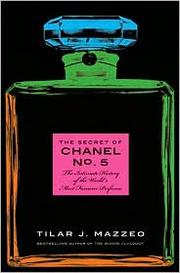
The Secret of Chanel No. 5

The Secret of Chanel No. 5

Tilar J. Mazzeo
2010
T3 304 pages · about 5h 4m to read Open Librarygoodreads

One product's history, including the Wertheimer deal that made the money.

Summary

Tilar Mazzeo, who has written on the history of luxury products, traces the creation and commercial history of Chanel No. 5 from its formulation in 1921 to the present.

The product history covers the perfumer Ernest Beaux, the use of aldehydes that gave the fragrance its distinctive abstract character rather than a recognisable floral identity, the jasmine and rose sourcing from Grasse, and the bottle and packaging design that broke with the ornate conventions of the period.

The commercial history is the more substantial content. Mazzeo covers the 1924 agreement under which Pierre Wertheimer's company Bourjois acquired the great majority of the perfume business, leaving Chanel with a small share of a product bearing her name; the decades of litigation and manoeuvre through which Chanel attempted to recover it, including her 1941 application under Vichy racial legislation to have the business transferred from its Jewish owners; the wartime production and the American soldiers who bought the perfume at the Paris boutique; and the postwar settlement in which the Wertheimers financed Chanel's return to fashion because the name's commercial value exceeded the cost. The book is popular history and Mazzeo's claims about specific formulation details have been questioned. The ownership history is well documented and is the part a business reader will want.

Key takeaways 7

  1. Chanel signed away the great majority of the perfume business in 1924 and spent decades attempting to recover it.
  2. The 1924 agreement left her with a small royalty on a product carrying her own name, which is the structural fact behind the entire history.
  3. Chanel applied under Vichy racial legislation in 1941 to have the perfume business transferred from its Jewish owners.
  4. The Wertheimers financed her postwar return to fashion because the commercial value of the name exceeded the cost of the settlement.
  5. The fragrance used aldehydes to produce an abstract character rather than a recognisable floral identity, which was a deliberate break with convention.
  6. American soldiers buying the perfume in Paris after the liberation built its position in the United States market.
  7. A brand name licensed away early can become the licensor's most valuable asset and the originator's permanent grievance.

Who should read it

Readers interested in luxury brand ownership structures and in what happens when a founder signs away rights to their own name.

Similar books 6

Chosen by shared topics, the entries that hold them, and the people who recommended both.
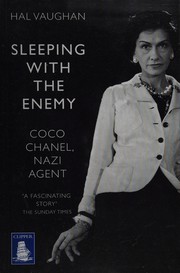
Hal Vaughan · 2011

Declassified files on her Abwehr connection; contested by the house.
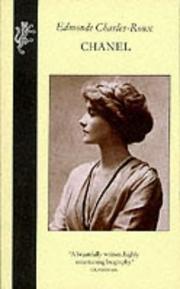
Edmonde Charles-Roux · 1975

The foundational biography; every later book argues with it.
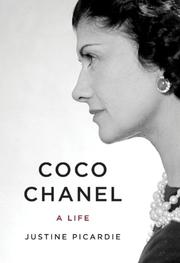
Justine Picardie · 2009

House-access biography; good on the business, softer on the war.
Rhonda K. Garelick · 2014

Reads the brand as politics; the most intellectually serious account.
Paul Morand · 2008

As-told-to: Morand's record of her 1946 conversations, published posthumously.
Rebecca Smith, John R. Emshwiller · 2003

The two Wall Street Journal reporters who broke the story.

Where it sits in the reference 2

Companies
Biographies

Topics

Company HistoriesGeneral HistoryEconomic and Business History