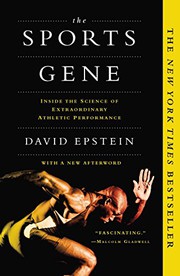
The Sports Gene
What the evidence shows about genes and training in elite athletic performance.
Talent, training and genetics in elite athletic performance
Summary
Epstein examines what the evidence actually shows about the contributions of genetics and training to elite athletic performance, and argues that both the pure talent and the pure practice accounts are wrong.
His attack on the ten thousand hours claim covers the enormous variation in hours required to reach expert level, the finding that some individuals reach elite performance with far less practice, and the argument that trainability itself is heritable, so the response to identical training varies substantially between individuals. The HERITAGE family study, which measured aerobic capacity response to a standardised training programme, found responses ranging from almost none to enormous improvement.
His genetic material covers specific well-established cases including height distributions in basketball and volleyball, the ACTN3 variant and its association with power versus endurance performance, the Finnish cross-country skier with a mutation producing elevated haemoglobin, and the geographic concentrations of elite runners in specific regions of Kenya and Ethiopia, which he attributes to a combination of body morphology, altitude and cultural factors rather than to any national genetic characteristic.
He covers the hardware and software distinction, arguing that reaction time in elite athletes is not faster than in ordinary people and that the advantage is in pattern recognition built through practice. His treatment of race is careful and he addresses the difficulty of discussing population differences without the discussion being misused. The book is more careful about evidence than most popular science and Epstein states uncertainty where it exists. The heritability of trainability is the finding with the widest application, since it applies to any domain where people receive identical instruction and produce different results.
Key takeaways 8
- Both the pure talent and the pure practice accounts of elite performance are contradicted by the evidence.
- The hours of practice required to reach expert level vary enormously between individuals in the same domain.
- Trainability itself is heritable, so identical training produces responses ranging from almost none to enormous improvement.
- Specific physical characteristics including height distributions produce absolute advantages in particular sports that training cannot overcome.
- Elite athletes do not have faster reaction times than ordinary people, and their advantage is pattern recognition built through practice.
- Geographic concentrations of elite performers reflect combinations of body morphology, environment and culture rather than national characteristics.
- Self-selection into sports that suit a person's physical characteristics explains part of what looks like a training effect.
- Epstein states uncertainty where it exists, which distinguishes this from most popular treatments of the same evidence.
Who should read it
Readers interested in what actually determines elite performance, including managers who assume identical training produces comparable results.
Who recommended it 3 · 1 direct
Similar books 6
Chosen by shared topics, the entries that hold them, and the people who recommended both.
Behavioural genetics on how much of who we are is inherited.
Recommended by: James Cameron, Michael Mauboussin
How natural selection, not a designer, produces the complexity of living things.
“Richard Dawkins, The Blind Watchmaker (New York: W.W. Norton & Company, 1986)” — Michael Mauboussin
Source: Thirty Years: Reflections on the Ten Attributes of Great Investors, page 17
Recommended by: Jim Collins, Michael Mauboussin and 4 others
How ancient DNA has rewritten the story of human prehistory and migration.
Recommended by: Balaji S. Srinivasan, Marc Andreessen and 3 others
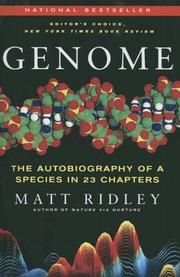
Twenty-three chapters, one per chromosome, each using a gene to open a subject.
“I highly recommend Genome as well, to figure out the rational basis behind ethics and the origin of virtue.” — Naval Ravikant
Source: Nav.al — 'Matt Ridley: How Innovation Works, Part 2' (Naval's podcast, edited transcript)
Recommended by: Charlie Munger, Mohnish Pabrai and 2 others
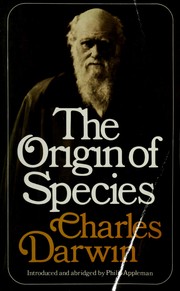
Species change over time as natural selection favours heritable variations.
“So begins paragraph three of “On the Origin of Species by Means of Natural Selection” by Charles Darwin, the bicentenary of whose birth falls this year.” — Nick Sleep
Source: Nomad Investment Partnership - Letters to Partners, complete collection 2001-2013, page 157
Recommended by: Jim Collins, Mohnish Pabrai, Naval Ravikant and 6 others
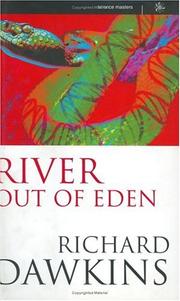
Genes as a river of digital information, and how life began and spreads.
“Biologist describes how evolution works, everything maximized for the gene’s survival. Includes related insights and analogies. I like his writing style.” — Derek Sivers
Source: Derek Sivers book notes (primary, rated list) · Rating: 6/10
Recommended by: Derek Sivers, Ray Dalio
Where it sits in the reference 2
Topics 4
As an Amazon Associate I earn from qualifying purchases.