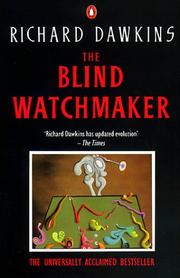
The Blind Watchmaker
How natural selection, not a designer, produces the complexity of living things.
Summary
Dawkins sets out to explain how natural selection, a process that is cumulative and nonrandom, produces complex living things without a designer. The title answers William Paley's argument that a watch implies a watchmaker. Dawkins builds on his first book, The Selfish Gene (1976), and replies to its critics. He takes echolocation in bats and the eye, which has evolved as many as forty times, as cases of complex design, and shows working intermediate eyes in living animals, from the pinhole eye of the chambered nautilus to the lensed eye of the octopus.
His weasel program and a second computer model, also called The Blind Watchmaker, show random variation joined to nonrandom selection. Later chapters cover the origin of life, arms races between predator and prey, gene duplication, sexual selection and Fisherian runaway, a critique of Eldredge and Gould's punctuated equilibrium, Kimura's neutral theory and molecular clocks, and the case against Lamarckism. The 1996 edition adds an appendix on the evolution of evolvability. The book won the Los Angeles Times Book Prize and the Heinemann Award.
Key takeaways 4
- Natural selection builds complexity through many small steps, each simple enough to arise by chance.
- The selection that keeps or discards each step is not random, so the whole sequence is not a chance process.
- Working intermediate eyes in living animals show how a complex organ can build up gradually.
- Dawkins finds alternatives to natural selection, such as Lamarckism, unable to explain adaptation.
Who should read it
Readers who want a clear, step-by-step account of how evolution by natural selection produces complex organs, written for a general audience.
Who recommended it 6 · 4 direct
“Richard Dawkins, The Blind Watchmaker (New York: W.W. Norton & Company, 1986)”
Similar books 6
Chosen by shared topics, the entries that hold them, and the people who recommended both.
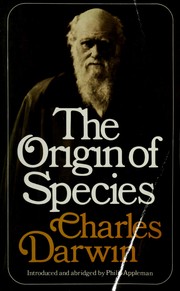
Species change over time as natural selection favours heritable variations.
“So begins paragraph three of “On the Origin of Species by Means of Natural Selection” by Charles Darwin, the bicentenary of whose birth falls this year.” — Nick Sleep
Source: Nomad Investment Partnership - Letters to Partners, complete collection 2001-2013, page 157
Recommended by: Jim Collins, Mohnish Pabrai, Naval Ravikant and 6 others
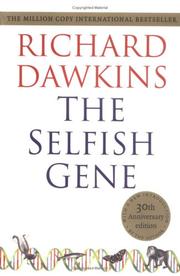
Selection acts on genes; bodies are vehicles that genes build to copy themselves.
“About evolution and the theory of natural selection, proposing the idea that it's not creatures that are looking to replicate, but individual genes.” — Derek Sivers
Source: Derek Sivers book notes (primary, rated list) · Rating: 5/10
Recommended by: Balaji S. Srinivasan, Bob Metcalfe and 13 others
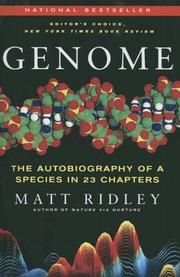
Twenty-three chapters, one per chromosome, each using a gene to open a subject.
“I highly recommend Genome as well, to figure out the rational basis behind ethics and the origin of virtue.” — Naval Ravikant
Source: Nav.al — 'Matt Ridley: How Innovation Works, Part 2' (Naval's podcast, edited transcript)
Recommended by: Charlie Munger, Mohnish Pabrai and 2 others
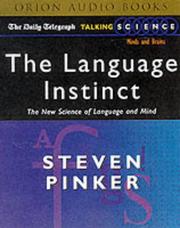
Language as a human instinct, and what science knows of grammar and learning.
“He gave me this book called The Language Instinct, written by Steven Pinker... And Pinker proves his point pretty well.” — Charlie Munger
Source: Poor Charlie's Almanack, Talk Two: A Lesson on Elementary, Worldly Wisdom
Recommended by: Charlie Munger, Michael Mauboussin and 3 others
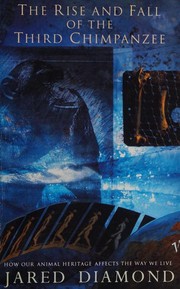
What in the few genes that separate us from apes made humans different.
Recommended by: Charlie Munger, Mohnish Pabrai
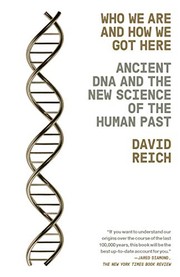
How ancient DNA has rewritten the story of human prehistory and migration.
Recommended by: Balaji S. Srinivasan, Marc Andreessen and 3 others
Where it sits in the reference 1
Topics 2
As an Amazon Associate I earn from qualifying purchases.