Updates

  1. Person pages list letters, writing, profiles and links as sortable tables with filters, and show each person's companies as links; Fund letters show each letter's description in its own column.
  2. Experts show a checked job title and a short description of each person; 30 more people have photographs.
  3. Every company, fund, university and publication the experts work for has a page listing the people there.
  4. Fund letters show each letter's thesis and filter by it; 225 person pages list the essays, columns and newsletter issues the person wrote.
  5. Person pages list every essay and newsletter issue a person wrote, and their own books as a table in List view.
  6. Recommends shows the five largest kinds of book and the rest under More; browse pictures load sooner.
  7. Podcasts and talks link the original episode, filter by Audio and video or Press, and list each publisher once.
  8. Pages are wider, Recommends has List and Grid, and a filter clicked again turns off.
  9. Book cards sit in a ruled grid with Open Library and Goodreads links and each book's one-line note.
  10. Funds is now Investors; each investor's styles are buttons that filter the table.
  11. Podcasts and talks on a person's page filter by year and publisher and show as a list or a grid of pictures.
  12. Quotes show only people's own words: 472 summaries written by list sites are gone.
  13. Country pages open from Browse again, and every link on the shelf lands on a page.
  14. Subject and person pages show their sections as tabs, and each book appears once on a person's page.
  15. Book cards show the quote, who said it and the source; grids show five cards to a row.
  16. On a phone, a menu holds the sections, search, Updates, Feedback and dark mode.
  17. Feedback takes a screenshot of the page with no browser prompt, opens a screenshot full size when you click it, and clears itself once sent.
  18. Book cards are centred, search names the topic each book sits in, and any text cut short shows whole on hover.
  19. Search groups its results by kind: people, companies, geographies, subjects, topics, books, funds, fund letters and papers.
  20. The Books table lists who recommended each book by name, and the browser tab names the section you are in.
  21. Feedback can take a screenshot of the page, or one you paste or choose, and opens in the corner beside Updates.
  22. Each rail button reopens its section where you left it, and Browse, Table and People show on every book and subject page.
  23. Filters grey out choices that hold nothing instead of hiding them, and Books › People filters by authors or recommenders.
  24. Feedback takes a subject line and up to three screenshots.
  25. Biographies are grouped by the person they are about: 41 new pages, from Abraham Lincoln to Lee Kuan Yew.
  26. Sport splits into 23 sports, and Religion into one topic per faith.
  27. Book lists show as cards: the cover, one recommendation quote and every recommender by name.
  28. Seventeen subjects that had two or three pages under different names now have one page each.
  29. Every page lists its Experts as authors and recommenders, with a link to them on the Experts tab.
  30. Economics, Financial history, Financial panics and Accounting are subjects of their own, with one page per financial crisis.
  31. Book, person and subject pages open inside the app, so the tabs stay in view.
  32. 996 more book covers, and photographs or logos for 227 more people and companies.
  33. Books › Browse shows every subject as cards, and the rail holds Fund letters, Papers, Experts, Books and Funds.
  34. Every topic over 150 books splits into narrower topics, each with a page of its own.

Send feedback

What is it?
Screenshots, up to 3 (optional)
or paste one with Ctrl+V

We use your email only to reply to you.

The Templeton Touch

The Templeton Touch

William Proctor
1983
T3 226 pages · about 3h 46m to read Open Librarygoodreads

Templeton's method: buying at the point of maximum pessimism worldwide

Summary

Proctor wrote this authorised account of John Templeton's investment approach in 1983, drawing on interviews with Templeton and with people who worked with him, and it covers his career from the 1930s through the Templeton Growth Fund's long record.

Templeton's approach was global value investing before either term was common. He bought securities in markets other investors were not examining, on the reasoning that if you search where nobody else is searching you will find better prices, and he was among the first American managers to buy Japanese equities in the 1950s and 1960s when they traded at very low multiples. His stated method was to buy at what he called the point of maximum pessimism, to hold for an average of four or five years, and to sell when he found something better rather than when a target was reached. He worked from a bargain list maintained continuously, so that when prices fell he had already decided what to buy.

The book also covers Templeton's religious convictions, which he treated as connected to his investing through an insistence on humility about one's own judgement, and his later philanthropy.

The reference has not verified all of the specific performance figures and anecdotes, which come from an authorised account written while Templeton was actively managing money. The book is admiring and does not examine the periods when the approach underperformed. Its value is the statement of the search-where-others-do-not principle and the maximum pessimism discipline, both of which Templeton practised consistently over a very long record.

Key takeaways 7

  1. Search for securities in markets and countries that other investors are not examining, because the absence of competing analysis is what produces mispricing.
  2. The point of maximum pessimism is the point of maximum opportunity, and acting then requires having decided in advance what to buy.
  3. Maintaining a continuously updated list of what you would buy at what price is the mechanism that makes buying during a panic possible.
  4. An investor should sell a holding only when a materially better opportunity is available, rather than at a predetermined price target.
  5. Applying value criteria globally rather than within one country widens the opportunity set enough to change the results materially.
  6. Buying Japanese equities in the 1950s and 1960s at very low multiples worked because no American investor was looking, not because of any insight into Japan.
  7. Humility about the reliability of one's own judgement is a practical investment discipline rather than a moral posture, because it enforces diversification and position sizing.

Who should read it

Investors interested in global value investing and in the practical discipline of preparing to buy during panics, read as an authorised account.

Who recommended it 2 · 2 direct

“There are a few books - really not that many which I believe are indispensable reading for every serious investor: The Templeton Touch by William Proctor.”

Similar books 6

Chosen by shared topics, the entries that hold them, and the people who recommended both.

John Train · 1980

The methods of nine great investors, including Buffett, Graham, Fisher and Templeton.

“all these people really were helpful in forming and getting me involved in investing” — Joel Greenblatt

Source: Masters in Business transcript: Joel Greenblatt (2018)

Recommended by: Joel Greenblatt, Mohnish Pabrai and 1 other

Philip L. Carret, Philip Carret · 1995

A fund manager of sixty years on investing, business and a long life.

Recommended by: Mohnish Pabrai

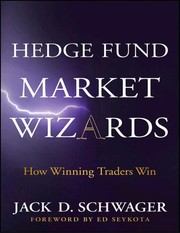
Jack D. Schwager · 2012

Includes a long Dalio interview predating the Principles publicity machine.
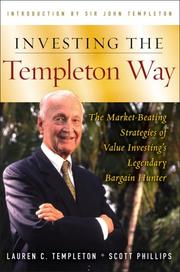
Lauren Templeton, Scott Phillips · 2008

How Templeton bought maximum pessimism across global markets.

Where it sits in the reference 3

Investment styles
Investment styles
Biographies

Topics

Biography and MemoirInvestingInvestors, Traders and Gamblers